

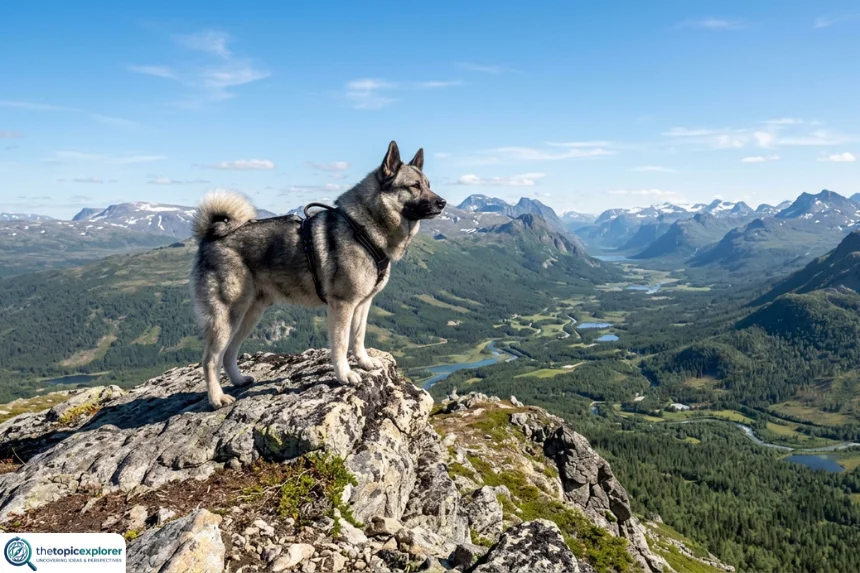

An elk hound usually means the Norwegian Elkhound, a medium-sized, silver-gray Nordic hunting dog with erect ears, a tightly curled tail, and a dense double coat. In the United States, the official breed name is written as one word: Norwegian Elkhound. Despite the English name, the dog was developed mainly to track and hold moose at bay in Scandinavia.
The Norwegian Elkhound is confident, intelligent, energetic, vocal, and deeply attached to its family. However, it is also an independent hunting breed that sheds heavily and needs consistent training, daily exercise, and secure handling. Therefore, it suits active owners who appreciate a bold working dog rather than people seeking a quiet, low-maintenance pet.
Elk Hound Quick Facts
| Topic | Verified breed information |
|---|---|
| Official U.S. breed name | Norwegian Elkhound |
| Common search spelling | Elk hound or elkhound |
| Country of origin | Norway |
| Breed type | Nordic spitz and big-game hunting dog |
| AKC group | Hound Group |
| Male height | About 20.5 inches at the shoulder |
| Female height | About 19.5 inches at the shoulder |
| Male weight | About 55 pounds |
| Female weight | About 48 pounds |
| Life expectancy | Approximately 12–15 years |
| Coat | Dense, weather-resistant gray double coat |
| Temperament | Friendly, confident, dependable, alert, and independent |
| Main challenges | Barking, shedding, prey drive, and independent decision-making |
| Recommended health screening | Hip and eye evaluations, with additional breed-club testing advised |
What Is an Elk Hound?
In everyday American searches, “elk hound” almost always refers to the Norwegian Elkhound. The American Kennel Club’s Norwegian Elkhound profile describes a robust, silver-gray spitz standing about 20 inches at the shoulder.
In addition, the breed has the classic features of a northern dog:
- A compact, square body
- Erect and mobile ears
- A wedge-shaped head
- A tightly curled tail
- A coarse outer coat
- A soft, dense undercoat
- Strong legs and substantial stamina
Although the AKC places the breed in its Hound Group, the Fédération Cynologique Internationale classifies the gray Norwegian Elkhound among Nordic hunting dogs in the spitz and primitive-type group.
Is “Elkhound” One Word or Two?
The official English breed name is Norwegian Elkhound, written as one word. Nevertheless, many people search for “elk hound,” “Norwegian elk hound,” or “elk hunting dog.”
Indeed, using two words is understandable because the name appears to combine an animal and a type of dog. However, breed registries, kennel clubs, and responsible breeders use Elkhound as one word.
For SEO purposes, an article may naturally mention both spellings. Still, owners searching for breeders, health records, or official standards should use “Norwegian Elkhound.”
Does an Elk Hound Hunt Elk or Moose?
The name creates confusion in North America. The Norwegian name is Norsk Elghund. According to the Norwegian Elkhound Association of America, elg means moose and hund means dog. Therefore, a literal modern U.S. translation would be “Norwegian moose dog.”
In much of Europe, the word elk refers to the animal North Americans call a moose. Meanwhile, North American elk are a different species. Consequently, “Elkhound” entered English through European terminology rather than as a precise description of the dog’s original quarry in the United States.
Historically, Norwegian Elkhounds also worked around bear, wolves, and other game. Moreover, in North America, some have hunted elk and other legal game where regulations allow. However, the traditional Scandinavian role centers on moose.
How Does a Norwegian Elkhound Hunt?
In fact, a Norwegian Elkhound does not simply chase an animal until a hunter catches up. Instead, traditional hunting requires independence, scenting ability, judgment, agility, and a powerful voice.
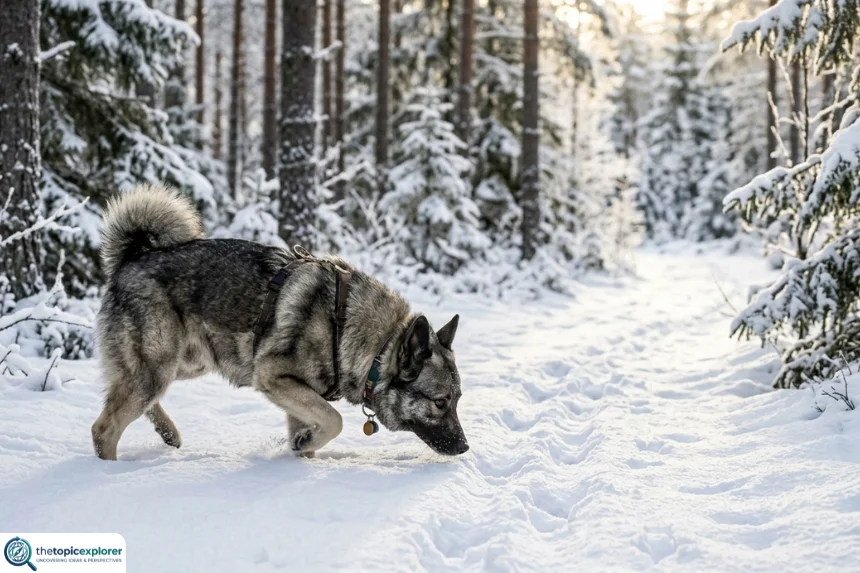
In one method, the dog searches away from the handler, locates a moose, and attempts to hold its attention by barking, circling, and moving quickly out of danger. The barking guides the hunter toward the location. If the moose moves, the dog may follow more quietly and resume barking when the animal stops.
Meanwhile, another method uses the dog on a lead to track game while remaining connected to the hunter. Both methods demand endurance over rough terrain and the ability to work without constant commands.
This history explains several modern household traits. Elkhounds tend to notice movement, follow scent, make their own decisions, and bark to report what they have found.
Types of Elk Hound Breeds
No. Although the gray Norwegian Elkhound is the breed most Americans mean, northern Europe recognizes other related moose-hunting dogs.
The FCI lists the Norwegian Elkhound Grey as a Norwegian Nordic hunting breed. It also recognizes the Norwegian Elkhound Black as a separate breed and the Swedish Jämthund as another distinct Nordic hunting dog.
| Breed | Origin | General distinction |
| Norwegian Elkhound Grey | Norway | The familiar silver-gray breed recognized by the AKC |
| Norwegian Elkhound Black | Norway | A separate, generally smaller black hunting breed recognized by the FCI |
| Jämthund or Swedish Elkhound | Sweden | A taller Swedish moose-hunting breed |
| Other Nordic hunting spitzes | Finland, Norway, Sweden, and nearby regions | Separate breeds with their own standards and working traditions |
Therefore, a black puppy is not simply a color variation of the gray Norwegian Elkhound under FCI standards. Likewise, the larger Jämthund is not an oversized Norwegian Elkhound.
Norwegian Elkhound Size and Appearance
The Norwegian Elkhound is a medium-sized dog built for balance, agility, and endurance rather than extreme speed or bulk.
The United Kennel Club breed standard gives the following ideal measurements:
- Males: 20.5 inches and about 55 pounds
- Females: 19.5 inches and about 48 pounds
Naturally, individual dogs may vary slightly. However, responsible breeders do not deliberately market unusually tiny “mini Elkhounds” or exaggerated giant versions as recognized varieties.
Coat and Color
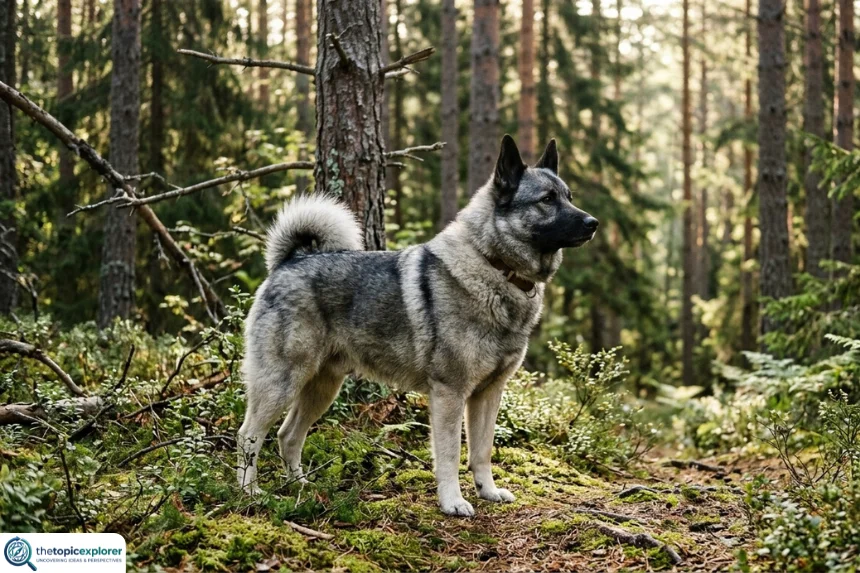
Moreover, the coat has two protective layers. The outer coat is coarse, straight, and weather-resistant, while the undercoat is soft, dense, and woolly.
Gray coloring comes from light undercoat and black-tipped guard hairs. The muzzle, ears, and tail tip appear darker, while the chest, legs, underside, and harness markings are lighter.
This coat helped the dog work through cold rain, sleet, snow, brush, and freezing conditions. However, the same coat creates substantial shedding inside a modern home.
Tail, Ears, and Expression
Likewise, the tail sits high and curls tightly over the back. The ears are comparatively small, pointed, mobile, and upright. Dark brown eyes create an alert and confident expression.
These features are not merely decorative. Mobile ears help the dog gather information, the compact body supports agility, and the weather-resistant coat protects it during long outdoor work.
Norwegian Elkhound Temperament
Generally, a well-bred Norwegian Elkhound is friendly, confident, dependable, alert, and courageous. It often forms close relationships with family members and can become an effective watchdog.
Nevertheless, this is not a soft, automatically obedient breed. Its ancestors had to work at a distance, evaluate danger, and continue hunting without step-by-step direction. Therefore, modern Elkhounds may question repetitive commands or choose a more interesting scent over an owner’s request.
Common temperament traits include:
- Strong family attachment
- Confidence around new situations
- Alert barking
- Independent thinking
- High food motivation
- Curiosity and scent interest
- Playfulness
- Persistence
- Protective awareness without normally being indiscriminately aggressive
Genetics, early socialization, training, health, and individual experience all influence behavior. Consequently, no breed description guarantees the temperament of every dog.
Are Norwegian Elkhounds Good Family Dogs?
With appropriate care, they can be excellent family companions in the right home. Elkhounds often enjoy attention, games, walks, and participation in household life.
However, they need boundaries and meaningful activity. A bored Elkhound may bark, dig, patrol fences, steal food, or create its own entertainment.
Families should include the dog in daily routines rather than leaving it isolated outdoors. Although the coat handles cold weather well, the breed generally thrives through close contact with its people.
Are Norwegian Elkhounds Good With Children?
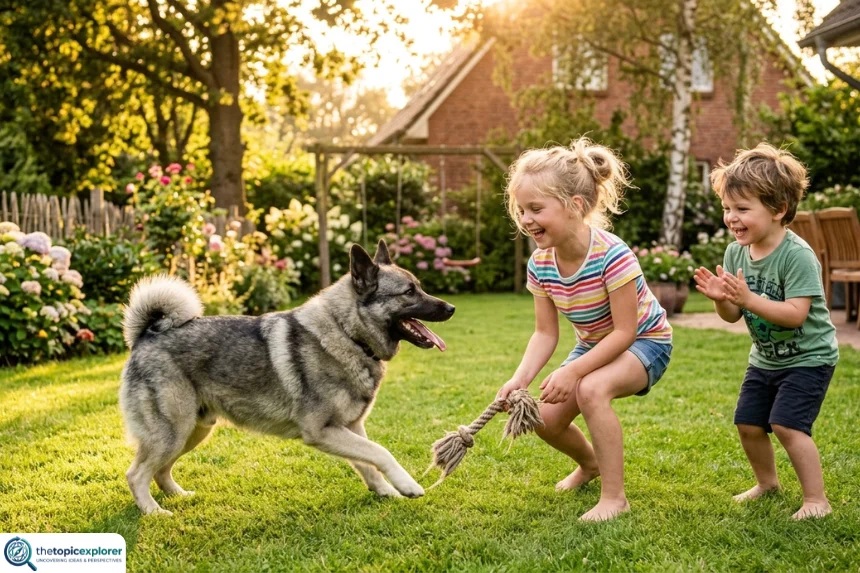
Similarly, many live successfully with children, especially when raised with respectful handling and early socialization. Their sturdy size can make them less physically fragile than toy breeds.
Nevertheless, adults should supervise every interaction between dogs and young children. Children should not climb on the dog, interfere with food, pull the tail, or corner a resting animal. Likewise, owners should teach the dog calm greetings and prevent overexcited chasing or body-bumping.
A breed reputation never replaces supervision or evaluation of the individual dog.
Do They Get Along With Other Pets?
In many cases, Elkhounds live peacefully with other dogs. Early socialization and thoughtful introductions improve the chances of success.
Cats and smaller pets require more caution because the breed has a hunting background. Some individuals accept household cats, particularly when raised with them, while others retain strong chase behavior. Rabbits, poultry, and small free-moving animals may trigger prey drive.
Therefore, owners should use secure management rather than assuming training will erase every hunting instinct.
Do Elk Hounds Bark a Lot?
Yes. In fact, many Norwegian Elkhounds are naturally vocal. Barking was essential to their traditional work because it helped hold game and guided hunters through difficult terrain.
Modern dogs may bark at:
- Visitors
- Wildlife
- Unfamiliar sounds
- Movement outside windows
- Excitement
- Frustration
- Boredom
- Requests for attention
Nevertheless, training can reduce unnecessary barking, but owners should not expect a naturally silent breed. Apartment residents must consider neighbors, shared walls, and building rules before bringing one home.
The best strategy combines exercise, predictable routines, visual barriers, reward-based quiet training, and management of triggers. Punishing all vocal behavior may increase stress without teaching the dog what to do instead.
Norwegian Elkhound Exercise Needs
Above all, Norwegian Elkhounds need daily physical activity and mental engagement. The national breed club suggests consistent exercise, often around 20–30 minutes twice a day, but many healthy adults benefit from longer walks, hiking, tracking games, or structured dog sports.
Suitable activities include:
- Brisk walks
- Hiking
- Scent work
- Tracking
- Agility
- Rally
- Obedience games
- Controlled running after physical maturity
- Food puzzles
- Search games
- Supervised play in a securely fenced area
Exercise needs vary with age, health, weather, and conditioning. Puppies should not perform repetitive high-impact exercise before their bodies mature. Senior dogs may prefer shorter, more frequent outings.
Can This Breed Live in an Apartment?
However, an apartment can work for a well-managed individual, but the breed is not an easy apartment choice.
The main challenges are:
- Frequent barking
- Heavy shedding
- Need for daily outdoor activity
- Alertness to hallway sounds
- Limited off-leash opportunities
- Potential frustration without mental work
A house with a secure fence may be more convenient, although a yard does not replace walks and training. Elkhounds can climb, dig, push through weak barriers, or follow wildlife scents. Therefore, outdoor time should remain supervised.
Training a Norwegian Elkhound
Therefore, training should begin early and continue throughout the dog’s life. Elkhounds are intelligent, but intelligence does not always produce instant compliance.
For example, short, varied sessions work better than endless repetition. Food rewards, play, praise, and access to sniffing can all reinforce behavior.
Important priorities include:
- Name response
- Recall
- Leash walking
- Calm handling
- Leave it and drop it
- Doorway control
- Quiet behavior
- Settling on a mat
- Safe introductions
- Comfortable grooming and veterinary handling
Harsh punishment can damage trust or create defensive behavior. Instead, reward the behavior you want and prevent repeated practice of unwanted behavior.
Can a Norwegian Elkhound Be Trusted Off Leash?
Even so, some highly trained dogs develop reliable recall in controlled settings. However, the breed’s scent drive and independent hunting history make unrestricted off-leash freedom risky.
A secure fenced area or long training line provides safer exercise. Even a well-trained dog may ignore a cue when wildlife appears.
Therefore, owners should judge recall by real-world reliability rather than confidence or wishful thinking.
Grooming and Shedding
As a result, Norwegian Elkhounds shed throughout the year and usually release their undercoat heavily during seasonal coat changes. Owners often describe loose undercoat collecting in visible clumps.
The AKC’s breed-care guidance recommends regular brushing and notes that back-brushing can help control shedding.
A practical routine includes:
- Brushing several times each week
- Daily brushing during heavy shedding
- Bathing when dirty or during coat release
- Regular nail trimming
- Tooth brushing
- Ear and skin checks
- Checking paws after outdoor activity
The natural coat should not be routinely shaved. Its layers help protect the dog from weather and sun. If medical treatment requires clipping, follow veterinary instructions.
Is the Norwegian Elkhound Hypoallergenic?
No. Instead, the breed sheds a substantial amount of hair and dander.
People with dog allergies should spend time around adult Norwegian Elkhounds before committing. No dog breed is completely allergen-free, and an individual reaction may differ from expectations.
Feeding and Weight Management
Additionally, Elkhounds are often enthusiastic eaters. Therefore, owners should measure meals, count training treats, and monitor body condition.
Excess weight increases stress on joints and can reduce endurance. A veterinarian can help determine an appropriate calorie target based on age, activity, reproductive status, and health.
Feed a complete diet appropriate for the dog’s life stage. Home-prepared diets should be formulated with veterinary guidance because meat and vegetables alone may not supply balanced nutrients.
Norwegian Elkhound Health
Although Norwegian Elkhounds are generally robust, every breed has health risks. The AKC lists hip and ophthalmologist evaluations among the recommended tests from the national breed club.
The NEAA health and research guidance advises breeders to screen hips and eyes and also recommends urinalysis, blood chemistry, and thyroid testing for breeding stock.
Conditions reported in the breed include:
- Hip dysplasia
- Eye disorders
- Kidney or renal disease
- Thyroid abnormalities
- Cancer
- Heart disease
- Obesity-related joint stress
This list does not mean every Elkhound will develop these problems. Instead, it helps owners choose screened parents, maintain preventive care, and discuss breed-specific concerns with a veterinarian.
What Health Tests Should a Breeder Provide?
At minimum, therefore, ask for verifiable hip and eye results for both parents. Responsible breeders may also provide thyroid, kidney, and broader laboratory screening recommended by the breed club.
Do not accept “the vet said the parents are healthy” as a substitute for documented screening. A routine examination cannot replace hip imaging or a specialist eye evaluation.
The OFA CHIC program explains that a CHIC number means a dog completed the breed’s required screenings and made the results public. However, a CHIC number does not automatically mean that every result was normal. Buyers should read the actual results.
Hot Weather and Cold Weather
In contrast, the double coat makes the Norwegian Elkhound well suited to cold climates. However, heat requires careful management.
During hot or humid weather:
- Exercise early or late
- Provide shade and water
- Avoid hot pavement
- Reduce intensity
- Never leave the dog in a parked vehicle
- Watch for heavy panting, weakness, confusion, vomiting, or collapse
Heat illness is an emergency. Seek veterinary care immediately if symptoms appear.
The coat should not encourage owners to leave the dog outdoors in severe winter weather without shelter. Cold tolerance does not eliminate the need for safety, companionship, fresh water, and monitoring.
Norwegian Elkhound Lifespan
Accordingly, the AKC lists a life expectancy of approximately 12–15 years.
Longevity depends on genetics, body weight, preventive veterinary care, dental health, exercise, diet, accident prevention, and early detection of disease.
A long life is not guaranteed by breed averages. Nevertheless, selecting health-tested parents and maintaining a lean body condition can improve the odds of healthy aging.
Is the Norwegian Elkhound Right for You?
For example, a Norwegian Elkhound may suit you when you want:
- An active medium-sized dog
- A confident family companion
- A cold-weather hiking partner
- A watchdog with a strong voice
- A dog for scent work or outdoor activities
- A natural-looking breed that does not require decorative trimming
It may not suit you when you need:
- Minimal shedding
- A naturally quiet apartment dog
- Effortless off-leash reliability
- Low exercise requirements
- A dog that obeys repetitive commands without question
- Guaranteed compatibility with small pets
- A heat-tolerant breed for intense midday exercise
Choosing by appearance alone often leads to frustration. Spend time with adult Elkhounds, speak with responsible owners, and evaluate whether barking, shedding, and independent behavior fit your household.
Finding a Responsible Breeder or Rescue
In practice, a responsible breeder should:
- Explain both strengths and challenges honestly
- Provide health records for both parents
- Raise puppies in a clean, socially rich environment
- Ask questions about your household
- Use a written contract
- Offer lifelong support
- Take back or help rehome a dog if necessary
- Avoid “rare color,” “mini,” or guaranteed-temperament marketing
The NEAA warns buyers to investigate breeders thoroughly rather than treating a referral list as an automatic endorsement.
Alternatively, rescue can also be an excellent option. Adult dogs may already have known energy, social, and grooming characteristics. However, every rescue dog still needs an individual behavioral and medical assessment.
Common Norwegian Elkhound Myths
Myth: An elk hound is bred only to hunt North American elk. The Norwegian breed’s traditional quarry is mainly the Scandinavian moose.
Myth: Every elkhound is the same breed. Gray Norwegian, Black Norwegian, and Swedish Elkhounds are distinct breeds under international standards.
Myth: The dog is easy to train because it is intelligent. Intelligence and obedience are not identical; Elkhounds are independent thinkers.
Myth: A large yard eliminates the need for exercise. The breed still needs walks, training, companionship, and mental work.
Myth: The dense coat does not shed because it is weatherproof. The undercoat can shed heavily.
Myth: Shaving keeps the dog comfortable in summer. Routine shaving may damage normal coat function and does not replace heat management.
Myth: A friendly breed never needs socialization. Every puppy needs structured, positive exposure to people, animals, handling, and environments.
FAQs About the Elk Hound
1. Is an Elk Hound the Same as a Norwegian Elkhound?
Usually, yes. In U.S. searches, “elk hound” generally refers to the Norwegian Elkhound, although other Nordic moose-hunting breeds also exist.
2. How Big Does a Norwegian Elkhound Get?
Males are ideally about 20.5 inches tall and 55 pounds. Females are about 19.5 inches and 48 pounds.
3. Why Is It Called an Elk Hound?
The name comes from Norwegian elghund. In this context, elg refers to moose, so “moose dog” is the clearest American English translation.
4. Are Elk Hounds Aggressive?
A well-bred Norwegian Elkhound is not normally indiscriminately aggressive. However, it can be protective, confident, and reactive to perceived threats, so socialization and responsible handling remain essential.
5. Do Norwegian Elkhounds Bark a Lot?
Many do. Barking was central to their traditional hunting work and remains a strong breed tendency.
6. Are Elk Hounds Good With Kids?
They can be good family dogs when properly socialized and trained. Nevertheless, adults should always supervise interactions between dogs and young children.
7. How Much Exercise Does an Elk Hound Need?
Most healthy adults need at least two purposeful activity periods each day, plus mental enrichment. Individual needs vary with age, health, and intensity.
8. Do Norwegian Elkhounds Shed?
Yes. They have a thick double coat and can release large amounts of undercoat during seasonal shedding.
9. What Health Problems Affect Norwegian Elkhounds?
Reported concerns include hip dysplasia, eye disease, kidney disorders, thyroid abnormalities, cancer, and heart problems. Responsible breeding and regular veterinary care help manage risk.
10. How Long Does an Elk Hound Live?
The typical life expectancy is about 12–15 years, although individual longevity varies.
Conclusion: Is an Elk Hound the Right Dog?
An elk hound, usually the Norwegian Elkhound, is a sturdy gray Nordic dog developed to find and hold large game while working through difficult terrain and cold weather. It combines loyalty and friendliness with independence, stamina, vocal behavior, and strong hunting instincts.
For active owners who value a bold companion, the breed can be deeply rewarding. However, prospective owners should prepare for shedding, barking, training challenges, secure-leash management, and lifelong exercise. Understanding those realities before bringing home a puppy or rescue provides the best foundation for a successful partnership.
Read more at The Topic Explorer
