



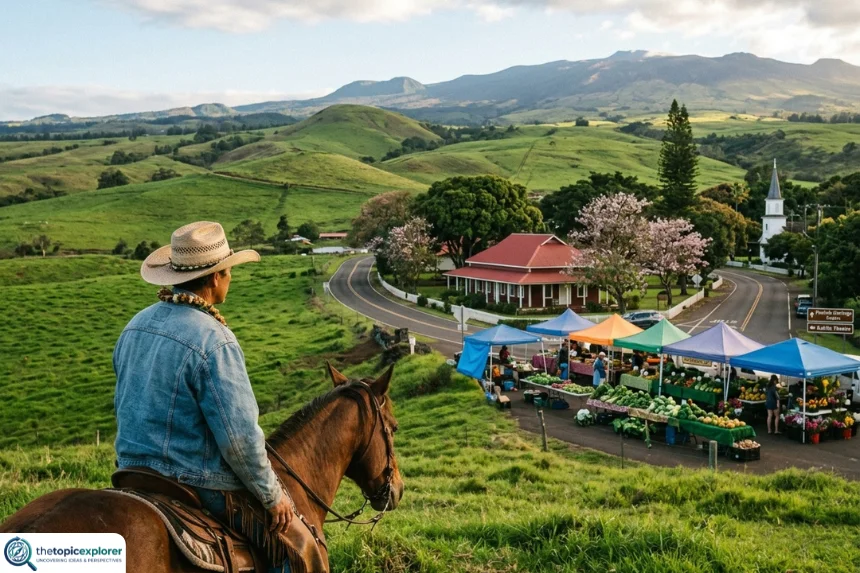
Waimea Big Island is a cool, upcountry community in South Kohala on the island of Hawaiʻi. Also called Kamuela, it sits at about 2,670 feet and offers green ranchland, paniolo heritage, farmers markets, local food, arts, and easy access to the Kohala Coast. It feels markedly different from the island’s beach resorts, so it makes a rewarding half-day stop, full day, or quiet overnight base.
Specifically, this guide covers Waimea in Hawaiʻi County. It does not cover Waimea town and canyon on Kauaʻi or Waimea Bay and Waimea Valley on Oʻahu.
Where Is Waimea Big Island?
Waimea lies inland in northern Hawaiʻi Island, between the Kohala Mountains and Maunakea. Meanwhile, Routes 19 and 190 meet in town, while Highway 250 runs toward Hāwī and Kapaʻau.
East Waimea can look green, misty, and windswept, while the landscape becomes much drier toward the Kohala Coast. Therefore, a short drive connects cool pastureland with sun-baked lava fields and beaches.
Waimea is also called Kamuela, particularly in mailing addresses. Kamuela is the Hawaiian form of Samuel. However, references differ on whether the usage honored Samuel Parker or former postmaster Samuel M. Spencer. Consequently, one origin story should not be presented as settled fact.
Locals and road signs generally use Waimea. Meanwhile, online maps, business addresses, and mailed items may use Kamuela. Both names normally point to the same Hawaiʻi Island community.
Waimea Big Island Quick Facts
| Detail | Quick answer |
|---|---|
| Focus destination | Waimea Big Island |
| Other name | Kamuela |
| Island | Hawaiʻi, commonly called the Big Island |
| District | South Kohala |
| Elevation | About 2,670 feet |
| Population | 9,904 in the 2020 Census |
| Time zone | Hawaiʻi Standard Time, UTC−10 |
| Known for | Paniolo culture, Parker Ranch, agriculture, food, arts, and astronomy support |
| Climate | Cooler than the coast, with fast changes between wetter and drier areas |
| Best visit length | Half a day to two nights |
| Main access roads | Highways 19, 190, and 250 |
Waimea is a working community rather than a purpose-built resort. As a result, visitors share it with ranchers, farmers, students, medical workers, astronomers, and families.
Why Visit Waimea on Hawaiʻi Island?
Visit Waimea for a side of Hawaiʻi that many first-time travelers never see. For example, instead of palm-lined beaches, the town offers rolling pasture, horses, old ranch buildings, crisp evenings, local produce, and a strong sense of place.
The destination suits travelers interested in history, food, scenic drives, cooler weather, or small-town culture. In addition, it links the Kohala Coast, the Hāmākua side, and North Kohala.
Waimea may disappoint anyone seeking a resort pool, nightlife district, or walkable beach vacation. It has restaurants, markets, performances, and community events, but it does not function like a coastal resort.
The official Kohala guide places the town within a wider region of pastureland, historic sites, and coastline.
What Is Waimea Big Island Known For?
Waimea is best known as the heart of paniolo country. Paniolo are Hawaiian cowboys whose traditions grew after vaqueros taught riding, roping, and cattle-handling skills in the Hawaiian Kingdom. However, paniolo culture did not simply copy the American West; Hawaiian ranchers adapted outside techniques into a distinct island tradition.
For example, Parker Ranch, established in 1847, influenced the town’s economy, schools, roads, culture, and landscape. For broader history, see Parker Ranch.
Today, nearby ranches and farms supply vegetables, fruit, beef, lamb, cheese, and other island products.
Moreover, Kahilu Theatre hosts performances, while observatory organizations maintain offices in town. Nevertheless, do not assume those offices offer daily public tours; check event calendars first.
Things to Do in Waimea Big Island
The best Waimea activities combine ranch history, local food, community spaces, and a scenic drive. Because opening days vary, check each venue shortly before arrival.
- Explore Parker Ranch history. Mana Hale and Puuopelu interpret the Parker family, Hawaiian monarchy connections, ranch life, and art. The current ranch visitor page lists tours, booking information, and hours. Therefore, reserve first.
- Visit the Paniolo Heritage Center. At Pukalani Stables, the center displays saddles, photographs, artifacts, and stories about paniolo, paʻu riders, and working cowboys.
- Walk around Church Row Park. Historic churches and mature trees create a pleasant stop. In early February, cherry trees often bloom around the annual heritage festival, although timing varies.
- Check the farmers markets. Waimea has long supported multiple weekly markets, particularly on Wednesday and Saturday. As of July 30, 2026, a local market notice says the Waimea Town Market at Parker School will be temporarily discontinued after July 31, while the Kamuela Farmers Market at Pukalani Stables continues to advertise Saturday operations. Consequently, verify the latest venue and time rather than relying on an old list.
- See a performance or exhibition. Kahilu Theatre anchors the arts scene, while other venues host talks, exhibitions, and community programs. Check schedules because many spaces lack daily visitor hours.
- Take a scenic drive. Local roads reveal pasture and changing mountain views. Highway 250 offers a longer route toward North Kohala; however, fog, rain, and wind can slow it.
- Eat something grown or raised nearby. A market breakfast, casual lunch, or produce-forward dinner connects the visit with local farms and ranches.
How to Spend One Day in Waimea Big Island
Generally, a full day gives enough time for ranch history, local food, and the town center without rushing. On a market day, start early; otherwise, begin with breakfast and move directly to the heritage sites.
| Time | Suggested plan | Why it works |
|---|---|---|
| 7:30–9:00 a.m. | Visit a confirmed market or have breakfast in town | Markets and cafés introduce local produce and community life |
| 9:30–11:30 a.m. | Tour Parker Ranch historic homes or visit Pukalani Stables | Morning hours suit heritage venues and cooler weather |
| Noon–1:30 p.m. | Lunch in central Waimea | Keeps the route compact |
| 1:30–3:00 p.m. | Walk Church Row Park and browse shops or galleries | Easy, low-key afternoon activity |
| 3:00–5:00 p.m. | Drive part of Highway 250 or continue to a planned nearby site | Adds scenery without overloading the day |
| Evening | Dinner or a ticketed performance | Ends the visit with Waimea’s food or arts scene |
If ranch tours are unavailable, visit the Paniolo Heritage Center. Similarly, if clouds obscure mountain views, favor indoor cultural stops.
Do not combine this itinerary with Hawaiʻi Volcanoes National Park; a same-day round trip consumes much of the day. Instead, use a separate base nearer the park.
Best Day Trips From Waimea
Waimea sits near several worthwhile destinations, but each offers a different landscape. Therefore, choose one direction instead of trying to circle northern Hawaiʻi Island in a few hours.
Hāpuna Beach and the Kohala Coast: Drive downhill for sun and swimming when conditions permit. Review the state beach information for hours, fees, closures, and surf warnings. High surf can create dangerous shorebreak and rip currents.
Puʻukoholā Heiau and Kawaihae: The historic site preserves a major temple associated with Kamehameha I and Hawaiian unification. Consult the National Park Service planning page for alerts, hours, and respectful-visit guidance.
Hāwī, Kapaʻau, and Pololū: Highway 250 crosses the Kohala uplands before descending toward North Kohala. Hāwī and Kapaʻau provide shops, food, and history, while Pololū offers a dramatic coastal lookout when open. However, trail and parking access can close for maintenance or safety, so check official notices.
Honokaʻa and Waipiʻo Valley Lookout: East of Waimea, Honokaʻa makes a natural food or shopping stop before the public lookout. Waipiʻo Valley Road has operated under changing emergency restrictions. Consequently, treat the lookout as the default visitor experience and do not plan to walk or drive down unless current Hawaiʻi County rules clearly authorize it.
What Is the Weather Like in Waimea Big Island?
Waimea is cooler, windier, and more changeable than the nearby Kohala Coast. Elevation lowers temperatures, while the town’s position near wet and dry zones creates rapid shifts in cloud, drizzle, sun, and visibility.
The eastern side often appears greener and wetter, whereas the western approach becomes drier. Therefore, a sunny coast forecast does not guarantee the same weather.
Pack a light jacket or sweater, a compact rain layer, sun protection, and closed-toe shoes. In addition, keep a dry layer in the car if you plan to combine the town with a beach stop.
Check the National Weather Service forecast for the town rather than relying on a Kona or Hilo forecast. Point forecasts matter on Hawaiʻi Island because elevation and topography create strong microclimates.
When Is the Best Time to Visit Waimea?
Waimea works year-round, so the best time depends more on your interests than on a single “perfect” month. For example, weekdays may suit ranch tours, while Wednesday or Saturday can provide market options if current schedules confirm them.
Early February often brings cherry blossoms and a heritage festival. Meanwhile, Parker Ranch traditionally holds its rodeo around July 4. Confirm each year’s calendar.
Morning generally offers the most flexible sightseeing window. Venues may close in the afternoon, and clouds can build over upland areas. However, no season or time guarantees a clear Maunakea view.
How to Get to Waimea Big Island
Most visitors reach Waimea by car. For example, allow roughly an hour from Ellison Onizuka Kona International Airport under normal conditions. From Hilo, allow about 75 to 90 minutes, while Kohala Coast resorts usually sit about 20 to 35 minutes away.
| Starting area | Typical route | Planning estimate |
|---|---|---|
| Kona airport | Highway 19 toward Kawaihae, then inland | About 50–65 minutes |
| Kailua-Kona | Highway 190 or the coastal route | About 60–75 minutes |
| Hilo | Highway 19 through the Hāmākua side | About 75–90 minutes |
| Kohala Coast | Kawaihae Road/Highway 19 | About 20–35 minutes |
| Hāwī | Highway 250 or the longer coastal route | About 35–50 minutes |
These are planning estimates. Construction, fog, rain, school traffic, and slow vehicles can add time.
Hele-On buses connect Waimea with Hilo, Kona, North Kohala, and resort areas. Review the official bus schedules because service changes.
A bus can work for a planned point-to-point trip. Nevertheless, a car remains more practical for Parker Ranch, beach stops, scenic drives, and multiple attractions in one day.
Where to Stay Around Waimea
Stay in Waimea for cooler nights, ranch-town atmosphere, and easy access to North Hawaiʻi. However, lodging is limited and tends toward smaller accommodations rather than resorts.
Stay on the Kohala Coast if beaches, pools, golf, and sunsets matter more. You can still visit Waimea for a day, although the coast feels much warmer and drier.
| Base | Best for | Main tradeoff |
|---|---|---|
| Waimea town | Ranch culture, cool weather, markets, food, North Kohala drives | Fewer accommodations and no beach |
| Kohala Coast | Beaches, resort facilities, sunsets | Less upcountry atmosphere |
| Honokaʻa/Hāmākua side | Waipiʻo lookout and east-side scenery | Farther from Kohala beaches |
For a first islandwide trip, one or two nights in or near Waimea can break up long drives. Nevertheless, travelers focused mainly on beaches may prefer a coastal base and a day visit.
Where to Eat and Shop in Waimea
Waimea’s food scene reflects nearby farms and ranches. For example, expect local beef, vegetables, fruit, baked goods, coffee, prepared market food, and dining from casual to special occasion.
Because businesses change hours, check the same day and reserve popular dinner spots. Moreover, do not assume late-night dining.
For shopping, look for locally made food, ranch-inspired goods, art, books, and practical outdoor layers. Markets can be particularly useful, but the July 2026 schedule change makes advance verification essential.

How Many Days Do You Need in Waimea?
Allow at least half a day for a quick stop and one full day for a satisfying visit. For example, a half day can cover a heritage site, lunch, and a short town walk. However, a full day adds a market or scenic drive without turning the visit into a checklist.
Stay one or two nights if you want to explore North Kohala, the Hāmākua side, and the Kohala Coast from one cooler base. More than two nights makes sense for travelers attending an event, visiting friends, working remotely, or deliberately seeking a slower trip.
Waimea Big Island Travel Tips
- Confirm access: Ranch tours, markets, trails, parks, and event venues can change hours or close.
- Carry layers: Waimea may feel cool and damp while the coast remains hot and sunny.
- Start early: Morning improves parking options and fits limited venue hours.
- Drive patiently: Fog, wind, rain, livestock activity, and local traffic can slow rural roads.
- Respect private land: Pasture and ranch roads are not public simply because a map shows them.
- Honor cultural sites: Follow signs, stay on paths, and treat heiau and historic places respectfully.
- Check ocean conditions: A calm-looking beach can still have shorebreak or rip currents.
- Use Hawaiian place names carefully: Waimea, Kamuela, Hāpuna, and Puʻukoholā refer to distinct places and histories.
In addition, download directions before leaving reliable service areas. Cell coverage is generally available in town, but it can weaken on remote roads and near valleys.
FAQs About Waimea Big Island
Is Waimea Big Island the same as Kamuela?
Yes. Waimea is the everyday place name, while Kamuela commonly appears in postal and business addresses. However, sources disagree about which historical Samuel inspired the postal name.
Which island is Waimea on?
This Waimea is on the island of Hawaiʻi, also called the Big Island. Nevertheless, Hawaiʻi also has a Waimea town on Kauaʻi and Waimea Bay and Valley on Oʻahu.
Is Waimea worth visiting?
Yes, especially for ranch history, paniolo culture, local food, cool scenery, and access to North Hawaiʻi. However, beach-focused visitors may prefer a shorter daytime stop.
How long should you spend in Waimea?
Plan a half day for one heritage stop and lunch, or a full day for markets, town sights, and a scenic drive. In addition, one or two nights work well for nearby day trips.
How far is Waimea from Kona?
Waimea is roughly 39 miles from Kailua-Kona by the shorter inland route, although the exact distance depends on the starting point. Therefore, allow about 60 to 75 minutes rather than planning by mileage alone.
What is Waimea’s weather like?
Waimea is generally cooler and more changeable than the coast because of its elevation. Moreover, the eastern and western sides can differ noticeably, so pack both sun protection and a light rain layer.
Does Waimea Big Island have a beach?
No. Waimea is an inland upcountry community. However, Hāpuna and other Kohala Coast beaches are usually within about 20 to 35 minutes by car.
Do you need a car in Waimea?
A car is strongly recommended for sightseeing and nearby trips. Hele-On buses serve the area, but their schedules offer less flexibility for ranch sites, beaches, and scenic drives.
What is Waimea best known for?
Waimea is best known for paniolo culture, Parker Ranch, green pastureland, agriculture, food, and its cooler climate. In addition, it supports arts, education, health care, and astronomy organizations.
Can visitors tour Parker Ranch?
Yes, Parker Ranch currently advertises self-guided historic-home experiences and other activities. Nevertheless, availability changes, so review the official visitor page and book before arrival.
Conclusion: Is Waimea Big Island Worth Visiting?
Waimea Big Island is worth visiting when you want more than beaches and resorts. Its upcountry climate, paniolo heritage, ranchland, food, arts, and position between the Kohala Coast and North Hawaiʻi create a destination with a character of its own.
A full day offers the best balance: begin with a confirmed market or breakfast, explore ranch history, enjoy lunch, see the town center, and finish with a scenic drive or performance. Above all, verify current hours and access because markets, tours, trails, and valley roads can change.
LEARN MORE ABOUT: Pele Hawaiian Goddess
