

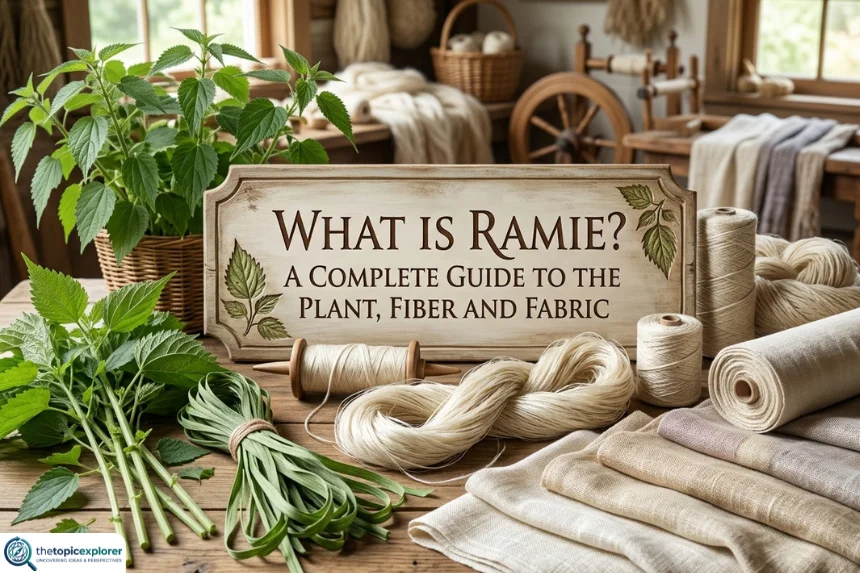

If you have noticed this material on a clothing label, you may wonder what is ramie and how it differs from cotton or linen. It is a natural plant fiber obtained mainly from the stems of Boehmeria nivea, a species in the nettle family, Urticaceae. Manufacturers process the extracted fibers into yarn, which can then be used for clothing, household textiles and other products.
Although the finished fabric can resemble linen, the two materials are different. Both, however, belong to the broader category of bast fibers because their useful textile fibers come from plant stems.
The word ramie can refer to the plant itself, the extracted fiber or, in everyday fashion language, a fabric made partly or entirely from that fiber.
Quick Answer: What Is Ramie?
Ramie is a natural cellulose-based bast fiber obtained mainly from the stems of Boehmeria nivea. The plant belongs to the nettle family and is also known as China grass. After extraction and processing, its fibers can be spun into yarn for textile production.
The finished material is generally valued for its strength, absorbency, crisp character and smooth, sometimes lustrous appearance.
The USDA National Agricultural Library classifies it as a plant fiber and identifies Boehmeria nivea as its botanical source.
Quick Facts
| Feature | Detail |
|---|---|
| Botanical source | Boehmeria nivea |
| Plant family | Urticaceae |
| Fiber category | Natural plant fiber |
| Fiber type | Bast fiber |
| Main component | Cellulose |
| Alternative name | China grass |
| Source within plant | Stem/bast |
| General appearance | Smooth with natural luster |
| Typical character | Strong, absorbent and crisp |
| Common textile forms | Pure fiber and blends |
| Often compared with | Linen, cotton and hemp |
| Traditional association | East and Southeast Asia |
Kew Science recognizes Boehmeria nivea as an accepted species in the Urticaceae family. Its native range extends from the Indian Subcontinent through temperate East Asia and Indo-China.
Understanding the Plant, Fiber and Fabric
The subject becomes easier to understand when the plant, extracted fiber and finished textile are considered separately.
The Plant
The textile source is Boehmeria nivea.
It belongs to the genus Boehmeria and the nettle family, Urticaceae. According to Kew’s Plants of the World Online database, the species is native across a broad part of Asia rather than a single country.
Kew also records traditional names including China grass and rhea.
Therefore, while the material has a strong historical association with China, its botanical distribution is considerably wider.
For authoritative botanical information, see the Kew Science profile for Boehmeria nivea.
Ramie as a Fiber
The textile material comes from fibrous tissues in the plant’s stems.
For this reason, is classified as a bast fiber. Research on the plant also describes textile fibers as being extracted from the stem bark or bast region.
This point separates ramie from cotton.
Cotton fibers develop around the seeds of the cotton plant. In contrast, , flax, hemp and jute are examples of materials whose commercially valuable fibers come from stem tissues.
Therefore, describing simply as “a type of cotton” would be incorrect.
Ramie as Fabric
After harvesting, manufacturers cannot immediately weave the raw stems into a finished shirt.
Instead, the usable fibers have to be separated from surrounding plant material and cleaned. Later processing prepares them for spinning into yarn. That yarn can then become woven or other textile structures.
Consequently, when a clothing retailer describes an item as a ramie dress or ramie shirt, the term usually refers to the fiber content of the textile rather than a special weave.
That distinction is useful because fiber and fabric construction are separate concepts.
For example, twill describes a particular fabric structure. Ramie describes the fiber from which a textile may be made.
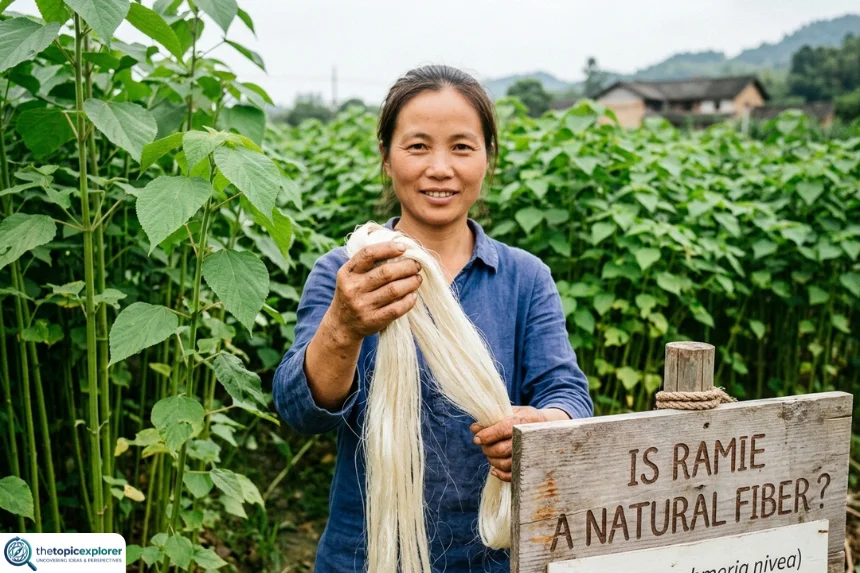
Is Ramie a Natural Fiber?
Yes. Ramie is a natural plant-derived fiber rather than a synthetic fiber such as polyester or nylon.
The USDA National Agricultural Library places it under the broader concept of plant fibers and identifies it as a product of Boehmeria nivea.
However, shoppers should distinguish the fiber itself from the complete garment.
A dress described as a “ramie blend,” for instance, could contain alongside cotton, viscose, polyester or another fiber. Therefore, the wordon a product page does not necessarily mean that every component of the garment is plant based.
The fiber-content label gives a more reliable answer.
What Is a Bast Fiber?
The phrase bast fiber can sound technical, although the basic idea is straightforward.
Bast fibers develop in fibrous tissues associated with plant stems. They help provide structural support, while textile producers value certain species because these fibers can be separated and processed into useful material.
Ramie belongs to this group along with:
- flax;
- hemp;
- jute;
- kenaf.
Scientific literature discussing natural fibers likewise groups ramie with common stem-derived bast fibers such as flax, hemp and jute.
This shared classification also helps explain why ramie is frequently compared with linen.
Linen comes from flax, while ramie comes primarily from Boehmeria nivea. Therefore, the fibers share a broad botanical-textile category but remain different materials.
Is Ramie a Type of Nettle?
Ramie belongs to the nettle family, but calling it simply “stinging nettle” would be misleading.
Its botanical family, Urticaceae, includes a variety of plants. Ramie’s main textile source, Boehmeria nivea, belongs to the genus Boehmeria.
The familiar common stinging nettle belongs to a different genus.
Therefore, descriptions such as Chinese nettle may help explain ramie’s family relationship, but the scientific name provides a more precise identification.
This distinction becomes especially important when reading historical references to “nettle cloth,” since that broader expression has not always referred exclusively to modern commercial ramie.
Why Is Ramie Called China Grass?
China grass is one of the established common names associated with ramie.
The name reflects the material’s strong historical association with China and Asian textile traditions. However, it should not be interpreted to mean that the species occurs naturally only in China.
Kew records a native range stretching across several parts of Asia, including areas of the Indian Subcontinent, China, Korea, Japan and Indo-China.
Therefore, “China grass” is best understood as a traditional common name rather than a complete description of the plant’s geographic distribution.
Where Does Ramie Come From?
Ramie has deep botanical and textile connections with Asia.
According to Kew Science, the native distribution of Boehmeria nivea extends from the Indian Subcontinent to temperate East Asia and Indo-China. Recorded native territories include regions of China, Japan, Korea, Bangladesh, Cambodia, Laos, Myanmar, Nepal, Taiwan, Thailand and Vietnam.
Humans have also introduced the plant beyond its native range.
Kew records introduced populations in parts of North America, South America, the Caribbean, Africa and Oceania. In the United States, listed introduced locations include Alabama, California, Florida, Georgia, Louisiana, South Carolina, Texas, Virginia and the District of Columbia.
However, botanical distribution and commercial textile production are not the same thing. The presence of the plant in a region does not necessarily mean that it has a major modern ramie industry.
Ramie Has a Long Textile Tradition
Ramie should not be viewed only as a modern fashion material.
Its use belongs to a much older textile tradition, particularly in Asia. Moreover, surviving craft traditions demonstrate that transforming the plant into refined fabric can involve considerable technical knowledge.
A notable example is mosi, a fine ramie textile associated with the Hansan region of South Korea.
UNESCO inscribed Weaving of Mosi (fine ramie) in the Hansan region on the Representative List of the Intangible Cultural Heritage of Humanity in 2011.
The traditional process described by UNESCO includes harvesting ramie plants, boiling and bleaching them, spinning yarn from the fiber and weaving the yarn on traditional looms. The organization also notes the use of the resulting fabric for several forms of clothing.
Readers can explore the tradition through the official UNESCO profile for Hansan fine-ramie weaving.
Traditionally, the Hansan craft has also been transmitted through family and community networks. UNESCO describes women passing weaving knowledge and experience to younger generations, demonstrating that ramie’s importance extends beyond its physical textile properties.
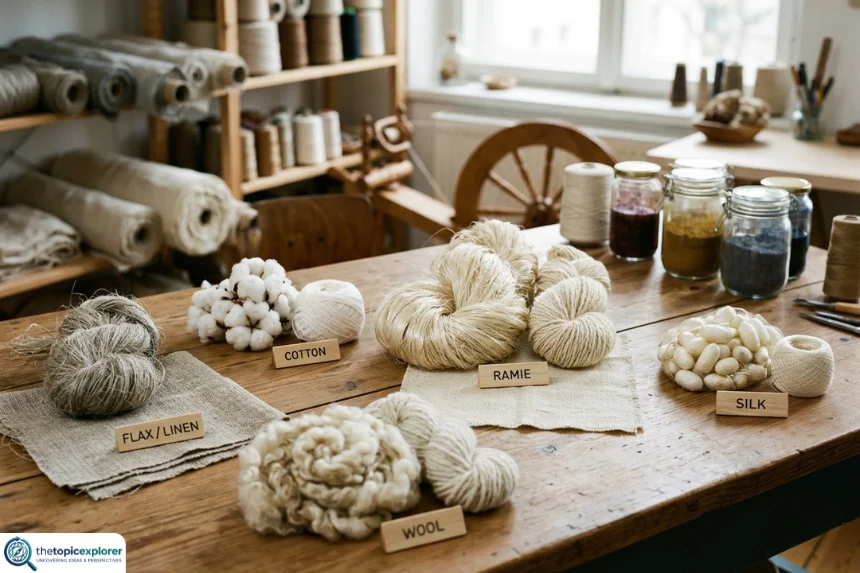
How Ramie Fits Among Other Natural Fibers
Ramie occupies an interesting position in the natural-fiber family.
Like cotton, it is plant derived and cellulose based. Meanwhile, its stem-fiber origin places it closer botanically and structurally to flax, hemp and jute.
Nevertheless, these materials should not be treated as interchangeable.
Each plant produces fibers with different dimensions, surface characteristics and processing requirements. Furthermore, the finished textile depends on far more than the plant alone. Yarn construction, weaving, blending and finishing can dramatically change the appearance and feel of a garment.
The University of Georgia Extension describes ramie as a natural cellulosic fiber and notes characteristics including strength and luster, while also identifying uses in blended textiles.
As a result, one ramie garment may feel crisp and linen-like, while another blend may feel considerably softer.
That variation is one reason checking the complete fiber composition is more useful than judging a garment by the word “ramie” alone.
How Is Ramie Made Into Fabric?
Although ramie is a natural fiber, converting the harvested plant into textile yarn requires several processing stages.
The main challenge is that the useful cellulose fibers do not separate cleanly from the stem on their own. Instead, natural gummy substances hold the fiber bundles together. Therefore, processors must remove much of this material before the fibers can be spun effectively.
A 2024 review in Industrial Crops and Products identifies pectin, hemicellulose and lignin among the non-cellulosic substances surrounding raw ramie fibers. The review explains that degumming is necessary before downstream spinning.
1. Harvesting the Stems
Ramie is grown for the long fibers found in its stems.
Once the plants reach a suitable stage, producers harvest the stems for fiber extraction. The exact harvesting and processing methods can vary according to location, production scale and intended textile quality.
Importantly, the valuable fiber does not come from the leaves or seeds in the same way that cotton fiber develops around cotton seeds.
2. Separating the Fibrous Material
After harvesting, processors separate the fibrous bark portion from the woody stem.
This stage is often described as peeling or decortication.
However, the material obtained at this point still contains substantial natural gums. Consequently, it is not normally ready to be converted directly into fine textile yarn.
3. Degumming the Raw Ramie
Degumming is one of the most important steps in ramie production.
Natural gums bind the individual fiber elements together. Therefore, processors need to remove enough of these substances to obtain clean, separable cellulose-rich fibers suitable for later textile operations.
Different approaches include:
- chemical degumming;
- enzymatic degumming;
- microbial degumming;
- mechanical treatments;
- combined processing systems.
Chemical methods have traditionally played an important role because they can remove gum efficiently. Nevertheless, researchers continue investigating biological and combined techniques that may reduce chemical demand and environmental burdens.
A recent scientific review notes that commonly used ramie degumming systems still face challenges involving processing time, operating costs, environmental pollution and control of fiber quality.
For that reason, degumming should not be treated as a minor cleaning step. It strongly influences both the final fiber quality and the environmental profile of ramie production.
4. Washing and Further Refining
After degumming, the fibers require washing to remove loosened plant substances and processing residues.
Depending on the desired textile, additional treatments may be used to improve cleanliness, color or consistency.
Bleaching may also be incorporated into some production systems when manufacturers want a particularly bright fiber.
However, the exact sequence varies considerably. Therefore, it would be inaccurate to suggest that every ramie textile undergoes one identical industrial process.
5. Preparing and Spinning the Fibers
Next, the cleaned fibers are prepared for spinning.
Fiber preparation can include opening, combing or carding to organize the material and remove unwanted short or irregular portions.
After preparation, the fibers can be spun into yarn.
Ramie’s long fiber structure offers valuable textile properties. At the same time, its stiffness and relatively low elasticity can create manufacturing challenges.
As a result, manufacturers sometimes blend ramie with another fiber before or during yarn production rather than producing a completely pure ramie yarn.
6. Weaving or Otherwise Forming the Textile
Once manufacturers have usable yarn, it can be converted into fabric.
Woven constructions are especially common. However, the finished appearance depends on numerous variables, including:
- yarn thickness;
- twist;
- weave structure;
- ramie percentage;
- other fibers in the blend;
- finishing treatments;
- dyeing;
- garment construction.
Consequently, the phrase ramie fabric does not describe one single surface or texture.
A lightweight ramie blouse may look delicate and slightly lustrous, whereas a heavier ramie-blend jacket may feel considerably firmer.
What Does the Fabric Feel Like?
This plant-based textile is often compared with linen because both materials can have a fresh, crisp and slightly structured character.
However, the exact feel varies depending on processing, weave and fiber blend.
A well-finished fabric may feel:
- smooth;
- crisp;
- cool;
- lightweight;
- dry rather than fuzzy;
- slightly firm;
- subtly lustrous.
Scientific literature also associates the fiber with characteristics such as moisture absorption, heat dissipation and good air permeability.
Therefore, it can work particularly well in lightweight garments designed for warm conditions.
Still, the material is not automatically soft.
Degumming quality, yarn construction, weave and finishing all influence the final hand. In addition, blended versions may feel much softer or more fluid than fabrics containing a very high percentage of the fiber.
How Does It Compare With Linen?
Often, the two materials feel similar, but they are not identical.
Both are bast fibers. Furthermore, each can produce textiles with a crisp hand, natural appearance and strong warm-weather appeal.
Ramie may sometimes look smoother and more lustrous, whereas linen can show a more noticeably slubbed or irregular texture depending on the yarn and weave.
Therefore, the comparison is useful for understanding the general feel, but it should not be treated as a reliable identification method.
In practice, you usually cannot determine the exact fiber content of a garment by touch alone.
Main Advantages of Ramie Fabric
Ramie’s characteristics explain why the fiber continues to attract interest despite the additional processing required to use it.
Ramie Fiber Is Strong
Strength is one of ramie’s most frequently cited advantages.
Research literature consistently describes ramie as a high-strength natural fiber. The 2024 Industrial Crops and Products review also describes degummed ramie as having particularly high mechanical strength among bast fibers.
However, exaggerated marketing claims should be treated carefully.
Statements such as “ramie is exactly eight times stronger than cotton” are difficult to apply universally because measured strength depends on factors such as:
- fiber condition;
- variety;
- moisture;
- processing;
- yarn structure;
- test method;
- fabric construction.
Therefore, a safer conclusion is that ramie is a naturally strong textile fiber, not that every ramie garment is automatically stronger than every cotton, hemp or linen garment.
Garment durability ultimately depends on the complete textile construction.
It Absorbs Moisture
Ramie is also absorbent.
The University of Georgia Extension groups ramie with natural plant fibers and describes plant-source textile fibers as generally strong and absorbent.
Meanwhile, scientific research on ramie specifically reports favorable moisture-absorption characteristics.
This property contributes to the fiber’s usefulness in clothing, especially when combined with an open or lightweight fabric construction.
It Can Feel Cool in Warm Weather
Ramie’s absorbency, low elasticity and ability to form breathable lightweight fabrics can create a cool-feeling textile.
For that reason, designers may use it for:
- summer shirts;
- loose blouses;
- warm-weather trousers;
- dresses;
- lightweight jackets.
However, breathability depends partly on fabric construction.
A loosely woven lightweight ramie textile and a densely constructed heavy ramie blend will not provide identical airflow simply because they contain the same plant fiber.
It Has a Distinctive Luster
Another attractive characteristic is ramie’s natural-looking sheen.
Properly processed fibers can appear bright and smooth rather than matte or fuzzy.
Consequently, ramie can create garments that combine the visual character of a plant-based material with a relatively refined appearance.
That feature also helps distinguish some ramie textiles visually from rougher natural-fiber fabrics.
It Holds a Crisp Shape
Ramie’s relatively firm character can be an advantage when designers want structure.
For example, it can work well for:
- crisp shirts;
- structured blouses;
- fuller skirts;
- tailored summer pieces;
- garments with visible shape.
Nevertheless, the same property becomes a disadvantage when a designer wants very fluid movement or high stretch.
Therefore, whether ramie’s firmness is a benefit depends on the intended garment.
What Are the Disadvantages of Ramie?
No fiber performs perfectly in every situation.
Ramie’s strengths come with several practical limitations.
Ramie Has Low Elasticity
One important limitation is its low natural elasticity.
The University of Georgia Extension identifies poor elasticity as a general characteristic of natural plant fibers including ramie.
As a result, pure ramie is not naturally suited to applications where the fabric itself needs significant stretch and recovery.
Manufacturers can address this limitation through:
- garment design;
- knitted construction;
- blending;
- adding elastic fibers.
Therefore, a stretchy garment containing ramie probably achieves most of its stretch through construction or another fiber rather than ramie alone.
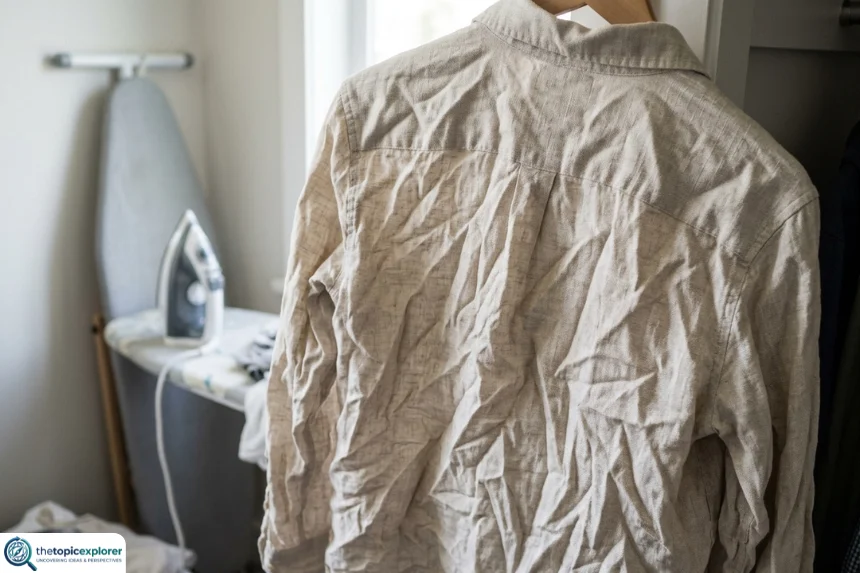
It Can Wrinkle Easily
Wrinkling is another common issue.
Plant-based cellulose fibers generally have limited wrinkle recovery compared with many synthetic materials. University of Georgia Extension similarly lists poor wrinkle resistance among characteristics of plant fibers.
Ramie’s crisp character may make creases particularly visible.
For some shoppers, those wrinkles contribute to the natural appearance of the fabric. Others may prefer a blend designed to recover more easily.
Pure Ramie May Feel Stiff
The same rigidity that allows ramie to hold shape can make some fabrics feel too firm for certain applications.
A poorly processed fabric may also feel harsher than expected.
Therefore, anyone shopping online should be cautious about relying on the fiber name alone. A garment’s ramie percentage, weave and finish provide more useful clues about how it may actually feel.
Abrasion Can Be a Weakness
High tensile strength does not mean a fiber performs equally well against every type of physical stress.
Technical literature notes low abrasion resistance among ramie’s limitations.
This illustrates an important textile principle: fiber strength and abrasion resistance are not the same property.
A fiber may resist being pulled apart strongly while still reacting differently to repeated rubbing, bending or surface wear.
Processing Can Be Difficult
Ramie’s natural gums create another disadvantage before the material even reaches consumers.
Raw fiber requires substantial cleaning and degumming before textile use. Consequently, processing can add time, cost and environmental burdens.
The need for degumming is one of the major differences between ramie as a plant resource and ramie as a practical commercial textile.
Ramie vs. Linen: What Is the Difference?
Ramie and linen are easy to confuse because both belong to the bast-fiber category.
However, they come from entirely different plants.
Ramie primarily comes from Boehmeria nivea.
Linen comes from flax, principally Linum usitatissimum.
Therefore, ramie should not technically be presented as a type of linen.
| Feature | Ramie | Linen |
|---|---|---|
| Main plant | Boehmeria nivea | Flax |
| Fiber source | Stem/bast | Stem/bast |
| Fiber category | Natural cellulose fiber | Natural cellulose fiber |
| Typical character | Crisp, smooth, often lustrous | Crisp, often textured |
| Natural stretch | Low | Low |
| Moisture absorption | Good | Good |
| Warm-weather use | Common | Common |
| Wrinkling | Common | Common |
| Same fiber? | No | No |
Because both are plant-derived bast fibers, they share several broad characteristics.
Nevertheless, differences in fiber structure and processing mean they should remain separate categories on a textile label.
How Does It Compare With Cotton?
Cotton and ramie are both natural cellulosic plant fibers. However, they develop in different parts of their respective plants.
Cotton fibers grow around the seeds, whereas the other material comes from stem tissues.
This difference influences harvesting, extraction, processing and the characteristics of the finished textile.
| Feature | Ramie | Cotton |
|---|---|---|
| Fiber location | Stem/bast | Around seeds |
| Fiber type | Bast fiber | Seed fiber |
| Typical feel | Crisp and firm | Generally softer |
| Luster | Often noticeable | Usually more subdued |
| Elasticity | Low | Low |
| Absorbency | Good | Good |
| Common in blends | Yes | Yes |
| Casual clothing use | Less common | Extremely common |
Cotton generally feels softer and more familiar to many consumers.
The bast fiber, meanwhile, can contribute structure, crispness and visible luster.
For this reason, manufacturers sometimes combine the two rather than treating them as competing materials.
How Does It Compare With Hemp?
Both materials are natural bast fibers.
Therefore, their useful textile fibers come from stem tissues rather than seed coverings.
Nevertheless, they originate from different plant species and should not be treated as identical textiles.
Ramie is often valued for a fine, lustrous appearance and useful moisture-handling properties. Hemp has its own mechanical and textile characteristics, which can also vary considerably depending on processing.
Most importantly, finished fabrics made from the two fibers may sometimes look similar.
Consequently, appearance alone is not a reliable way to identify the exact fiber.
Why Are Fiber Blends So Common?
Blending allows manufacturers to combine useful characteristics from different materials.
This can be especially helpful when a naturally crisp fiber would otherwise feel too firm for the intended garment.
With Cotton
A cotton blend can combine structured character with a softer and more familiar hand.
Depending on the percentages, the finished fabric may feel less stiff while still retaining some crispness and visual definition.
With Viscose
Viscose generally offers a softer, more fluid drape.
Therefore, combining it with a firmer bast fiber can produce a fabric that moves more easily while retaining some structure.
For example, a blended dress may drape very differently from a tightly woven shirt made with a much higher percentage of the plant fiber.
With Linen
Since both materials are bast fibers, designers may combine them when they want natural texture and warm-weather appeal.
However, the blend still contains two distinct fibers. One does not become the other simply because they share similar characteristics.
With Synthetic Fibers
Manufacturers may also add synthetic fibers to improve particular performance qualities.
Synthetic components can contribute characteristics such as:
- improved wrinkle recovery;
- greater abrasion resistance;
- easier wash-and-wear performance;
- better crease retention;
- added stretch in certain blends.
Therefore, polyester or another manufactured fiber may compensate for some limitations of a crisp natural textile.
However, adding synthetic material also changes the environmental and end-of-life profile of the finished product.
Common Uses
The combination of strength, absorbency, structure and visual appeal allows ramie to serve several textile purposes.
In clothing, it may appear in:
- shirts;
- blouses;
- dresses;
- skirts;
- trousers;
- lightweight jackets;
- summer suits;
- scarves and accessories.
Home-textile applications may include:
- curtains;
- table coverings;
- decorative fabrics;
- upholstery blends;
- other household textiles.
The fiber also has uses beyond conventional fashion.
Researchers have investigated it as a reinforcement material in composites because of its mechanical properties.
Therefore, its applications extend from traditional woven textiles to modern materials research.
Is It Suitable for Summer Clothing?
Yes. Lightweight fabrics made from this fiber can work particularly well in warm conditions when the construction allows good airflow.
Useful summer characteristics may include:
- moisture absorption;
- a relatively cool hand;
- lightweight fabric construction;
- a crisp structure that may sit away from the skin;
- good air permeability in suitable weaves.
Research has also associated the material with moisture absorption, heat dissipation and airflow.
Still, fiber content is only one factor.
A lightweight, loosely constructed shirt may feel much cooler than a dense blended jacket containing the same plant fiber.
Therefore, shoppers should consider fabric weight, weave, fiber content and garment fit together rather than assuming that every item will perform the same way.
Does Fiber Content Determine Quality?
No. A textile can contain ramie and still vary widely in overall quality.
Several factors influence the finished garment:
- fiber preparation;
- degumming quality;
- yarn consistency;
- weaving;
- fiber percentage;
- finishing;
- stitching;
- garment construction.
Consequently, both affordable and premium clothing can contain this material.
A well-made fabric may appear smooth, crisp and refined. Conversely, poor processing or weak garment construction can result in excessive stiffness or disappointing performance.
For that reason, a fiber-content label should be treated as information about composition rather than a guarantee of quality.
What About Sustainability?
This plant-derived textile has several characteristics that can make it appealing from an environmental perspective. It comes from a renewable biological resource, and the fiber itself is cellulose based.
However, ramie should not automatically be described as eco-friendly.
The overall environmental impact depends on cultivation as well as the methods used to convert the harvested stems into usable textile fiber.
Processing Is the Main Environmental Consideration
Raw fibers contain natural gums that must be removed before efficient spinning can take place.
This treatment is known as degumming.
Depending on the production method, the process may involve:
- water;
- heat;
- energy;
- alkalis;
- enzymes;
- other processing agents.
Therefore, environmental performance can vary considerably from one production system to another.
A published life-cycle assessment found that degumming, together with later carding and spinning stages, contributed significantly to environmental impacts within the production system examined.
As a result, the most accurate way to evaluate sustainability is to consider the entire production chain, rather than judging the fabric only by its plant origin.
For further technical context, see this life-cycle assessment of ramie fiber production.
Researchers continue exploring biological and microbial degumming methods because these approaches may reduce reliance on harsher chemical treatments.
As a result, the most accurate conclusion is:
Ramie has sustainability potential, but its environmental impact depends on cultivation, degumming, energy use, chemicals, dyeing, finishing, transport and garment lifespan.
Natural does not automatically mean low impact.
Is Ramie Biodegradable?
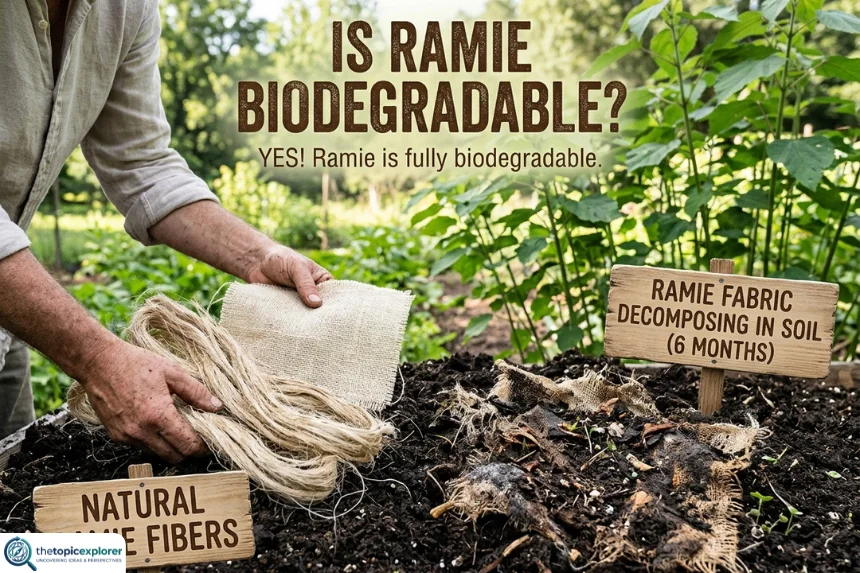
Pure ramie fiber is plant derived and cellulose based. Therefore, untreated ramie can biodegrade under suitable environmental conditions.
However, a finished garment may not behave like pure fiber.
For example, clothing can contain:
- polyester thread;
- elastane;
- synthetic linings;
- resin finishes;
- coatings;
- plastic buttons;
- zippers;
- blended synthetic fibers.
Consequently, a garment labeled “ramie blend” should not automatically be described as fully biodegradable.
The complete fiber composition and finishing treatments matter.
Is Ramie Vegan?
Ramie itself is plant based, so the fiber does not come from animals.
Therefore, pure ramie is generally compatible with vegan textile preferences.
Still, a finished garment could contain non-ramie components such as:
- wool;
- silk;
- leather trim;
- shell buttons;
- animal-derived decorative materials.
For that reason, shoppers who specifically want vegan clothing should check the complete material list rather than relying only on the main fiber name.
How to Care for Ramie Fabric
The safest approach is always to follow the garment’s care label first.
This advice is especially important because ramie is frequently blended with other fibers. A pure ramie shirt and a ramie-viscose lined jacket may require different treatment.
Washing Ramie
When the care label allows machine or hand washing, gentler treatment can help preserve the garment.
Useful precautions may include:
- using a mild detergent;
- selecting a gentle wash cycle;
- avoiding unnecessarily hot water;
- separating light and dark colors;
- avoiding excessive twisting or wringing.
However, the manufacturer’s instructions should take priority over general advice.
Drying
Air drying may be suitable for many washable ramie garments.
Whenever possible:
- reshape the garment while damp;
- smooth obvious creases;
- avoid excessive high heat;
- follow any specific drying directions on the label.
High heat can affect more than the ramie itself because trims, linings and blended fibers may respond differently.
Ironing Ramie
Ramie can wrinkle, particularly in crisp woven garments.
If the label permits ironing, pressing the fabric while it remains slightly damp may make creases easier to remove.
Use a temperature appropriate for the full fabric composition.
For blends, the most heat-sensitive component generally deserves the most caution.
Should Ramie Be Dry-Cleaned?
Not automatically.
Some ramie garments may be washable, while others may require professional cleaning because of:
- tailoring;
- linings;
- dyes;
- interfacings;
- embellishments;
- fiber blends.
Therefore, the care label remains more reliable than the word “ramie” alone.
Does Ramie Shrink?
Ramie garments can change dimension under unsuitable laundering conditions, although the amount varies by fabric construction, finishing and fiber blend.
For this reason, it is not accurate to give one universal shrinkage percentage for all ramie fabric.
Higher temperatures and aggressive washing may increase dimensional changes in some textiles.
Therefore:
- follow the care label;
- avoid unnecessary heat;
- do not assume every ramie blend behaves the same way.
Pre-treatment during manufacturing can also influence how much a finished garment changes after washing.
Does Ramie Wrinkle?
Yes, ramie can wrinkle noticeably.
Its relatively low elasticity means that once the fabric folds or creases, it may not recover as easily as many synthetic fibers.
Nevertheless, wrinkle behavior depends on:
- weave;
- garment construction;
- fiber blend;
- finishing treatment;
- fabric weight.
A ramie-polyester blend, for example, may recover from creasing more effectively than a high-percentage ramie woven fabric.
Therefore, consumers who dislike visible wrinkles may prefer blended ramie rather than a very crisp pure fabric.
Does Ramie Get Softer With Washing?
Some ramie textiles can feel softer after use and laundering.
However, the extent of softening depends on how the fabric was processed and finished.
A garment that begins with a crisp hand may gradually relax. On the other hand, an especially stiff textile will not necessarily become dramatically soft simply through repeated washing.
Fiber blends also influence the result.
Therefore, it is safer to treat softening as a possible characteristic rather than a guaranteed outcome.
How to Identify Ramie When Shopping
The easiest and most reliable method is to read the fiber-content label.
Trying to identify ramie by touch alone is unreliable because it can resemble:
- linen;
- hemp;
- cotton-linen blends;
- viscose;
- other crisp plant-based fabrics.
A product description may say:
- 100% ramie;
- ramie-cotton blend;
- ramie-viscose blend;
- ramie-linen blend;
- ramie with polyester.
These labels give much more useful information than appearance alone.
What Does “100% Ramie” Mean?
A label stating 100% ramie normally means that the declared textile fiber content is entirely ramie rather than a ramie blend.
However, this does not necessarily mean every physical component of the garment is ramie.
For example, the item may still contain:
- sewing thread;
- buttons;
- zippers;
- labels;
- interfacing;
- decorative elements.
Therefore, “100% ramie” is best interpreted as a fiber-content statement about the relevant textile material.
What Does “Ramie Blend” Mean?
A ramie blend contains ramie combined with one or more other textile fibers.
For example:
55% ramie, 45% cotton
would mean the fabric combines both plant fibers.
Blending can alter several characteristics, including:
- softness;
- drape;
- wrinkle resistance;
- stretch;
- durability;
- cost;
- ease of care.
Therefore, the ramie percentage can help explain why two garments carrying the same fiber name feel completely different.
What Should You Look for When Buying Ramie Clothing?
Instead of looking only at the word ramie, check the complete garment information.
Consider:
Fiber Percentage
A high ramie percentage may deliver more of its crisp, structured character.
Meanwhile, lower percentages may create a softer or more fluid textile depending on the companion fiber.
Fabric Weight
Lightweight ramie can be particularly suitable for warm-weather shirts and dresses.
Heavier fabric may work better for jackets, trousers or structured garments.
Weave and Construction
Fabric structure influences breathability, transparency, durability and drape.
Therefore, two 100% ramie garments can perform differently.
Care Instructions
Check whether the garment requires:
- hand washing;
- machine washing;
- cold water;
- professional cleaning;
- low-temperature ironing.
This is particularly important when buying clothing online.
Garment Purpose
Ramie may work especially well when you want a crisp summer garment.
However, another material may be more suitable if you need:
- high stretch;
- strong wrinkle resistance;
- very fluid drape;
- athletic performance.
Is Ramie Worth Buying?
Ramie can be a good choice for shoppers who appreciate natural plant fibers and crisp warm-weather textiles.
You may particularly like it if you want:
- a linen-like appearance;
- breathable fabric;
- subtle natural luster;
- relatively structured clothing;
- a plant-derived fiber;
- something less common than cotton.
However, it may be less suitable for someone who strongly dislikes ironing, wants substantial stretch or prefers very soft, fluid fabrics.
Therefore, whether ramie is “good” depends more on the garment and intended use than on the fiber name alone.
Frequently Asked Questions
What is ramie made from?
This natural fiber comes primarily from the stems of Boehmeria nivea, a plant in the nettle family. Its cellulose-rich bast fibers are separated, degummed and prepared for textile production.
Is it a natural fabric?
Yes. Ramie is a natural plant-derived textile fiber. However, garments may also contain cotton, viscose, polyester or other materials when manufacturers use a blend.
Is it the same as linen?
No. Linen comes from flax, whereas this fiber comes mainly from Boehmeria nivea. Both are bast fibers, which explains some similarities in their appearance and feel.
Which is better: ramie or linen?
Neither is universally better.
The first can offer a smooth, crisp and slightly lustrous appearance. Linen, meanwhile, has its own distinctive texture and long history in clothing. Therefore, the better choice depends on the garment, weave, processing and personal preference.
How does it compare with cotton?
The two materials have different strengths.
Ramie can provide crispness, structure and subtle luster, while cotton is generally associated with a softer and more familiar feel. As a result, the best option depends on how the fabric will be used.
Is it suitable for hot weather?
Yes. Lightweight fabrics made from this fiber can work well in warm conditions because they can be absorbent and breathable.
However, weave density, fabric weight and garment fit also affect comfort.
Does the fabric stretch?
It has relatively low natural elasticity.
Therefore, garments that stretch usually depend on their construction or on additional fibers such as elastane.
Does it wrinkle easily?
It can. The fiber’s low elasticity and crisp structure may make creases noticeable.
Nevertheless, blending and finishing treatments can improve wrinkle recovery.
Is the fabric soft?
The texture varies.
Some versions feel smooth and refined, while others are noticeably crisp or firm. Processing quality, weave, finishing and fiber percentage all influence the final feel.
Is it stronger than cotton?
Ramie is recognised as a strong natural fiber. However, there is no single numerical comparison that applies to every cotton and ramie textile.
Fiber condition, yarn structure, processing and testing methods can all affect measured strength.
Is it expensive?
Prices vary considerably.
Degumming and textile processing can add complexity to production. However, final garment prices also depend on the brand, construction, fiber blend, finishing and manufacturing location.
Therefore, the material should not automatically be considered either luxury or budget.
Is it breathable?
It can be used to produce breathable fabrics, especially lightweight woven textiles.
Still, airflow depends strongly on fabric density and garment construction.
Can it be machine washed?
Some garments can be machine washed, whereas others need gentler care.
Always follow the manufacturer’s care label because blends, dyes, finishes and garment construction can change the recommended washing method.
Is ramie eco-friendly?
It has potential environmental advantages because it comes from a renewable plant source. However, processing—particularly degumming—may require water, energy and chemicals.
Therefore, environmental performance depends on the specific production system rather than the fiber being automatically eco-friendly.
Is it biodegradable?
Pure, untreated plant fiber is cellulose based and can biodegrade under suitable conditions.
However, synthetic blends, coatings, dyes, sewing thread and garment hardware can affect how a finished product behaves at the end of its life.
Why is it blended with cotton?
Manufacturers may combine the two fibers to balance crisp structure with cotton’s softer feel.
Blending can also influence drape, comfort, wrinkle behaviour and manufacturing performance.
What is another name for the fiber?
China grass is an established common name. The main textile-producing plant is Boehmeria nivea.
Final Answer: What Is Ramie?
So, what is ramie?
It is a natural cellulose-based bast fiber obtained mainly from the stems of Boehmeria nivea, a member of the nettle family. After harvesting, manufacturers separate and degum the fibers before preparing them for spinning and textile production.
The finished material can be strong, absorbent, crisp and slightly lustrous. Because of these qualities, it is used in shirts, dresses, trousers, household textiles and blended fabrics.
At the same time, it is not another name for linen. Its environmental impact also depends on how the crop and textile are processed.
When evaluating a garment, consider the fiber percentage, weave, construction, care requirements and intended use rather than focusing on the material name alone.
For shoppers who prefer breathable, structured and plant-derived textiles, ramie can provide an interesting alternative to cotton and linen.
