

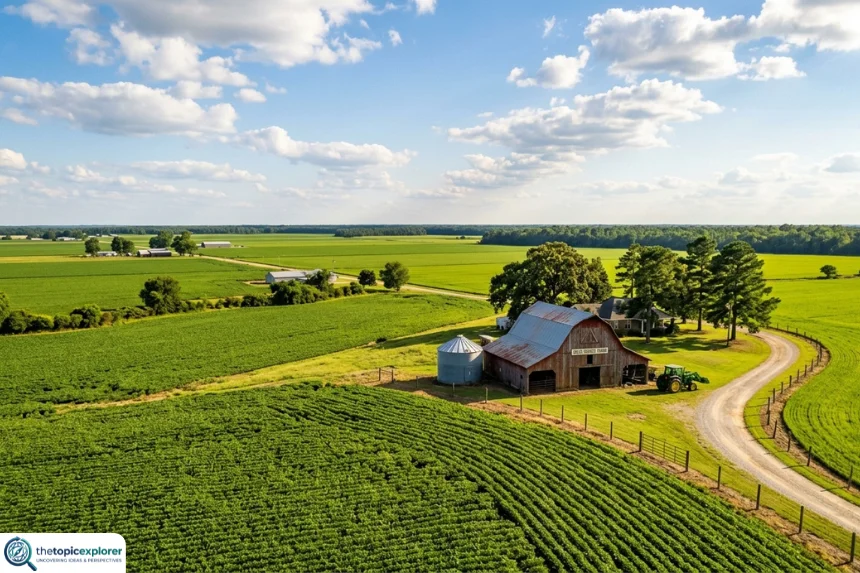

Stuttgart Arkansas is a small city in Arkansas County, situated on the Grand Prairie of southeastern Arkansas. Although the community is now strongly associated with agriculture, rice farming, and waterfowl culture, its origins go back to a German settlement established during the late nineteenth century.
Stuttgart developed in stages. German settlers arrived in the area in 1878, the Stuttgart name was attached to a local post office in 1880, and railroad development changed the location and growth of the community during the 1880s. Later, Stuttgart became an important commercial and government center for the surrounding Grand Prairie.
The city recorded 8,264 residents in the 2020 Census, while the U.S. Census Bureau estimated its population at 7,525 in 2025.
What Is Stuttgart, Arkansas?
Stuttgart is a city in Arkansas County on the Arkansas Grand Prairie. It traces its beginnings to a German colony established in 1878 and developed into a regional center for agriculture, commerce, transportation, and government.
The city serves as the county seat for the northern district of Arkansas County, while DeWitt serves the southern district.
Today, Stuttgart is particularly well known for the agricultural and outdoor traditions that developed around the Grand Prairie. However, understanding the city requires going back to its German immigrant roots and the railroad expansion that helped determine where modern Stuttgart developed.
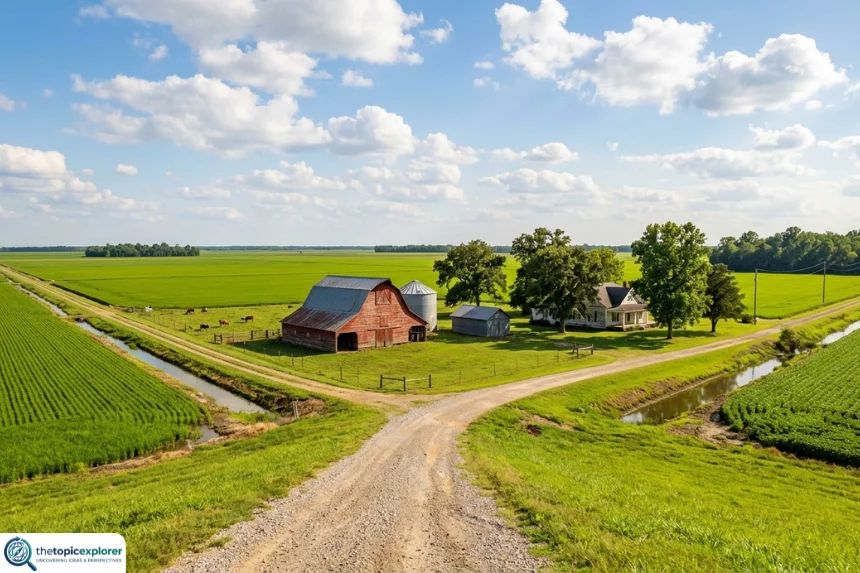
Stuttgart Arkansas Quick Facts
| Detail | Information |
|---|---|
| City | Stuttgart |
| State | Arkansas |
| County | Arkansas County |
| Region | Arkansas Grand Prairie |
| 2020 Census population | 8,264 |
| 2025 population estimate | 7,525 |
| Land area | About 7.41 square miles |
| Early settlement | 1878 |
| Founder associated with the city | Rev. George Adam Buerkle |
| Stuttgart post office established | 1880 |
| Railroad reached the area | 1883 |
| Town platted | 1884 |
| Northern county seat since | 1913 |
| Name origin | Stuttgart, Germany |
Several dates appear in accounts of Stuttgart’s founding because the community did not emerge through a single event. Instead, settlement, naming, railroad development, and formal town planning occurred over several years.
Where Is Stuttgart, Arkansas?
Stuttgart is located in Arkansas County in southeastern Arkansas.
More specifically, it sits within the Arkansas Grand Prairie, a distinctive landscape that forms part of the larger Mississippi Delta region.
The Grand Prairie historically contained extensive open grasslands. Consequently, its appearance differed from many of the heavily wooded landscapes found elsewhere in Arkansas.
Over time, agriculture transformed much of the original prairie. Nevertheless, the region’s relatively flat terrain and particular soil and groundwater conditions continued to influence how communities developed.
Stuttgart became one of the Grand Prairie’s principal urban and commercial centers.
Therefore, its location is important for understanding both its history and its eventual agricultural significance.
What County Is Stuttgart In?
Stuttgart is located in Arkansas County.
Unlike most Arkansas counties, Arkansas County has two judicial districts with separate county seats.
Stuttgart serves the northern district, while DeWitt serves the southern district.
Stuttgart received its county-seat role in 1913.
This development strengthened the city’s importance to the surrounding region. Residents from nearby rural communities could travel to Stuttgart for government, legal, commercial, and professional services.
As a result, the city increasingly functioned as more than an agricultural settlement.
Stuttgart Arkansas Population
The population of Stuttgart depends on whether a reader is looking at the official decennial Census or a newer annual estimate.
The 2020 Census counted 8,264 residents.
However, the U.S. Census Bureau’s July 1, 2025 estimate was 7,525 residents.
Therefore, both figures can appear in accurate sources while describing different measurements.
For current informational content, the clearest presentation is:
- 2020 Census: 8,264 residents
- 2025 estimate: 7,525 residents
The Census Bureau also reports approximately 7.41 square miles of land area for Stuttgart.
Although its population makes Stuttgart a relatively small American city, its influence on the surrounding Grand Prairie has historically extended well beyond its municipal boundaries.
The Arkansas Grand Prairie Setting
Stuttgart’s history is closely tied to the Grand Prairie.
Before extensive agricultural development, the region contained broad stretches of native prairie. Early settlers raised crops and livestock while adapting to environmental conditions that differed from nearby forested areas.
The landscape eventually became extremely important to commercial agriculture.
In particular, relatively flat land, groundwater resources, and soil conditions capable of holding water would later prove valuable for irrigated farming.
However, the rise of rice agriculture came after Stuttgart had already begun taking shape.
During its earliest years, immigration and transportation were equally important to the community’s development.
Who Founded Stuttgart, Arkansas?
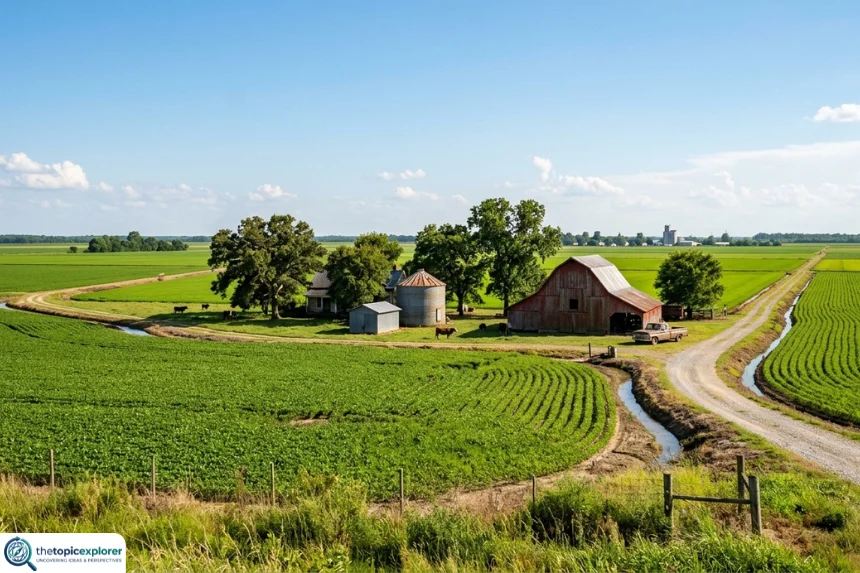
Rev. George Adam Buerkle is regarded as Stuttgart’s founding figure.
Buerkle was born in Germany and later immigrated to the United States.
By the late 1870s, he was looking for a location where a German colony could be established.
In 1878, Buerkle purchased thousands of acres from the former Gum Pond Plantation and brought the first group of settlers to the Grand Prairie.
A second group, including members of Buerkle’s own family, arrived the following year.
These settlers created the foundation of the community that would eventually become Stuttgart.
However, the original settlement was not located exactly where the center of modern Stuttgart later developed.
The railroad would change that.
Why Is Stuttgart, Arkansas, Named Stuttgart?
The Arkansas city takes its name from Stuttgart, Germany.
In 1880, Buerkle established a post office in his home and gave it the Stuttgart name.
The choice reflected his German background and the origins of the immigrant community he was helping establish.
Therefore, the name is more than an unusual European reference on an Arkansas map.
It preserves part of the city’s immigrant history.
Stuttgart’s early German connection also explains why accounts of the community’s origins frequently begin with Buerkle rather than with later developments in rice farming or duck culture.
When Was Stuttgart Founded?
There is no need to force Stuttgart’s beginnings into one date.
Three milestones are particularly important.
1878: The Settlement Begins
Buerkle purchased land and brought a group of German settlers to the Grand Prairie.
1880: Stuttgart Gets Its Name
A post office was established and named Stuttgart.
1884: The Town Is Platted
The developing community was formally laid out as a town.
Therefore, a statement such as “Stuttgart was founded in 1880” is incomplete.
A more accurate summary is:
Stuttgart traces its settlement to 1878, received its name through a post office established in 1880, and was formally platted in 1884.
How the Railroad Changed Stuttgart
Transportation played a decisive role in shaping the modern city.
In 1883, the Texas & St. Louis Railway completed a route through the area between Pine Bluff and Clarendon.
However, the tracks did not run directly through Buerkle’s original settlement.
That could have left the community commercially isolated.
Instead, Buerkle owned land beside the new rail line. He established a small structure near the tracks bearing the Stuttgart name, and the post office shifted toward that location.
This railroad-side site became the foundation of present-day Stuttgart.
The development demonstrates how powerful railroads could be in nineteenth-century town building.
A settlement with convenient rail access could move:
- passengers;
- mail;
- agricultural products;
- construction materials;
- merchandise.
Consequently, businesses and residents increasingly concentrated closer to the tracks.
Stuttgart Was Platted in 1884
The town was formally platted in 1884.
However, significant growth did not occur immediately.
Expansion accelerated beginning around 1887, when developers and businessmen promoted Stuttgart and the surrounding Grand Prairie to prospective settlers.
Railroad transportation made such promotion more practical because visitors could travel to the area more easily.
Businesses followed.
Banks, hotels, stores, professional services, schools, churches, and other institutions gradually helped Stuttgart take on the characteristics of an established town.
Thus, railroad access did more than provide transportation.
It helped transform Stuttgart from an immigrant agricultural settlement into a commercial community.
From Small Settlement to Regional Center
By the beginning of the twentieth century, Stuttgart had developed several advantages.
It had a growing business district, railroad access, surrounding agricultural land, and an expanding role as a service center for nearby communities.
Then, in 1913, Stuttgart became the county seat for the northern judicial district of Arkansas County.
That decision further strengthened its regional role.
People traveled to Stuttgart not only to buy and sell goods but also to handle government and legal matters.
Meanwhile, another economic transformation was already beginning.
Successful rice cultivation on the Grand Prairie during the early twentieth century would reshape Stuttgart’s economy, landscape, and national reputation.
That development ultimately helped create the Stuttgart identity recognized across Arkansas today.
How Rice Transformed Stuttgart
Rice changed Stuttgart more than almost any other agricultural development.
By the beginning of the twentieth century, the city already had railroad access, businesses, and a growing population. However, successful commercial rice production gave the surrounding Grand Prairie an entirely new economic direction.
In 1904, W. H. Fuller of Lonoke County and his brother-in-law, John Morris of Carlisle, successfully grew rice on the Grand Prairie.
That experiment demonstrated that the prairie could support large-scale rice production.
Only a few years later, Stuttgart began developing the businesses and institutions needed to process and market the crop.
Therefore, rice did not simply become another local farm product. It helped reshape the economy of the entire region.
Why Rice Grew Well on the Grand Prairie
The Grand Prairie had several characteristics that made irrigated rice farming possible.
The landscape was relatively flat, which made it easier to manage water across agricultural fields.
Meanwhile, the region contained soils with dense layers that slowed the downward movement of water. That characteristic helped farmers maintain the flooded conditions traditionally associated with rice cultivation.
Groundwater was also available for irrigation.
Together, these features created an environment where rice could be produced on a commercial scale.
However, farmers still needed:
- irrigation systems;
- wells;
- levees;
- milling facilities;
- improved seed varieties;
- knowledge about pests and disease;
- reliable markets.
As those systems developed, rice became increasingly important to Stuttgart and the surrounding countryside.
Stuttgart’s First Rice Mill
Successful rice production quickly created demand for local processing.
In 1907, the Stuttgart Rice Mill Company constructed Mill A, described in Arkansas historical records as the first rice mill in the area.
This was a major economic step.
Before local milling capacity existed, growers faced greater difficulty moving harvested rice through the production chain.
A nearby mill allowed the crop to be processed closer to where it was grown.
Consequently, Stuttgart became increasingly useful not only to farmers but also to merchants, processors, investors, and agricultural businesses.
Rice was beginning to turn the city into a specialized agricultural center.
The Rice Growers’ Association and Rice Carnival
Agricultural organization followed quickly.
In 1909, the Rice Growers’ Association of Arkansas was formed to represent and inform farmers.
That same year, Stuttgart hosted its first Rice Carnival.
The event promoted Arkansas rice while bringing visitors and residents together around the industry that was rapidly changing the Grand Prairie.
The Rice Carnival is important because it shows that Stuttgart’s agricultural identity developed into civic culture very early.
Rice was no longer simply something grown outside town.
It had become part of how Stuttgart presented itself.
This tradition of connecting agriculture with public celebration eventually helped create some of the city’s best-known modern events.
Rice Remains Important to Arkansas Agriculture
Stuttgart’s rice history is not merely a story from the early twentieth century.
Arkansas remains the leading rice-producing state in the United States.
In 2025, Arkansas accounted for about 45% of total U.S. rice production, according to the University of Arkansas System Division of Agriculture.
That statewide dominance helps explain why Stuttgart continues to hold such a prominent place in the rice industry.
The city sits within one of the most historically important rice-producing regions in the country.
However, modern rice farming is substantially more scientific than it was when farmers first experimented with the crop on the Grand Prairie.
Research now plays a central role.
Rice Research Near Stuttgart
One of Stuttgart’s most important agricultural institutions is the Rice Research & Extension Center, located east of the city.
The center is operated by the University of Arkansas System Division of Agriculture.
Its mission focuses on developing and sharing practical methods for sustainable rice production.
Researchers study areas including:
- rice breeding;
- agronomy;
- soil science;
- plant diseases;
- insects;
- irrigation;
- crop management;
- grain quality;
- agricultural economics.
Rice remains the center’s main focus, although researchers also work with soybeans, corn, grain sorghum, and wheat.
This makes Stuttgart more than a place where rice is grown.
It is also a center where scientists help determine how rice may be grown more efficiently in the future.
From Experiment Station to Modern Research Center
The history of rice research near Stuttgart stretches back more than a century.
In 1923, the Arkansas General Assembly authorized a rice experiment station in the center of the state’s rice-producing region.
Funding later allowed the purchase of a 160-acre rice farm between Stuttgart and Almyra in 1925, and research work began there in December 1926.
Early researchers studied practical questions such as:
- seeding rates;
- planting dates;
- rice varieties;
- fertilizer use;
- weed control;
- insects;
- plant diseases.
Over the decades, the research operation expanded dramatically.
In 1981, the facility was renamed the Rice Research & Extension Center to reflect its broader mission.
Today, it encompasses more than 1,000 acres and continues to serve Arkansas farmers through research and extension work.
Stuttgart’s Role in Modern Rice Innovation
The research center has contributed to the development of numerous rice varieties and management recommendations.
Scientists use both traditional field research and modern tools such as genetic markers to identify useful traits.
These traits can include:
- disease resistance;
- grain quality;
- plant height;
- aroma;
- herbicide tolerance;
- cooking characteristics.
Research also addresses questions that earlier generations of farmers could not have anticipated.
For example, current work includes issues involving sustainability, water use, changing temperatures, production costs, and new technologies.
Therefore, Stuttgart’s connection to rice has evolved from early farming experiments into a sophisticated research and agricultural-industry network.
Why Is Stuttgart Known as the Rice and Duck Capital?
Stuttgart is widely promoted as the “Rice and Duck Capital of the World.”
The phrase is a civic and tourism nickname rather than an official international ranking.
Nevertheless, it summarizes two parts of Stuttgart’s identity that became closely connected.
Rice fields dominate much of the surrounding agricultural landscape.
At the same time, southeastern Arkansas lies within a major waterfowl migration region.
During autumn and winter, large numbers of ducks move through Arkansas along the Mississippi Flyway.
The combination of wetlands, flooded timber, reservoirs, and agricultural fields created extensive waterfowl habitat around the Grand Prairie.
As a result, rice farming and duck culture became linked in Stuttgart’s public identity.
How Rice Fields Became Part of Waterfowl Culture
Rice agriculture altered the landscape in ways that also affected migrating birds.
Historically, harvested rice sometimes remained in fields while drying, leaving grain that attracted waterfowl.
Even with modern harvesting methods, rice stubble and waste grain can provide food in agricultural areas.
Flooded fields can also create shallow-water habitat used by ducks and other migratory birds.
This does not mean every rice field automatically functions as high-quality wildlife habitat.
Water levels, farming practices, weather, food availability, and nearby natural wetlands all matter.
However, the relationship between rice agriculture and wintering waterfowl became particularly visible on the Grand Prairie.
That connection helped Stuttgart develop a national reputation among duck hunters.
Why Duck Hunting Became So Important
The Stuttgart region lies in the path of major seasonal waterfowl movements.
Consequently, hunters have traveled to the area for generations.
The surrounding landscape can include:
- flooded agricultural fields;
- bottomland hardwood forests;
- reservoirs;
- wetlands;
- bayous.
Each habitat offers different conditions for waterfowl.
Duck hunting eventually became an important part of Stuttgart’s seasonal tourism economy and local culture.
Restaurants, lodging, outdoor retailers, guides, landowners, and other businesses can all experience increased activity during waterfowl season.
Still, Stuttgart should not be described only as a hunting town.
The duck tradition is one part of a broader community shaped by agriculture, research, manufacturing, history, and regional services.
Bayou Meto and Stuttgart’s Waterfowl Reputation
One major nearby public waterfowl area is the George H. Dunklin Jr. Bayou Meto Wildlife Management Area.
The Arkansas Game and Fish Commission manages the area primarily to provide wintering habitat for migrating waterfowl while also supporting other wildlife.
Bayou Meto covers more than 33,000 acres in Arkansas and Jefferson counties.
Seasonal flooding of bottomland hardwood forests provides feeding habitat for ducks and creates the flooded-timber hunting conditions strongly associated with Arkansas waterfowl culture.
Stuttgart is the nearest city providing significant restaurants and other services for visitors to the management area.
Therefore, the city’s hunting reputation is closely connected to both private agricultural land and nearby public wildlife habitat.
The World’s Championship Duck Calling Contest
One of Stuttgart’s most distinctive traditions began in 1936.
That year, the first World’s Championship Duck Calling Contest was held as part of the city’s Rice Carnival.
The competition took place on Main Street in downtown Stuttgart.
Historical records identify 17 contestants in the inaugural event, with Thomas Walsh of Greenville, Mississippi, becoming the first champion.
The contest was created partly to attract visitors to Stuttgart and promote competitive duck calling.
Over time, it developed into one of the most recognizable events associated with the city.
The competition also shows how Stuttgart’s rice and waterfowl identities gradually merged.
An event that began within a rice celebration eventually became internationally associated with duck-calling culture.
What Is Duck Calling?
A duck call is a device designed to imitate sounds made by ducks.
Hunters can use calls to attract or communicate with approaching waterfowl.
Competitive duck calling, however, is not simply about making a single realistic sound.
Competitors perform structured calling routines intended to demonstrate control, rhythm, tone, volume, and realistic hunting sequences.
Therefore, championship calling has developed into a specialized skill of its own.
Stuttgart’s competition helped transform that skill into a public tradition closely associated with the city.
Wings Over the Prairie Festival
The modern event most closely associated with Stuttgart’s duck culture is the Wings Over the Prairie Festival.
Held during Thanksgiving week, the festival brings together outdoor traditions, competition, entertainment, and community events in downtown Stuttgart.
The World’s Championship Duck Calling Contest is one of its central attractions.
Other festival activities have included:
- carnival attractions;
- the Great 10K Duck Race;
- outdoor-related events;
- shopping and exhibits;
- community activities;
- additional duck-calling competitions.
The exact schedule can vary from year to year.
Therefore, visitors should always check the current festival calendar rather than relying on an older itinerary.
The Festival Remains Active Today
Wings Over the Prairie is not simply a historic event that survives only in old tourism accounts.
The City of Stuttgart currently promotes the 90th annual Wings Over the Prairie Festival, confirming that the tradition remains active in 2026.
The longevity of the festival demonstrates how deeply rice and waterfowl culture have become woven into Stuttgart’s civic identity.
For visitors, Thanksgiving week is one of the most distinctive times to experience the city.
However, the popularity of the festival does not mean Stuttgart has nothing to offer during the rest of the year.
Its museums, arts organizations, historic downtown, nearby wildlife areas, and agricultural institutions provide additional reasons to visit.
Those attractions form the focus of the next part.
More Than a Nickname
The phrase “Rice and Duck Capital of the World” can sound like simple tourism branding.
Yet the history behind it is substantial.
Rice farming changed Stuttgart’s economy beginning in the early twentieth century.
Agricultural research later strengthened the city’s role in the industry.
Meanwhile, waterfowl migration and nearby wetlands contributed to a long hunting tradition.
The 1936 duck-calling championship connected those identities publicly, while Wings Over the Prairie continues that tradition today.
Therefore, Stuttgart’s rice-and-duck reputation developed from a combination of geography, agriculture, science, wildlife, business, and community culture rather than from one marketing slogan alone.
Things to Do in Stuttgart, Arkansas
Although Stuttgart Arkansas is best known nationally for rice and waterfowl traditions, visitors do not have to arrive during duck season to find things to do.
The city combines agricultural history, museums, visual arts, community events, downtown activity, and access to some of southeastern Arkansas’s most important wildlife landscapes.
For a first-time visitor, the strongest itinerary usually combines three sides of Stuttgart:
- local history and agriculture;
- downtown arts and culture;
- the surrounding Grand Prairie landscape.
That approach provides a better understanding of the city than viewing Stuttgart only as a hunting destination.
Visit the Museum of the Arkansas Grand Prairie
The Museum of the Arkansas Grand Prairie is one of the best places to understand how Stuttgart and the surrounding region developed.
The museum was created in 1974 to preserve Arkansas County’s heritage, particularly its history of rice agriculture and waterfowl culture.
Today, its main building covers approximately 20,000 square feet and contains thousands of artifacts connected with prairie life.
Visitors can explore exhibits dealing with:
- early settlers;
- farm machinery;
- rice production;
- historic shops and homes;
- schools and churches;
- transportation;
- duck calls and decoys;
- waterfowl;
- Native American artifacts;
- changing agricultural technology.
The museum therefore connects many of the themes covered earlier in this guide.
Rather than simply reading that Stuttgart grew from a German settlement into a rice center, visitors can see tools, machinery, reconstructed spaces, and artifacts connected with that transformation.
The Waterfowl Wing
One particularly relevant section is the museum’s Waterfowl Wing.
Its exhibits explore the birds, hunting traditions, duck-call craftsmanship, and conservation culture connected with the Grand Prairie and Mississippi Flyway.
The collection includes numerous waterfowl specimens, historic duck calls, decoys, hunting-related equipment, and displays illustrating the relationship between the prairie landscape and migratory birds.
Consequently, the museum is useful even for visitors who are not hunters.
It explains why waterfowl became such an important part of Stuttgart’s identity rather than treating the city’s duck reputation as a simple tourism slogan.
Prairie Life and Agricultural History
Agricultural exhibits provide another major reason to visit.
The museum maintains examples of historic tractors, combines, engines, tools, and other equipment used on the Grand Prairie.
Additional displays recreate aspects of early community life, including a church, school, shops, and domestic spaces.
Together, these exhibits show how Stuttgart’s development involved much more than one crop.
Agriculture influenced family life, transportation, business, technology, immigration, and the physical growth of the city.
Therefore, the museum works particularly well as a starting point before exploring the wider area.
As of 2026, the museum states that admission is free. Because opening hours and holiday closures can change, visitors should confirm the current schedule before making a special trip.
Explore Stuttgart’s Arts Scene
Stuttgart also has a creative side that receives less attention than its rice and duck traditions.
The Arts Center of the Grand Prairie provides exhibitions, classes, workshops, and community programming.
Arkansas tourism describes it as part gallery, part classroom, and part gathering space, with activities involving pottery, photography, visual arts, mixed media, and other creative disciplines.
This makes the Arts Center particularly useful for visitors who want to experience local culture without centering their trip on hunting.
Moreover, it demonstrates that Stuttgart supports cultural activity throughout the year rather than only during its major seasonal festivals.
Grand Prairie Center
Another cultural venue is the Grand Prairie Center.
The venue hosts performing-arts programming and can accommodate concerts, theater productions, meetings, conferences, and community gatherings. Arkansas tourism includes it among Stuttgart’s notable cultural attractions.
Consequently, visitors planning an overnight or weekend trip should check the local events calendar before arriving.
A performance or community program can add another dimension to a trip centered on history or outdoor recreation.
Spend Time Around Downtown Stuttgart
Downtown Stuttgart offers another way to experience the community.
The City of Stuttgart promotes the downtown area for shopping, dining, entertainment, and access to local cultural attractions.
Visitors should not expect the scale of a major urban entertainment district.
Instead, downtown reflects Stuttgart’s role as a small regional center serving both residents and surrounding agricultural communities.
Walking through the area can also help connect the city’s history with the present.
The railroad-era commercial development discussed in Part A eventually produced the town center that became central to Stuttgart’s business life.
Today, the same general area continues to function as a community gathering and commercial space.
Look for Public Art and Local Culture
Stuttgart’s cultural identity is also visible through murals, exhibitions, and community events.
Arkansas tourism specifically highlights art shows, local music, and other cultural activities as part of the city’s year-round appeal.
For travelers who arrive outside Thanksgiving week, these smaller cultural experiences can provide a more everyday view of the city.
Therefore, it is worth checking city and tourism calendars rather than assuming that the annual duck-calling festival is Stuttgart’s only event.
Outdoor Recreation Near Stuttgart
The surrounding landscape is one of the city’s biggest attractions.
Stuttgart sits amid agricultural fields, wetlands, waterways, and bottomland hardwood forests that support large numbers of birds and other wildlife.
Although hunting is a major regional activity, visitors can also enjoy:
- birdwatching;
- wildlife photography;
- scenic driving;
- fishing where permitted;
- nature observation;
- seasonal waterfowl viewing.
The experience changes with the season.
Winter is especially associated with waterfowl, while other times of year provide different views of the Grand Prairie’s agricultural and natural landscapes.
George H. Dunklin Jr. Bayou Meto Wildlife Management Area
One of the most important nearby public lands is the George H. Dunklin Jr. Bayou Meto Wildlife Management Area.
Managed by the Arkansas Game and Fish Commission, the area covers approximately 33,832 acres in Arkansas and Jefferson counties.
Bayou Meto is particularly famous for its bottomland hardwood habitat and waterfowl resources.
Seasonal flooding creates the flooded-timber conditions that have become closely associated with Arkansas duck hunting.
However, anyone entering the management area should check current Arkansas Game and Fish Commission rules first.
Access restrictions, permits, hunting seasons, and regulations can change from year to year. The AGFC currently publishes separate 2026–27 regulations, reinforcing why an evergreen city guide should not reproduce season dates that may soon become outdated.
White River National Wildlife Refuge
Travelers interested in a broader wildlife experience can also explore the Dale Bumpers White River National Wildlife Refuge region.
The refuge protects one of the largest remaining bottomland hardwood forest systems in the Mississippi River Valley.
The U.S. Fish and Wildlife Service describes it as an important area for wintering waterfowl and notes that its landscape includes hundreds of lakes, streams, sloughs, and bayous.
Activities can include wildlife observation, fishing, hunting where permitted, and other outdoor recreation according to refuge rules.
For visitors interested in ecology rather than hunting alone, landscapes such as White River help explain the larger environmental setting surrounding Stuttgart.
Birdwatching on the Grand Prairie
Waterfowl migration provides one of the most distinctive seasonal experiences around Stuttgart.
Visitors do not need to hunt to appreciate it.
Fields, wetlands, reservoirs, and wildlife areas can provide opportunities to observe large numbers of migratory birds during favorable conditions.
However, wildlife sightings are never guaranteed.
Weather, water levels, migration timing, habitat conditions, and agricultural practices can all affect where birds are concentrated.
Therefore, birdwatchers should treat the landscape itself as part of the experience rather than expecting one guaranteed viewing location.
When Is the Best Time to Visit Stuttgart?
The best time depends on what a visitor wants to experience.
Thanksgiving Week
This is the obvious choice for travelers interested in Stuttgart’s signature cultural traditions.
The Wings Over the Prairie Festival and World’s Championship Duck Calling Contest make this one of the busiest and most distinctive periods of the year.
Because attendance increases around major events, visitors should plan accommodations and other arrangements early.
Fall and Winter
These seasons are particularly relevant for people interested in waterfowl culture, migration, or hunting.
The agricultural landscape also looks very different from the active growing season.
Spring and Summer
Travelers more interested in local history, museums, arts, and a quieter visit may prefer warmer months outside the peak waterfowl period.
However, Arkansas summers can be hot and humid, so outdoor plans should account for the weather.
Ultimately, Stuttgart is not limited to a single tourism season.
A Simple First-Time Stuttgart Itinerary
A visitor with one day in Stuttgart can build a balanced trip without trying to see everything.
Morning: Learn the Local Story
Start with the Museum of the Arkansas Grand Prairie.
Its exhibits provide context for Stuttgart’s settlement, farming history, rice industry, and waterfowl traditions.
Midday: Explore the Community
Spend some time around downtown, have lunch, and see what exhibitions or community activities are available.
Afternoon: Add Art or Nature
Depending on your interests, visit the Arts Center of the Grand Prairie or travel toward one of the surrounding wildlife landscapes.
Evening: Check Local Events
If a performance, festival program, or seasonal community event is taking place, it can round out the day.
This combination prevents a first visit from becoming narrowly focused on only one aspect of Stuttgart.
Is Stuttgart Worth Visiting?
Stuttgart is likely to appeal most strongly to travelers interested in:
- Arkansas history;
- agriculture;
- rice production;
- waterfowl;
- birdwatching;
- hunting culture;
- regional museums;
- small-town Southern communities;
- festivals and local traditions.
It is not a major-city sightseeing destination.
Instead, its appeal comes from how strongly the surrounding landscape has shaped local culture.
Few communities combine rice research, agricultural history, waterfowl traditions, competitive duck calling, museums, and prairie geography in quite the same way.
Therefore, travelers looking for a distinctive Arkansas Delta and Grand Prairie experience can find more here than the city’s relatively small population might suggest.
What Is It Like to Live in Stuttgart?
Stuttgart functions as a small regional center surrounded by agricultural communities.
The city’s size means daily life differs considerably from living in Little Rock or another large metropolitan area.
Residents have access to local government services, schools, healthcare, retail activity, cultural organizations, and businesses serving the surrounding region.
Agriculture remains highly visible. However, the city’s economic activity also includes retail, transportation, warehousing, healthcare, food services, manufacturing, and other sectors.
Therefore, describing Stuttgart simply as a farming town would be incomplete.
Stuttgart Housing and Income Snapshot
Recent U.S. Census Bureau QuickFacts provide useful context for people researching the community.
For 2020–2024, the Census Bureau reports:
| Measure | Stuttgart |
|---|---|
| Median household income | $49,399 |
| Median owner-occupied home value | $152,600 |
| Median gross rent | $872 |
| Owner-occupied housing rate | 53.8% |
| Mean travel time to work | 17.6 minutes |
These figures are community-level statistics rather than quotes for what any particular household will earn or pay. Housing costs can vary substantially by property, condition, neighborhood, and market conditions.
The Census Bureau also estimated Stuttgart’s population at 7,525 in 2025, down 8.9% from its April 2020 estimates base.
That trend is useful context for anyone evaluating long-term population change in the city.
Frequently Asked Questions
Where is Stuttgart, Arkansas?
Stuttgart is in Arkansas County in southeastern Arkansas, within the Arkansas Grand Prairie region.
It serves as the county seat for Arkansas County’s northern judicial district.
What is Stuttgart, Arkansas known for?
Stuttgart is especially known for rice agriculture, agricultural research, duck hunting, waterfowl migration, the World’s Championship Duck Calling Contest, and the Wings Over the Prairie Festival.
It is widely promoted as the “Rice and Duck Capital of the World.”
What is the population of Stuttgart, Arkansas?
The 2020 Census counted 8,264 residents.
The U.S. Census Bureau’s July 1, 2025 estimate was 7,525.
Why is Stuttgart, Arkansas named after a German city?
The name reflects the community’s German immigrant origins.
Rev. George Adam Buerkle helped establish a German colony in the area and named a local post office Stuttgart in 1880 after Stuttgart, Germany.
When was Stuttgart, Arkansas founded?
Stuttgart developed through several milestones.
German settlement began in 1878, the Stuttgart post office was established in 1880, and the town was formally platted in 1884.
Therefore, no single date tells the complete founding story.
Why is Stuttgart famous for rice?
Commercial rice cultivation proved highly successful on the Grand Prairie during the early twentieth century.
The region’s relatively flat landscape, soil characteristics, irrigation resources, processing infrastructure, and later agricultural research helped make Stuttgart an important center of the Arkansas rice industry.
Why is Stuttgart associated with duck hunting?
The surrounding Grand Prairie lies within an important waterfowl migration region.
Rice fields, wetlands, reservoirs, bayous, and nearby bottomland hardwood forests provide habitat used by migrating birds.
Over time, this environment helped Stuttgart develop a nationally recognized waterfowl and duck-hunting culture.
What is the World’s Championship Duck Calling Contest?
It is a competitive duck-calling event whose Stuttgart history dates to 1936.
Today, the championship is a signature part of the city’s Wings Over the Prairie Festival.
What can you do in Stuttgart besides duck hunting?
Visitors can explore the Museum of the Arkansas Grand Prairie, see local arts programming, spend time downtown, attend performances and community events, go birdwatching, and explore nearby wildlife landscapes.
Arkansas tourism specifically promotes Stuttgart as offering museums, arts, shopping, dining, and outdoor experiences beyond hunting.
Is the Museum of the Arkansas Grand Prairie free?
Yes. The museum currently states that admission is free.
Visitors should still confirm opening hours and holiday closures before traveling.
What wildlife areas are near Stuttgart?
One important nearby public area is George H. Dunklin Jr. Bayou Meto Wildlife Management Area, managed by the Arkansas Game and Fish Commission.
The broader region also provides access to the Dale Bumpers White River National Wildlife Refuge and other Delta wildlife landscapes.
Is Stuttgart only worth visiting during duck season?
No.
Duck season and Thanksgiving-week events showcase an important part of the city’s culture, but Stuttgart also has museums, arts programming, agricultural history, downtown activity, and outdoor recreation available at other times of year.
Conclusion
Stuttgart Arkansas is a small city with a distinctive identity shaped by immigration, railroads, agriculture, science, wildlife, and community tradition.
Its German settlement history explains the unusual name. Meanwhile, railroad development helped establish the modern city, and rice agriculture transformed the Grand Prairie into one of America’s most important rice-producing regions.
Waterfowl added another layer to that identity. The World’s Championship Duck Calling Contest and Wings Over the Prairie Festival turned Stuttgart’s connection with migrating birds into nationally recognized traditions.
Yet the city offers more than rice and duck hunting.
Museums preserve the region’s agricultural and pioneer history, local arts organizations provide year-round cultural activity, and nearby wetlands and bottomland forests reveal the natural landscape behind Stuttgart’s reputation.
Together, these features explain why Stuttgart holds a place in Arkansas history and culture that is much larger than its population alone would suggest.
