

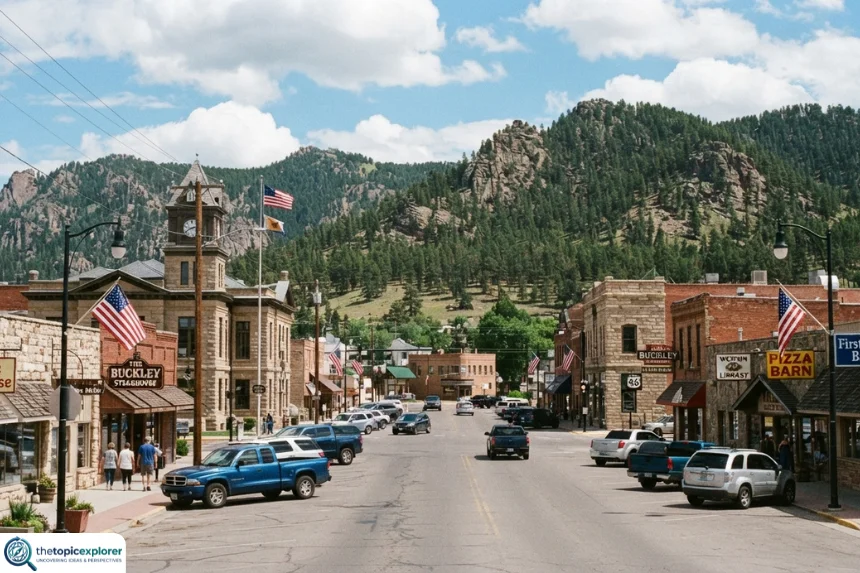

Newcastle Wyoming is a small city in the northeastern corner of the state, close to the Black Hills and the South Dakota border region. Its identity developed around railroads, coal, ranching and energy, while its location now also makes it useful for travelers exploring northeastern Wyoming’s historic towns, forests and wide-open landscapes. The 2020 U.S. Census counted 3,374 residents in the city.
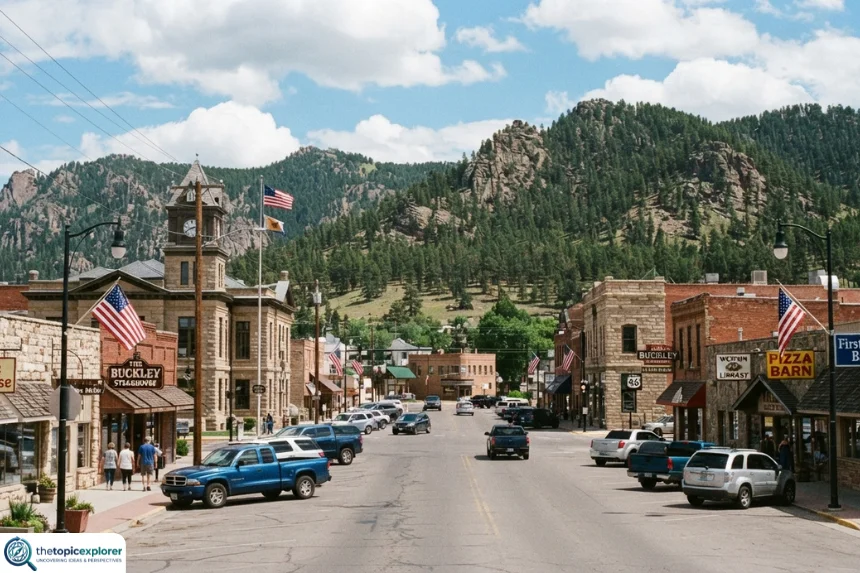
Although Newcastle is small, it is not simply a roadside stop. Its historic commercial core, nearby outdoor recreation and position at the meeting point of prairie and forest give it a character that differs from Wyoming’s better-known mountain resort communities.
What Is Newcastle Wyoming?
Newcastle is a small city in Weston County in northeastern Wyoming. It had 3,374 residents at the 2020 Census and occupies about 2.6 square miles. The community grew through railroad and coal development in the late nineteenth century and today serves as a local center for residents, ranching, energy activity and travelers heading through the Black Hills region.
Wyoming’s official tourism office places Newcastle on the edge of the Black Hills and highlights the contrast between the wooded hills and the open shortgrass prairie surrounding the community.
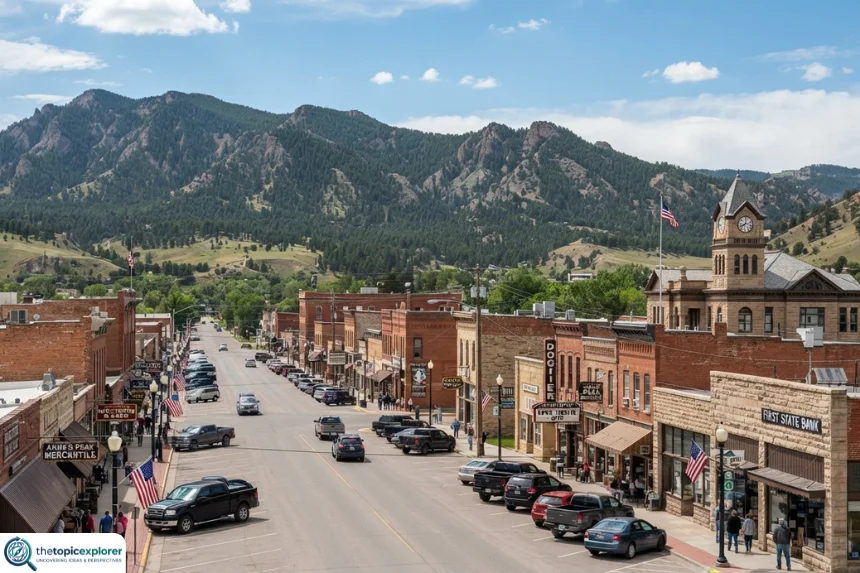
Newcastle Quick Facts
| Detail | Information |
|---|---|
| State | Wyoming |
| County | Weston County |
| Region | Northeastern Wyoming |
| 2020 Census population | 3,374 |
| Land area | About 2.6 square miles |
| Elevation | About 4,334 feet |
| Municipal beginnings | 1889 |
| Historic industries | Railroad, coal, agriculture and energy |
| Major road connections | U.S. Highways 16 and 85 |
| Nearby landscape | Black Hills and High Plains |
| Time zone | Mountain Time |
| ZIP code | 82701 |
The Census population and land-area figures come from the U.S. Census Bureau profile for Newcastle, while elevation and regional visitor information come from Wyoming’s official tourism program.
Where Is Newcastle?
Newcastle sits in northeastern Wyoming, west of the South Dakota state line and near the western side of the Black Hills region.
U.S. Highways 16 and 85 meet in Newcastle, giving the town an important road connection through this part of the state. Wyoming’s tourism office also describes it as a useful base for exploring the surrounding prairie, historic routes and Black Hills landscapes.
This location creates one of the city’s defining characteristics.
To one side, visitors encounter open Wyoming grassland, ranch country and broad views. In the other direction, the landscape becomes increasingly wooded and hilly as it approaches the Black Hills.
Therefore, Newcastle feels different from both Wyoming’s western mountain towns and the flatter communities farther onto the Great Plains.
How Newcastle Began
Newcastle’s history is closely connected to transportation and natural resources.
The official city history traces the community’s municipal beginning to October 25, 1889, when an application involving local residents was presented to Crook County officials. After Weston County was created from part of Crook County in 1890, Newcastle became part of the new county.
Meanwhile, railroad and coal development were reshaping northeastern Wyoming.
Wyoming’s official tourism office says the town formed after the coal and railroad industries arrived in the area. It also notes the region’s connection to the historic Cheyenne-to-Black Hills stage route.
The city was named after Newcastle upon Tyne in England, according to the Wyoming Office of Tourism. The name made particular sense for a community whose early development was closely tied to coal.
Railroads, Coal and Growth
Rail transportation gave Newcastle a reason to develop as more than an isolated settlement.
Coal mining, particularly in the surrounding region, created demand for workers and transportation. At the same time, agriculture and ranching remained important to the broader local economy.
Even today, the official city website identifies the railroad, agriculture and energy industry as longstanding economic foundations.
Consequently, Newcastle’s story reflects a pattern common across the American West: transportation infrastructure, resource extraction and agriculture combined to turn a small settlement into a permanent regional community.
A Historic Downtown That Still Shows the City’s Past
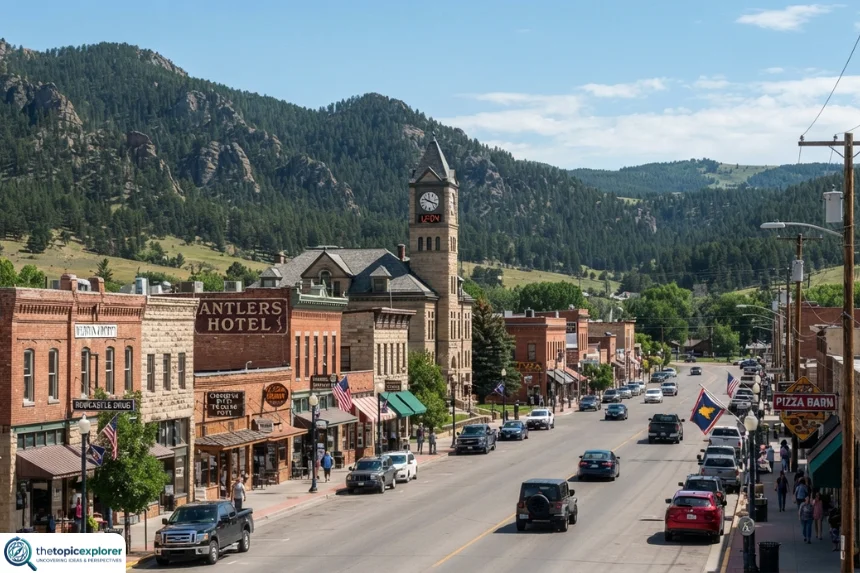
One of the easiest ways to see Newcastle’s history is through its downtown architecture.
The Newcastle Commercial District is listed on the National Register of Historic Places. Wyoming State Historic Preservation Office documentation identifies a district containing 23 buildings, including the historic post office.
The surviving buildings represent the period when Newcastle’s commercial center developed alongside railroad activity, regional trade and population growth.
Rather than expecting a large restored tourist district, visitors should think of downtown Newcastle as a working small-town center that still contains architectural evidence of its past.
The Wyoming State Historic Preservation Office documentation provides authoritative background on the historic commercial district.
Things to Do in and Around Newcastle
Newcastle works best for travelers who enjoy a mix of local history, scenic driving and outdoor recreation rather than large-scale tourist attractions.
Wyoming’s official tourism office recommends several activities in the area, including historic Main Street, the Anna Miller Museum, the Beaver Creek Loop, hiking and mountain biking, fishing, and winter recreation.
Walk Through the Historic Center
Main Street provides an easy introduction to the city.
Older commercial buildings, the courthouse area and the historic district provide visual connections to Newcastle’s late-nineteenth- and early-twentieth-century development.
Meanwhile, locally oriented shops and services keep downtown from feeling like an outdoor museum.
Learn About Regional History
The Anna Miller Museum is one of the attractions highlighted by Wyoming’s official tourism office. Its collections focus on Weston County and regional history.
Because the museum itself appears in your competitor list, I have not attached its website as an external link. The article instead relies on the non-competitor Wyoming Office of Tourism for the attraction reference.
Explore Local Trails
The Newcastle area also offers hiking and mountain-biking opportunities.
Wyoming’s tourism office highlights the Flying V Trail system, while winter recreation in the surrounding hills can include cross-country skiing and snowmobiling when conditions allow.
As with most recreation in Wyoming, conditions can change with weather, fire restrictions and seasonal access. Therefore, visitors should confirm trail and road information before heading into more remote areas.
The Black Hills Are a Major Part of Newcastle’s Appeal
Newcastle sits close to the western side of the Black Hills, giving residents and visitors access to an unusually diverse landscape for eastern Wyoming.
The U.S. Forest Service describes the Black Hills National Forest as approximately 1.2 million acres spanning western South Dakota and northeastern Wyoming. Recreation includes trails, camping, streams, reservoirs, scenic drives and other outdoor activities.
For current federal recreation information, use the Black Hills National Forest website.
This proximity is important because Newcastle itself is not a mountain resort.
Instead, it functions more like a small gateway community where travelers can access services before continuing into forest, prairie and monument country.
Devils Tower Makes a Strong Regional Day Trip
One of northeastern Wyoming’s most recognizable landmarks is Devils Tower National Monument.
The National Park Service describes the Tower as a dramatic geologic feature rising above the prairie near the Black Hills. The site also has deep cultural significance for numerous Northern Plains Indigenous peoples and is known internationally for climbing.
Travelers using Newcastle as part of a northeastern Wyoming road trip can include the monument in a broader regional itinerary.
Before visiting, check the official Devils Tower National Monument website for current conditions, access information and visitor guidance.
Thunder Basin Adds a Different Kind of Landscape
The region west and southwest of the Black Hills shifts into open grassland country.
The U.S. Forest Service manages Thunder Basin National Grassland as part of the Medicine Bow-Routt National Forests and Thunder Basin National Grassland system. Federal information describes the grassland as a semi-arid landscape between the Big Horn Mountains and the Black Hills, with wildlife habitat, grazing, mineral resources and recreation opportunities.
Visitors interested in public lands can use the U.S. Forest Service Thunder Basin information to check current recreation and land-use conditions.
This contrast between forest and grassland is one reason Newcastle makes an interesting base for travelers who prefer landscapes to amusement-style attractions.
Scenic Driving Around the Area
Driving is a large part of the Newcastle experience.
The Wyoming Office of Tourism recommends the Beaver Creek Loop for scenery, wildlife and connections to historic travel routes.
Meanwhile, U.S. 16 and U.S. 85 connect Newcastle with other communities and attractions throughout northeastern Wyoming and the Black Hills region.
Travelers should remember that distances in Wyoming can be deceptive. A destination that appears nearby on a state map may still require significant driving.
In winter or during severe weather, road conditions can change quickly. WYDOT maintains road-condition information for state highways, and previous department notices confirm U.S. 85 as a principal Newcastle route.
What Is It Like to Live in Newcastle?
Newcastle’s strongest lifestyle characteristic is its scale.
With a 2020 population of only 3,374, it offers a substantially smaller community environment than Wyoming’s larger cities.
That can be attractive for people who value:
- less urban congestion,
- access to outdoor recreation,
- a recognizable downtown,
- proximity to ranch and open-land culture,
- and a slower small-town pace.
However, small size also means fewer specialized services, employers, restaurants and entertainment options than residents would find in a larger regional center.
Therefore, whether Newcastle is a “good place to live” depends heavily on what a person values.
Someone seeking nightlife, extensive public transit or a large corporate job market may find it limiting. On the other hand, someone prioritizing open space and a small-community environment may see those same characteristics as advantages.
Population and Household Data
The 2020 Decennial Census counted 3,374 people in Newcastle. The Census Bureau’s 2024 American Community Survey profile reports 1,229 households and a median household income estimate of $82,734.
These figures need to be interpreted correctly.
The population number is a decennial census count. In contrast, household and income figures from the American Community Survey are survey estimates and carry sampling uncertainty, particularly in a community this small.
Therefore, they are useful for understanding Newcastle but should not be treated as perfectly precise real-time measurements.
What Drives the Local Economy?
Newcastle’s economy still reflects its historical geography.
The city identifies the railroad, agriculture and energy sectors as longstanding economic forces.
At the same time, modern rural communities increasingly depend on a wider mix of:
- public services,
- education,
- health care,
- retail,
- construction,
- tourism,
- small businesses,
- and regional commuting.
Consequently, Newcastle should not be described as simply a coal town today.
Its history explains how the community developed, but the modern local economy is broader.
Is Newcastle a Tourist Town?
Not in the same sense as Jackson, Cody or other Wyoming destinations built around major visitor attractions.
Newcastle is better described as a small regional community with tourism value.
Visitors come for:
- historic architecture,
- museums,
- scenic drives,
- hiking and biking,
- hunting and fishing,
- access to the Black Hills,
- and road-trip connections to northeastern Wyoming attractions.
Wyoming’s official tourism office promotes Newcastle around exactly this mix of outdoor recreation, heritage and small-town character.
That makes it especially suitable for travelers who prefer quieter places over heavily commercialized destinations.
When Is the Best Time to Visit?
For most general sightseeing and outdoor recreation, late spring through early fall offers the widest range of activities.
Summer provides easier access to trails, scenic drives and outdoor attractions. Meanwhile, fall can bring cooler conditions and fewer peak-season travelers.
Winter changes the experience significantly.
Snowmobiling and cross-country skiing become possible in parts of the surrounding region, but winter weather can also affect roads and trail access. Wyoming’s official tourism advice recommends packing layers because weather conditions can change quickly.
Therefore, the best season depends on what you plan to do.
Who Will Enjoy Newcastle Most?
Newcastle makes the most sense for:
History-focused travelers who enjoy small Western downtowns and railroad-era architecture.
Outdoor travelers using northeastern Wyoming as a base for hiking, scenic drives and public lands.
Road-trippers connecting Wyoming with the Black Hills region.
People considering small-town living who value open space over extensive urban amenities.
It may be less appealing to visitors expecting resort-style shopping, nightlife or large entertainment complexes.
That is not a weakness so much as an important expectation to set.
Newcastle Wyoming Timeline
| Year/Period | Event |
|---|---|
| Late 1800s | Railroad, coal and regional transportation encourage settlement and commercial development |
| October 25, 1889 | Municipal application associated with Newcastle’s formation is presented |
| 1890 | Weston County is created from part of Crook County |
| 1890s onward | Commercial district develops alongside railroad and resource activity |
| Early 1900s | Downtown expands with commercial and civic buildings |
| Modern era | Agriculture, railroad and energy remain important alongside services and tourism |
| 2020 | U.S. Census records 3,374 residents |
| 2026 | Newcastle remains an incorporated Wyoming city with active municipal government |
The early municipal timeline comes from the official City of Newcastle website, while the population figure comes from the Census Bureau.
Frequently Asked Questions
Where is Newcastle Wyoming?
Newcastle is in northeastern Wyoming in Weston County, near the Black Hills region and the South Dakota side of the state. U.S. Highways 16 and 85 connect in the community.
What is Newcastle Wyoming known for?
Newcastle is known for its railroad and coal history, historic commercial center, location near the Black Hills and access to outdoor recreation in northeastern Wyoming.
What is the population of Newcastle?
The 2020 U.S. Census counted 3,374 residents in Newcastle.
Is Newcastle worth visiting?
Yes, particularly for travelers interested in quiet Western towns, local history, scenic driving and outdoor recreation. It works well as part of a broader northeastern Wyoming or Black Hills road trip.
What can you do in Newcastle?
Visitors can explore the historic downtown, learn about local history, hike or bike nearby trails, fish, take scenic drives and use Newcastle as a base for exploring the Black Hills region. Wyoming’s official tourism office also highlights the Anna Miller Museum and Beaver Creek Loop.
Is Devils Tower near Newcastle?
Devils Tower National Monument is in the same northeastern Wyoming region and can be incorporated into a road trip from Newcastle. The National Park Service recommends checking official road and access information before visiting.
Is Newcastle in the Black Hills?
Newcastle sits on the edge of the Black Hills region, where wooded hills meet the High Plains. The Black Hills National Forest itself extends through western South Dakota and northeastern Wyoming.
What industries are important in Newcastle?
The city’s official website identifies the railroad, agriculture and energy industry as longstanding economic foundations. Modern employment also extends into services and other local sectors.
What is the elevation?
Wyoming’s official tourism office lists Newcastle at approximately 4,334 feet above sea level.
Is Newcastle a good place to live?
That depends on personal priorities. Newcastle offers a small population, access to outdoor landscapes and a slower pace. However, its size also means fewer specialized urban amenities and employment options than larger cities.
Why Newcastle Still Matters
Newcastle Wyoming is not one of the state’s biggest or most famous destinations, and that is part of its appeal.
The community grew from the same forces that shaped much of the American West: rail transportation, coal, agriculture, migration and regional trade. Its historic downtown still reflects that past, while its modern identity combines a working small-town economy with access to the Black Hills and open Wyoming grasslands.
For visitors, Newcastle can serve as a quieter base for history and outdoor exploration. For residents, it offers the advantages and trade-offs of life in a small rural city.
Ultimately, Newcastle is best understood not as a miniature tourist resort, but as a real northeastern Wyoming community whose history, landscape and location make it worth understanding on its own terms.
