

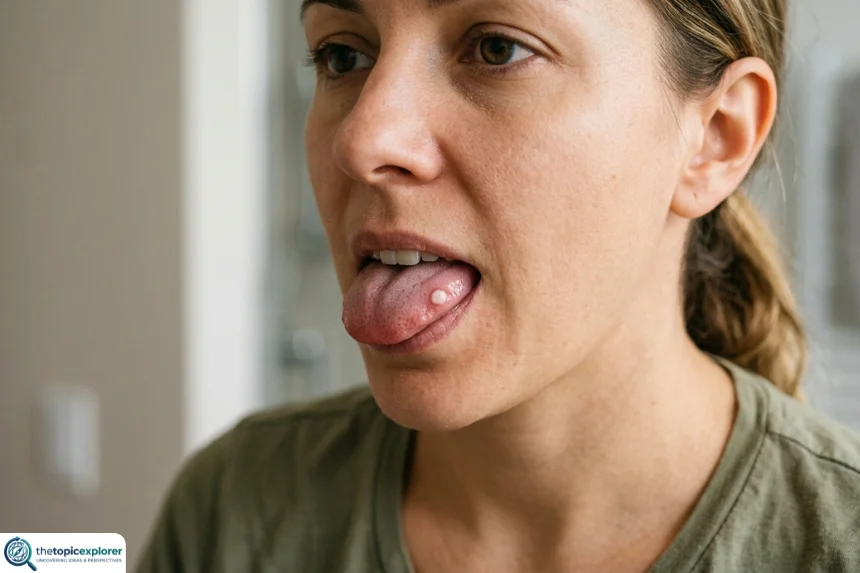

A white bump on side of tongue is often caused by a temporarily irritated tongue papilla, accidental biting, friction from a sharp tooth, or a canker sore. Although many small tongue bumps improve without medical treatment, appearance alone cannot confirm the cause.
Therefore, pay attention to the bump’s texture, pain level, duration, and whether it changes. A tiny painful bump that appeared after eating spicy food or biting your tongue may be temporary. However, a firm, growing, bleeding, or nonhealing lesion needs professional evaluation.
The National Institute of Dental and Craniofacial Research recommends seeing a dentist or doctor when an unexplained mouth sore, lump, thick area, or white or red patch remains for more than two weeks. Other warning signs include difficulty chewing, swallowing, speaking, or moving the tongue.
This guide explains the common causes of a white tongue bump, how different lesions may look, and when it is safer to arrange a dental or medical examination.
Medical note: This article provides general educational information. It cannot diagnose a tongue lesion or replace an examination by a qualified dentist or healthcare professional.
Quick Answer: What Does a White Bump on the Side of the Tongue Mean?
A white bump on side of tongue commonly comes from an irritated papilla, minor injury, repeated rubbing, or a canker sore. A lie bump usually appears as a small raised red or white spot, while a canker sore is generally a shallow white or yellow ulcer with a red border.
Most minor lesions improve within several days to two weeks. Nevertheless, arrange a professional examination when the bump:
- Remains longer than two weeks
- Continues to grow
- Feels unusually hard or fixed
- Frequently bleeds
- Causes numbness
- Repeatedly returns in the same place
- Interferes with eating or swallowing
- Occurs with a lump in the neck
A persistent tongue change does not automatically mean cancer. However, a dentist or doctor must examine it because several harmless and more serious conditions can have similar appearances.
Key Takeaways
- A small white tongue bump commonly results from irritation or minor trauma.
- A “lie bump” is an inflamed tongue papilla, not a skin pimple.
- A canker sore is usually a shallow ulcer rather than a solid bump.
- Biting, rough food, braces, dentures, and sharp teeth can irritate the tongue.
- Do not pop, pierce, cut, burn, or aggressively scrape the lesion.
- Pain alone cannot determine whether a tongue bump is harmless.
- A painless bump should still be checked if it persists, grows, or feels hard.
- Any unexplained lesion lasting longer than two weeks needs professional evaluation.
What Causes a White Bump on Side of Tongue?
Several conditions can produce a white spot, sore, or raised area along the tongue’s edge. In many cases, the cause is temporary irritation. For example, you may have bitten the tongue while eating or rubbed it against a rough tooth.
Common possibilities include:
- An irritated or enlarged tongue papilla
- Transient lingual papillitis, also called a lie bump
- A canker sore
- Accidental biting
- A burn from hot food or drinks
- Friction from a broken or sharp tooth
- Irritation from braces, retainers, or dentures
- A cut from hard or sharp food
- Oral thrush
- Leukoplakia
- Oral lichen planus
- A benign tissue growth
- A less common serious oral lesion
However, the word bump can describe several different appearances. One person may have a raised papilla, while another may have an ulcer with a white center. Similarly, a flat white patch can appear bump-like when the surrounding tongue tissue is swollen.
Before assuming the cause, consider these questions:
- Is the area raised, flat, or open like a shallow sore?
- Is there one bump or are there several white areas?
- Does it hurt, burn, or feel numb?
- Did it appear after biting, dental work, or eating rough food?
- Does it touch a sharp tooth or dental appliance?
- Does the white material wipe away?
- Is the lesion becoming smaller or larger?
- Has it remained longer than two weeks?
These details can help a dentist decide what type of examination or testing may be necessary. Nevertheless, they should not be used to diagnose the lesion at home.
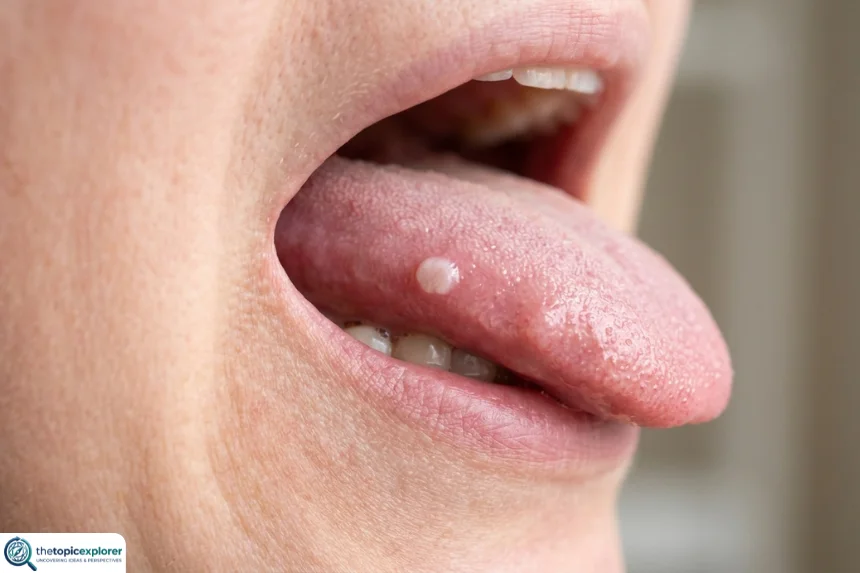
Why Do Bumps Develop on the Side of the Tongue?
The side of the tongue frequently contacts the teeth while you speak, chew, and swallow. Consequently, this area can become irritated by accidental biting, rough fillings, broken teeth, braces, dentures, retainers, or sharp food.
In addition, fungiform papillae occur across the front portion and sides of the tongue. These small structures contain taste buds and other sensory receptors. When one becomes inflamed, it may appear as a tender red or white raised bump.
The location alone does not identify the cause. A short-lived painful bump on the edge of the tongue may be an irritated papilla. On the other hand, a shallow sore may be related to biting or a canker sore.
Most importantly, a side-of-tongue location does not automatically mean oral cancer. Still, a persistent lesion in this area should not be ignored. An examination is particularly important when the bump does not heal after the apparent source of irritation has been removed.
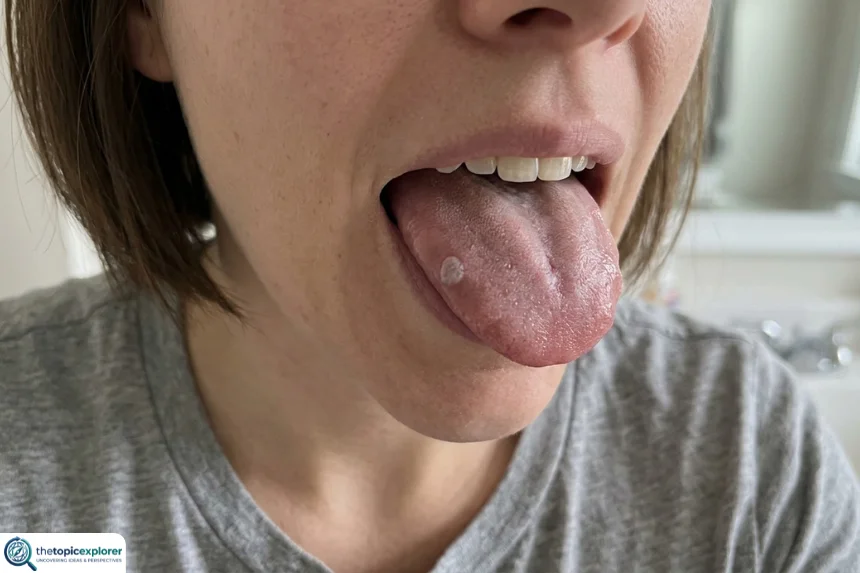
Can a Sharp Tooth Cause a White Tongue Bump?
Yes. A broken tooth, rough filling, sharp tooth edge, loose orthodontic wire, or poorly fitting denture can repeatedly rub the tongue. As a result, the affected tissue may become sore, swollen, ulcerated, or thickened.
The American Dental Association’s patient information notes that loose orthodontic wires, poorly fitting dentures, and sharp edges from broken teeth or fillings can contribute to mouth sores.
Signs that dental friction may be responsible include:
- The bump sits directly beside a rough tooth or appliance
- Pain increases while speaking or chewing
- The tongue repeatedly catches on the same area
- The lesion improves when contact is reduced
- The problem returns in exactly the same location
- A broken filling, wire, denture, or tooth is visible
Although avoiding additional irritation may help, the underlying dental problem should also be corrected. Otherwise, the lesion may repeatedly return.
Do not attempt to file a tooth or repair a filling at home. Instead, arrange a dental appointment so the rough area and the tongue can both be examined safely.
Can Biting Your Tongue Cause a White Bump?
Accidentally biting your tongue can cause swelling, tenderness, and a white or pale healing surface. Furthermore, the injured area may hurt when it touches a tooth or comes into contact with salty, spicy, or acidic food.
Minor injuries may occur when you:
- Chew quickly
- Talk while eating
- Bite down during sleep
- Eat hard or sharp food
- Have a tooth alignment problem
- Experience numbness after dental treatment
Initially, the injured area may look red or swollen. Later, a pale or white surface can develop as the mouth tissue heals. However, this does not necessarily mean that pus or an infection is present.
A minor bite should gradually become smaller and less painful. Therefore, monitor the overall healing pattern rather than repeatedly touching the bump.
Arrange an examination when:
- The area does not improve
- The wound repeatedly opens
- The same location is bitten frequently
- Bleeding continues
- Swelling becomes significant
- Eating or drinking becomes difficult
- The lesion remains beyond two weeks
A dentist can also check whether a sharp tooth, bite-alignment issue, or dental appliance is repeatedly injuring the tongue.
Is a White Bump on Side of Tongue a Lie Bump?
A white bump on side of tongue may be a lie bump, particularly when it is small, raised, tender, and short-lived. The medical name for this condition is transient lingual papillitis.
Transient lingual papillitis develops when one or more fungiform papillae become inflamed. These papillae are natural structures found mainly near the front and sides of the tongue. When inflamed, one may become much more noticeable than the surrounding papillae.
Possible triggers include:
- Accidental tongue biting
- Mechanical irritation
- Spicy or acidic food
- Very hot food or beverages
- Stress
- Dental treatment
- Certain oral-care products
- Other forms of local tongue irritation
However, the exact trigger is not always identifiable. In addition, a bump that looks like an irritated papilla may have another cause. Therefore, the term “lie bump” should not be applied automatically to every white tongue lesion.
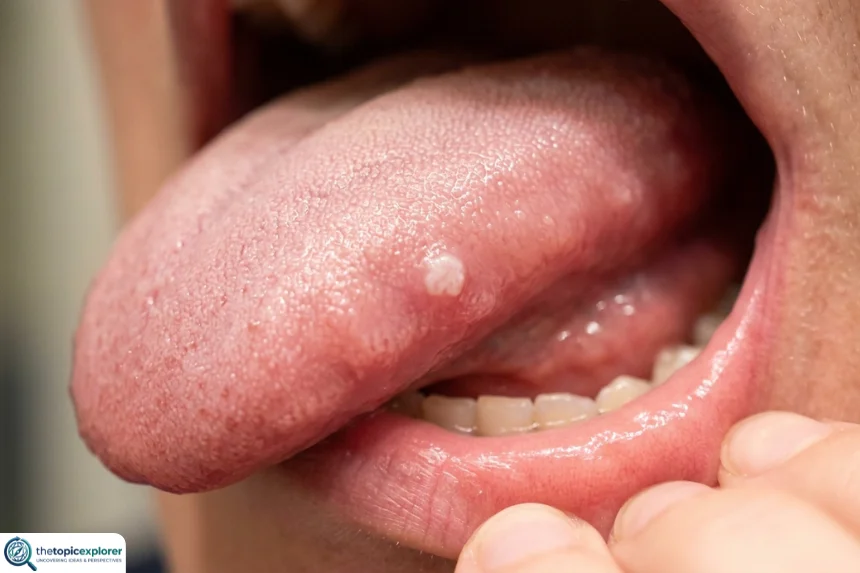
What Does a Lie Bump Look and Feel Like?
A classic lie bump generally appears as:
- One small raised bump
- A red, white, or pale appearance
- A location near the tongue’s tip or side
- Sharp tenderness
- Burning or tingling
- Greater pain when eating
- Sensitivity to hot or spicy food
DermNet describes the classic form as a single painful raised red or white bump, usually near the front of the tongue. It generally disappears quickly, although some cases may contain several bumps or last longer.
A lie bump is different from a pus-filled skin pimple. Instead, it is inflamed tongue tissue. Therefore, squeezing it will not safely empty or cure it.
In addition, not every lie bump is painful. A less common papulokeratotic form may cause whitish or yellow bumps without significant discomfort. Because persistent or widespread bumps may have several possible causes, a dentist or clinician should evaluate them rather than relying on appearance alone.
How Long Does a Lie Bump Last?
A classic lie bump is temporary. DermNet reports that the typical localized form may disappear within one or two days, although some tongue bumps can last several days or recur later.
During recovery, you should notice:
- Less tenderness
- Reduced swelling
- Improved comfort while eating
- A smaller and less noticeable bump
- No new warning symptoms
However, not every bump that lasts longer is dangerous. It may instead be a canker sore, recurring irritation, or another benign lesion. Nevertheless, a bump that does not resolve needs evaluation because its cause cannot be confirmed from a description or photograph alone.
Use the two-week rule as an important safety boundary. If the unexplained bump remains beyond two weeks, schedule an examination with a dentist or healthcare professional.
Can You Pop a Lie Bump?
No. You should not pop a lie bump or any unexplained bump on the tongue.
Unlike an acne pimple, a lie bump is an inflamed papilla. Therefore, piercing or squeezing it may:
- Damage healthy tongue tissue
- Increase pain
- Cause bleeding
- Delay healing
- Introduce bacteria into the injury
- Make professional evaluation more difficult
Similarly, do not cut the bump with a blade, puncture it with a needle, bite it intentionally, or burn it with chemicals.
Instead, leave the area alone and reduce irritation. You can temporarily avoid hot, spicy, acidic, or sharp foods. Gentle oral hygiene may also prevent additional injury while the tongue heals.
If the bump becomes larger, more painful, or persistent, arrange an examination rather than attempting to remove it yourself.
Can a Canker Sore Look Like a White Tongue Bump?
Yes. A canker sore on the tongue may initially be described as a white bump. However, it is usually a shallow ulcer rather than a solid raised papilla.
A typical canker sore may have:
- A white, gray, or yellow center
- A red surrounding border
- A round or oval shape
- A shallow, crater-like surface
- Burning or tingling before it appears
- Pain during eating or speaking
NIDCR describes a canker sore as a round white or yellow sore with a red border that can develop on the tongue or other tissue inside the mouth.
Canker sores are not contagious. They are also different from cold sores, which are associated with herpes viruses and more commonly develop on or around the lips.
Potential canker-sore triggers include:
- Minor mouth injuries
- Accidentally biting the tongue
- Rough or sharp food
- Stress
- Certain foods
- Hormonal changes
- Some oral-care products
- An unknown cause
Nevertheless, a person cannot confirm a canker sore merely by seeing a white center. Other types of mouth ulcers and lesions can look similar.
Lie Bump Versus Canker Sore
| Feature | Lie bump | Canker sore |
|---|---|---|
| Basic form | Inflamed or enlarged papilla | Shallow mouth ulcer |
| Appearance | Small raised red, pale, or white bump | White or yellow center with a red border |
| Surface | Usually solid and raised | Often open or crater-like |
| Common location | Tip or side of the tongue | Tongue or other soft tissue inside the mouth |
| Discomfort | Tender, sharp, burning, or tingling | Burning or ulcer-like pain |
| Common triggers | Papilla irritation, biting, food, or friction | Minor injury, stress, food, or an unclear cause |
| Typical duration | Often one or two days, although it may last longer | Usually heals within approximately 10–14 days |
| Contagious? | The classic localized form is not generally considered contagious | No |
| Should it be popped? | No | No |
MedlinePlus states that canker-sore pain usually decreases within several days and other symptoms generally disappear within 10 to 14 days. It advises contacting a healthcare professional when a canker sore or mouth ulcer does not go away after two weeks of home care or becomes worse.
Therefore, the healing timeline is one useful distinction. A lie bump often disappears relatively quickly, whereas a canker sore may remain noticeable for up to approximately two weeks.
Still, duration alone cannot provide a diagnosis. A lesion that repeatedly returns, becomes unusually large, occurs with fever or a rash, or makes eating difficult should be discussed with a dentist or healthcare professional.
White Tongue Bump Appearance Guide
A white bump on side of tongue can look different depending on whether it is a raised papilla, ulcer, patch, coating, or tissue growth. The following table offers general clues only.
| Appearance or symptom | Possible explanation | Recommended response |
| Tiny painful raised white or red bump | Irritated papilla or lie bump | Avoid irritation and monitor for improvement |
| White or yellow shallow sore with a red border | Canker sore | Use gentle supportive care and monitor healing |
| Tender bump after biting the tongue | Minor traumatic injury | Avoid further friction and watch for gradual healing |
| Sore directly beside a sharp tooth or dental appliance | Repeated mechanical irritation | Arrange a dental examination |
| Several creamy white areas | Oral thrush or another coating may be possible | Consult a dentist or healthcare professional |
| Flat or thick white area that remains | Leukoplakia or another persistent lesion may be possible | Schedule a professional examination |
| Firm or smooth lump that repeatedly returns | Irritation-related tissue growth or another oral lesion | Have the area evaluated |
| Growing, bleeding, numb, or nonhealing lesion | Requires diagnosis | Seek prompt dental or medical care |
Do not use the table as a substitute for an examination. In particular, do not aggressively scrape, squeeze, or puncture the lesion to test what it is.
The safest approach is to monitor a minor bump for clear improvement while avoiding irritation. However, use the two-week rule for any unexplained lesion and seek care sooner when concerning symptoms appear.
Other Possible Causes of a White Tongue Bump
A temporary injury or inflamed papilla is a common explanation for a white bump on side of tongue. However, several other mouth conditions can produce a white spot, patch, coating, ulcer, or raised area.
Some of these conditions usually affect more than one part of the mouth. Others form a persistent lesion that does not disappear like a typical lie bump. Therefore, the lesion’s duration, texture, distribution, and associated symptoms are important.
Irritation From Hot, Spicy, Acidic, or Rough Food
Food can temporarily injure or irritate the tongue. For example, a very hot drink may burn the surface, while chips, crusty bread, hard candy, or sharp food fragments may scratch the tissue.
In addition, spicy and acidic foods can inflame an already sensitive area. Common triggers may include:
- Citrus fruits
- Tomatoes
- Vinegar
- Hot peppers
- Spicy sauces
- Very salty snacks
- Hard or sharp-edged food
- Extremely hot drinks
After irritation, the tongue may become red, swollen, tender, or pale. Moreover, a white surface may form over a small healing ulcer. This appearance does not necessarily mean that the area contains pus.
A minor food-related injury should gradually improve when the irritating food is avoided. Nevertheless, repeated injury in the same location may indicate another problem, such as a sharp tooth or poorly fitting dental appliance.
Braces, Retainers, Dentures, or Recent Dental Work
Dental appliances can repeatedly contact the side of the tongue. Consequently, the tissue may become swollen, ulcerated, or thickened.
Possible sources of irritation include:
- A loose orthodontic wire
- A rough brace bracket
- A cracked retainer
- A denture edge
- A temporary crown
- A rough filling
- Swelling after dental treatment
- Changes in the way the teeth meet
At first, the lesion may feel like a tender bump. However, continued friction can prevent healing. Therefore, contact a dentist or orthodontist when the same area repeatedly rubs against an appliance.
Do not bend orthodontic wires with sharp household tools or attempt to grind a denture at home. Instead, professional adjustment can remove the source of friction while allowing the tongue to heal properly.
Oral Thrush
Oral thrush, also called oral candidiasis, is a fungal infection caused by an overgrowth of Candida. Unlike a single lie bump, thrush more often creates several creamy white or yellowish areas on the tongue, inner cheeks, gums, roof of the mouth, or throat.
Possible symptoms include:
- Multiple white patches
- A white coating on the tongue
- Red or sore tissue underneath
- A burning feeling
- An unpleasant taste
- Cracks at the corners of the mouth
- Discomfort while eating
- Difficulty swallowing in more significant cases
The white material may sometimes wipe away and leave red, irritated, or slightly bleeding tissue. However, you should not aggressively scrape the tongue to test for thrush. Large white areas on the tongue may represent thrush or another infection and should be professionally assessed.
Thrush may be more likely after antibiotic use or in people who wear dentures, have dry mouth, use certain inhaled medicines, have diabetes, or have reduced immune defenses. NIDCR notes that diabetes can increase the risk of thrush, which may produce painful white patches in the mouth.
Treatment depends on the person’s health and the extent of the infection. Therefore, suspected thrush may require evaluation and prescription antifungal medicine rather than treatment with home remedies alone.
Leukoplakia
Leukoplakia generally appears as a persistent white or gray patch inside the mouth. It may form on the tongue, gums, inner cheeks, or beneath the tongue.
Unlike a temporary coating, a leukoplakia patch usually does not wipe or scrape away. It may also appear:
- Slightly raised
- Thickened
- Rough
- Irregular
- Firm
- Painless
Leukoplakia may develop in response to long-term irritation, including rough teeth, poorly fitting dentures, tobacco exposure, or other repeated injury. However, the exact cause is not always clear.
Most leukoplakia lesions are not cancer. Nevertheless, some contain abnormal cells or may represent an early cancer-related change. For this reason, a dentist cannot confirm leukoplakia from appearance alone. Examination and, in some cases, a biopsy may be necessary.
A white patch should receive professional evaluation when it:
- Does not rub away
- Persists beyond two weeks
- Becomes thicker
- Develops red areas
- Feels hard
- Repeatedly bleeds
- Occurs in a person who uses tobacco
- Causes numbness or discomfort
Do not attempt to scrape or burn away a persistent white patch. Instead, arrange a dental examination so the tissue and any possible source of irritation can be assessed.
Oral Lichen Planus
Oral lichen planus is an inflammatory condition that can affect the tongue, gums, and inner cheeks. Rather than causing one simple pimple-like bump, it may produce:
- Bluish-white spots
- Small white bumps
- Thin white lines
- A lacy pattern
- Red or swollen tissue
- Painful open sores
MedlinePlus notes that mouth lesions from lichen planus may appear on the sides of the tongue and may resemble bluish-white spots or pimples covered by thin white streaks.
Some people have few symptoms. In contrast, others experience burning or pain, particularly while eating spicy, acidic, crunchy, or very hot foods.
Because oral lichen planus can resemble other mouth conditions, it should be diagnosed by a dentist, dermatologist, oral-medicine specialist, or another qualified clinician. Moreover, recurring or widespread white areas should not automatically be treated as lie bumps.
An Irritation Fibroma or Similar Tissue Growth
Repeated friction may occasionally cause the mouth to form a smooth area of thickened tissue. This type of irritation-related growth is sometimes called a fibroma.
It may appear as:
- A round or oval lump
- A smooth surface
- A color similar to the surrounding tongue
- A pale or whitish appearance
- A firm texture
- Little or no pain
The growth may sit next to a tooth, filling, denture, or another structure that repeatedly rubs the same location.
Although an irritation growth can be benign, it may not disappear while the source of friction remains. Furthermore, several oral lesions can look similar. Therefore, a persistent smooth or firm lump requires professional assessment rather than home removal.
A dentist may examine the surrounding teeth and appliances. In addition, a clinician may recommend tissue testing when the diagnosis remains uncertain.
Squamous Papilloma
An oral squamous papilloma is a benign, wart-like growth that can occur on the tongue or elsewhere inside the mouth. It may look pink, pale, or white and often has an uneven or cauliflower-like surface. These growths are usually painless.
Unlike a lie bump, a papilloma generally does not disappear within several days. Instead, it may remain the same size or slowly become more noticeable.
A person cannot reliably identify a papilloma or determine its cause from a photograph. Therefore, a dentist or oral specialist should examine a persistent raised growth.
Do not cut, tie, burn, or apply wart-removal products to a tongue lesion. Skin wart products can damage oral tissue and are not intended for use inside the mouth.
Oral Hairy Leukoplakia
Oral hairy leukoplakia is different from ordinary leukoplakia. It generally causes a rough, folded, or hairlike white patch, most commonly along the side of the tongue.
The lesion usually does not wipe away. In addition, it is more often associated with reduced immune function than with routine tongue irritation. NIDCR identifies hairy leukoplakia as a rough white patch on the tongue that may occur among people with HIV or other immune-related concerns.
However, seeing a white area on the side of the tongue does not mean that a person has HIV or another immune disorder. Many more common conditions can affect this location.
Nevertheless, a persistent folded or nonscrapable patch requires examination. A healthcare professional can consider the full medical history and determine whether testing is appropriate.
Oral or Tongue Cancer
Most small, short-lived tongue bumps are not cancer. Still, oral cancer can sometimes begin as an unexplained sore, lump, thickened area, or red or white patch.
Possible warning signs include:
- A sore that does not heal
- A persistent lump
- A hard or thickened area
- A red or white patch
- Unexplained bleeding
- Pain or numbness
- Difficulty chewing
- Difficulty swallowing
- Trouble moving the tongue or jaw
- A persistent sore throat
- A neck lump
- Dentures that suddenly fit differently
The National Cancer Institute lists a nonhealing mouth sore, a mouth lump or thickening, a red or white tongue patch, unusual bleeding, numbness, and difficulty chewing, swallowing, or moving the tongue among symptoms requiring medical assessment.
These symptoms can also result from noncancerous conditions. Therefore, one warning sign does not confirm cancer. However, a dentist or doctor should examine any unexplained lesion that remains beyond two weeks or changes noticeably.
Early assessment matters because some mouth cancers produce few symptoms initially and may be discovered during a routine dental examination.
What Does a Painful White Bump on the Tongue Mean?
A painful white tongue bump is commonly related to inflammation, minor injury, or an ulcer. For example, an irritated papilla can produce sharp tenderness, while a canker sore may cause a deeper burning sensation.
Common causes of pain include:
- A lie bump
- A canker sore
- Accidental biting
- A burn
- A cut from rough food
- Friction from a tooth
- Braces or dentures
- An inflamed mouth ulcer
Pain often increases when the lesion touches food, teeth, or dental appliances. However, the intensity of the pain cannot reliably identify the cause.
A tiny lie bump may feel extremely painful despite being harmless. In contrast, some persistent lesions cause little discomfort. Therefore, neither severe pain nor a lack of pain should be used alone to judge whether a bump is serious.
Why Does the Bump Hurt When I Eat?
Eating places pressure on the tongue and exposes the lesion to heat, salt, acids, spices, and rough textures.
For example:
- Citrus juice may sting an open sore.
- Hot sauce may irritate an inflamed papilla.
- Chips may scrape the lesion.
- A tooth may press against the bump while chewing.
- Hot food may further irritate burned tissue.
- Salt may cause a temporary burning sensation.
Consequently, soft and relatively bland food may feel more comfortable while a minor lesion heals.
Temporary options may include:
- Cool water
- Soft cooked food
- Plain yogurt
- Oatmeal
- Scrambled eggs
- Smooth soups that are not hot
- Mashed vegetables
- Other non-acidic soft meals
However, difficulty eating or drinking should not be ignored. Seek professional advice when pain prevents adequate fluid intake, causes weight loss, or continues despite the apparent injury healing.
What Can Cause a Painless White Bump?
A painless bump may be caused by mild thickening, a small benign growth, leukoplakia, a papilloma, or another oral lesion. In addition, some irritated papillae produce little discomfort.
Possible painless patterns include:
- A smooth bump near a tooth
- A firm area caused by repeated friction
- A slightly raised white patch
- A wart-like growth
- A small cyst-like lesion
- A persistent papilla
- A painless area of leukoplakia
An oral papilloma, for example, is generally a benign wart-like growth that may appear pink or white and often causes no symptoms.
Nevertheless, painless does not mean unimportant. Some significant oral conditions cause little discomfort at first. Therefore, arrange an examination when a painless bump:
- Remains longer than two weeks
- Feels firm or fixed
- Becomes larger
- Changes color
- Develops an uneven surface
- Bleeds
- Occurs with a persistent white or red patch
- Appears with a neck lump
A dentist can determine whether simple monitoring, removal of an irritation source, imaging, referral, or biopsy is appropriate.
What Does a Hard White Bump on the Tongue Mean?
A hard white bump on side of tongue may represent thickened tissue from repeated friction. However, other possibilities include leukoplakia, scar-like tissue, a benign growth, or another lesion that requires diagnosis.
Firmness becomes more important when the bump:
- Feels fixed in place
- Continues to grow
- Remains after two weeks
- Has an irregular surface
- Bleeds unexpectedly
- Causes numbness
- Occurs with difficulty moving the tongue
- Has no obvious injury-related cause
Leukoplakia can appear as a white or gray area that is sometimes raised and cannot be scraped off. Although many cases are benign, some may be precancerous or an early cancer-related change.
However, you may not be able to accurately judge whether tissue is truly hard by touching it with a finger or tongue. Repeated pressing can also irritate the area. Therefore, avoid constantly testing the bump.
A dental examination is the safest next step for a hard or persistent lesion. Depending on the findings, the dentist may refer you to an oral surgeon, oral-medicine specialist, or ear, nose, and throat physician.
Can a White Bump Be Scraped or Wiped Off?
Whether a white area wipes away can provide a clue, but it cannot confirm a diagnosis.
| What happens | What it may suggest |
|---|---|
| Creamy white material gently wipes away and leaves red tissue | Oral thrush may be possible |
| A white or gray area remains firmly attached | Leukoplakia or another persistent lesion may be possible |
| The area is a shallow white or yellow ulcer | A canker sore or traumatic sore may be possible |
| The area is a small solid raised papilla | A lie bump or another papillary lesion may be possible |
| The lesion has a folded or hairlike surface and does not wipe away | Oral hairy leukoplakia or another condition requires evaluation |
Thrush can produce white areas that wipe off and leave a red, sore, or bleeding surface. In contrast, leukoplakia generally forms a white patch that cannot be scraped away.
However, do not aggressively scrape a tongue lesion as a home test. Scraping can:
- Cause bleeding
- Create a new ulcer
- Increase pain
- Damage healthy tissue
- Introduce germs
- Change the appearance before an examination
- Delay healing
Instead, observe the lesion without repeatedly touching it. You may note whether it is raised, flat, widespread, painful, firm, or changing.
What if the White Material Wipes Away?
When a coating gently wipes away, oral thrush is one possibility, especially if several white patches are present and the tissue underneath appears red or sore.
Nevertheless, food residue, dry mouth, tongue coating, and other conditions can also create removable material. Therefore, a wipeable coating does not automatically confirm a fungal infection.
Arrange professional advice when the coating:
- Repeatedly returns
- Covers a large part of the mouth
- Causes pain or burning
- Occurs with swallowing difficulty
- Develops after antibiotic use
- Affects an infant
- Occurs with diabetes or reduced immunity
- Does not improve with regular oral hygiene
What if the White Area Does Not Wipe Away?
A nonscrapable white area may be caused by leukoplakia, friction-related thickening, oral lichen planus, oral hairy leukoplakia, or another lesion.
Because some nonscrapable white lesions contain abnormal tissue, they should not be ignored. NCI explains that most leukoplakia lesions are benign, but some may be precancerous or an early sign of cancer.
Therefore, arrange a dental examination when a white area remains attached, persists beyond two weeks, or develops red, rough, hard, bleeding, or ulcerated areas.
Painful Versus Painless White Tongue Bumps
The presence or absence of pain may help describe the lesion. However, it cannot safely determine whether treatment is needed.
| Feature | Painful bump | Painless bump |
| Common explanations | Lie bump, canker sore, bite, burn, friction | Thickened tissue, papilloma, leukoplakia, mild papilla swelling |
| Effect of eating | May sting or become more painful | May cause little change |
| Expected pattern | Often improves as irritation heals | May remain unnoticed for longer |
| Main concern | Severe pain, poor intake, spreading swelling | Persistence, firmness, growth, or color change |
| When to arrange care | Pain is severe, worsening, or lasts beyond healing | Bump persists beyond two weeks or changes |
A painful lesion often attracts attention sooner. On the other hand, a painless lesion may remain unnoticed until it becomes larger.
Therefore, use the same two-week safety rule for both types. In addition, seek earlier care for growth, bleeding, numbness, swallowing difficulty, tongue-movement problems, or a neck lump.
Can the Appearance Confirm the Cause?
No. A photograph, mirror check, or online description cannot reliably confirm why a tongue bump has developed.
Several conditions may share features such as:
- White color
- A raised surface
- Tenderness
- A red border
- Firmness
- A nonscrapable surface
- Location along the tongue’s edge
For example, an irritated papilla can look like a small white bump. Meanwhile, a canker sore may appear raised because the surrounding tissue is swollen. Similarly, thickened friction-related tissue may resemble leukoplakia.
A dentist may examine:
- The lesion’s size and shape
- Its exact location
- Its texture
- The surrounding tissue
- Nearby teeth and dental work
- The neck and lymph nodes
- Other areas of the mouth
- The person’s medical and dental history
When necessary, the dentist may recommend referral or a biopsy. NIDCR notes that dentists examine the face, neck, lips, mouth, tongue, and throat for unusual changes and may refer patients for further testing.
Therefore, online appearance guides should help readers recognize when to seek care, not encourage self-diagnosis.
How Do You Treat a White Bump on Side of Tongue?
Treatment for a white bump on side of tongue depends on what caused it. A small bump caused by biting, an irritated papilla, or a canker sore may improve with gentle care. However, thrush, persistent white patches, dental friction, and unexplained growths may require professional treatment.
Home care is most appropriate when the bump is:
- Small and recently developed
- Connected to an obvious minor injury
- Not rapidly growing
- Gradually becoming less painful
- Not interfering with swallowing or breathing
- Showing clear signs of healing
Most importantly, home care should reduce irritation rather than attempt to remove the lesion.
1. Avoid Foods That Irritate the Bump
First, temporarily avoid foods and drinks that make the lesion sting or become more painful.
Common irritants include:
- Hot peppers and spicy sauces
- Citrus fruits and juices
- Tomatoes
- Vinegar
- Very salty snacks
- Hard chips
- Sharp or crusty food
- Extremely hot drinks
- Alcoholic beverages
Acidic and spicy foods may irritate canker sores and other inflamed mouth tissue. Therefore, choose bland, soft foods until the area becomes less sensitive.
Suitable temporary options may include:
- Plain yogurt
- Oatmeal
- Scrambled eggs
- Mashed vegetables
- Soft rice
- Smooth, non-spicy soups
- Cool water
- Other soft meals that do not cause discomfort
Nevertheless, you do not need to follow a highly restrictive diet when foods are not causing pain.
2. Rinse Gently With Warm Salt Water
A gentle saltwater rinse may soothe a minor mouth sore and help keep the area clean. MedlinePlus includes saltwater rinsing among the supportive measures used for canker sores and other mouth sores.
To use a rinse:
- Mix a small amount of salt into a cup of comfortably warm water.
- Swish it gently around the mouth.
- Spit it out rather than swallowing it.
- Stop if it causes significant burning or irritation.
Do not make the water excessively hot or the solution extremely salty. In addition, avoid forcefully swishing when the lesion is bleeding.
A saltwater rinse may reduce discomfort, but it will not treat every possible cause. For example, oral thrush may require prescription antifungal medication, while a persistent white patch may require examination or biopsy.
3. Maintain Gentle Oral Hygiene
Continue brushing and flossing while the bump heals. However, use a soft-bristled toothbrush and avoid scrubbing directly over the lesion.
Gentle oral care may include:
- Brushing twice daily without excessive pressure
- Flossing carefully
- Rinsing the mouth after meals
- Cleaning removable dental appliances
- Keeping retainers and dentures clean
- Avoiding aggressive tongue scraping
- Replacing a damaged toothbrush
Do not stop cleaning your mouth completely because plaque and food debris may create additional irritation. On the other hand, repeated forceful brushing can reopen a healing sore.
4. Avoid Alcohol-Containing Mouthwash
Some mouthwashes contain alcohol that may sting or irritate an open tongue sore. MedlinePlus specifically advises avoiding alcohol-containing mouthwash when managing canker sores because it may increase irritation.
Therefore, check the product label before use. A pharmacist or dentist can help you select an appropriate alcohol-free product when needed.
5. Choose Cool and Soft Foods
Cool food and drinks may temporarily ease tenderness. Similarly, soft food reduces the amount of rubbing against the side of the tongue.
However, avoid placing ice directly against the same spot for long periods. Prolonged direct contact may irritate or injure mouth tissue.
Instead, sip cool water or allow a small ice chip to melt naturally when that feels soothing.
6. Remove the Source of Repeated Friction
A tongue lesion may continue returning if it repeatedly touches:
- A sharp tooth
- A broken filling
- A damaged crown
- An orthodontic wire
- A rough denture
- A cracked retainer
- Another dental appliance
Mouth sores can develop because of irritation from braces, dentures, broken teeth, or sharp filling edges. Therefore, a dentist should examine both the lesion and the source of repeated contact.
Do not attempt to file a tooth, cut an orthodontic wire, reshape a denture, or repair a filling with household materials. Although temporary dental wax may sometimes protect tissue from an orthodontic bracket, contact the orthodontist for instructions and a permanent adjustment.
7. Drink Enough Water
A dry mouth can make oral tissue feel more irritated and may contribute to mouth sores or recurring oral infections. NIDCR lists mouth sores, burning, difficulty swallowing, and recurrent mouth infections among possible problems associated with persistent dry mouth.
Therefore, sip water regularly unless a healthcare professional has told you to restrict fluids.
You may also:
- Limit tobacco exposure
- Reduce excessive alcohol
- Avoid products that worsen dryness
- Discuss persistent dry mouth with a dentist or doctor
8. Ask About Appropriate Pain Relief
Over-the-counter pain medicine or a mouth-sore product may reduce discomfort. However, the most appropriate option depends on age, health conditions, medications, pregnancy status, and the type of lesion.
Before using a product:
- Read the complete label
- Follow the stated directions
- Check the active ingredients
- Avoid combining duplicate medicines
- Ask a pharmacist when uncertain
- Keep medicines away from children
Do not apply aspirin directly to the tongue. Direct contact can irritate or chemically injure mouth tissue.
Moreover, numbing products can reduce sensation temporarily. Therefore, use caution while eating because you may accidentally bite the tongue or burn your mouth without noticing.
What Should You Not Do to a Tongue Bump?
A tongue bump is not the same as an acne pimple. Consequently, attempting to drain or remove it can worsen the problem.
Do not:
- Pop the bump
- Pierce it with a needle
- Cut it with a blade
- Bite it intentionally
- Scrape it forcefully
- Burn it
- Apply skin wart remover
- Apply undiluted essential oils
- Place aspirin directly against it
- Use household disinfectants inside the mouth
- Repeatedly press it to test its firmness
- Ignore continued rubbing from a sharp tooth
These actions may cause pain, bleeding, tissue damage, delayed healing, or a secondary infection.
Furthermore, do not assume that a removable white coating proves thrush or that a nonscrapable lesion proves cancer. Several oral conditions have overlapping appearances. Only a qualified professional can make a diagnosis after examining the area.
Should You Pop a White Tongue Bump?
No. You should never pop an unexplained tongue bump.
An irritated papilla consists of swollen tongue tissue rather than a pocket of pus. Similarly, a canker sore is an ulcer, not a pimple. Piercing either one is unlikely to help and may create a deeper wound.
Instead, avoid irritation and monitor whether the lesion becomes smaller and less painful. If it remains or changes, arrange a dental examination.
Should You Scrape Off the White Area?
Do not aggressively scrape a white tongue area.
Oral thrush may produce white lesions that bleed when disturbed. However, leukoplakia and other persistent white lesions generally remain attached. Because scraping may cause injury and change the lesion’s appearance, professional examination is safer.
How Long Does a White Bump on Side of Tongue Last?
The expected duration depends on the cause of the white bump on side of tongue.
| Possible cause | General healing pattern |
|---|---|
| Minor biting or food irritation | May begin improving within several days |
| Inflamed papilla or lie bump | Often short-lived and should clearly improve |
| Canker sore | Commonly heals within about 10–14 days |
| Traumatic ulcer | Should improve after repeated contact stops |
| Oral thrush | May continue until the fungal infection is treated |
| Leukoplakia or another persistent patch | May not disappear without professional care |
| Benign tissue growth | May remain until evaluated or removed |
| Unexplained persistent lesion | Requires professional diagnosis |
MedlinePlus states that pain from a canker sore often decreases within several days and other symptoms commonly disappear within 10–14 days. It also recommends medical advice when a mouth ulcer does not resolve after two weeks of home care.
A healing lesion should generally show a positive trend. For example:
- Pain becomes milder
- The bump becomes smaller
- Eating becomes easier
- Redness and swelling decrease
- No new lesions appear
- Bleeding does not occur
- The area does not become harder
However, do not continue monitoring indefinitely when there is no improvement.
When Is a White Bump on Side of Tongue Concerning?
Many tongue bumps are temporary. Nevertheless, an unexplained lesion requires professional attention when it persists or develops concerning features.
Use the Two-Week Safety Rule
NIDCR recommends seeing a dentist or doctor when a mouth sore, lump, irritation, thick patch, or white or red patch remains for more than two weeks. This recommendation also applies to difficulty chewing, swallowing, speaking, or moving the tongue.
Therefore, schedule an examination when a white bump on side of tongue has not disappeared or clearly improved within two weeks.
You do not need to wait for the full two weeks when the bump is worsening or causing significant problems.
Schedule a Dental or Medical Appointment When
Arrange an examination when:
- The bump lasts longer than two weeks
- It continues to grow
- It repeatedly returns in the same location
- It feels hard, firm, or fixed
- It develops red areas
- It cannot be wiped away
- It bleeds without a clear injury
- It becomes ulcerated
- It causes persistent numbness
- Pain is severe or worsening
- Eating and drinking become difficult
- A rough tooth repeatedly contacts it
- Several unexplained mouth lesions appear
- You have recurrent oral thrush
- You use tobacco products
Persistent sores, lumps, thick patches, red or white areas, unexplained bleeding, numbness, and difficulty moving the tongue are among the oral changes NIDCR advises having examined.
Seek Prompt Care for These Warning Signs
Seek prompt dental or medical assessment when the tongue lesion occurs with:
- Difficulty swallowing
- Trouble speaking
- Difficulty moving the tongue or jaw
- A lump in the neck
- Persistent throat discomfort
- Unexplained ear pain
- Significant mouth swelling
- Fever and worsening pain
- Pus-like drainage
- Unexplained weight loss
- Dentures that suddenly fit differently
These symptoms do not automatically mean cancer. However, they may require testing because benign and serious conditions can produce similar changes.
Seek Emergency Help When
Call 911 or seek emergency care for:
- Trouble breathing
- Rapidly increasing tongue, mouth, face, or throat swelling
- Choking
- Inability to swallow saliva
- Fainting
- Severe uncontrolled bleeding
- Signs of a serious allergic reaction
New or severe breathing difficulty is a medical emergency, particularly when swelling affects the tongue or throat.
Does a Persistent White Bump Mean Cancer?
No. A persistent tongue bump does not automatically mean oral cancer.
Noncancerous causes can include:
- Continued friction
- A traumatic ulcer
- Leukoplakia without abnormal cells
- Oral lichen planus
- A fibroma
- A papilloma
- Another benign oral growth
However, appearance alone cannot safely exclude cancer. NIDCR lists persistent mouth sores, lumps, thick areas, red or white patches, bleeding, numbness, and swallowing or tongue-movement difficulty among symptoms requiring examination when they remain beyond two weeks.
Therefore, the correct response is not to panic or ignore the lesion. Instead, schedule an examination.
A dentist may:
- Inspect the lesion under good lighting
- Feel the surrounding tissue
- Examine the teeth and dental work
- Check the rest of the mouth
- Examine the neck
- Review tobacco and alcohol exposure
- Ask about medications and health conditions
- Refer the patient for specialist evaluation
- Recommend a biopsy when necessary
A biopsy does not mean that cancer has already been diagnosed. Rather, it allows a laboratory to identify the type of tissue change.
Should You See a Dentist or a Doctor?
A dentist is often an appropriate first professional for a persistent bump, sore, white patch, or irritation on the tongue.
Start With a Dentist When
Contact a dentist when:
- The bump touches a sharp tooth or filling
- A brace, retainer, or denture rubs the area
- The lesion has lasted longer than two weeks
- It repeatedly returns
- It feels firm
- It bleeds
- A white patch does not wipe away
- You have pain while chewing
- No obvious cause is present
Dentists routinely examine the tongue, mouth, jaw, and neck for unusual changes. MouthHealthy, the American Dental Association’s patient resource, advises dental evaluation for ongoing mouth sores and recognizes braces, dentures, broken teeth, and sharp fillings as possible sources of irritation.
Contact a Medical Doctor When
A primary-care clinician may be a useful starting point when:
- White patches appear across several areas
- Oral thrush may be present
- Fever or systemic illness occurs
- The symptoms followed a new medication
- You have diabetes
- Your immune defenses may be reduced
- Swallowing becomes difficult
- A neck lump appears
- Similar sores occur elsewhere on the body
- You have unexplained weight loss
Thrush in adults may sometimes be associated with antibiotics, diabetes, inhaled medicines, dentures, dry mouth, or weakened immune defenses. Therefore, a medical review may be needed in addition to dental care.
Which Specialist Might Be Involved?
Depending on the findings, a dentist or doctor may refer you to:
- An oral-medicine specialist
- An oral and maxillofacial surgeon
- An ear, nose, and throat specialist
- A dermatologist
- An infectious-disease specialist
- Another appropriate clinician
The type of referral depends on whether the lesion appears traumatic, inflammatory, infectious, or related to a tissue growth.
Can White Tongue Bumps Be Prevented?
Not every tongue bump can be prevented. Nevertheless, several habits may reduce avoidable irritation.
Chew Carefully
Eating slowly may reduce accidental biting. Furthermore, take care with hard candy, chips, bones, and other sharp food.
Correct Rough Dental Surfaces
Ask a dentist to examine broken teeth, fillings, crowns, dentures, or braces that repeatedly rub the tongue.
Maintain Consistent Oral Hygiene
Brush gently, floss regularly, and clean removable appliances. However, avoid aggressive tongue scraping.
Limit Tobacco Exposure
Tobacco can irritate oral tissue and increases the risk of mouth and throat cancer. Therefore, avoiding smoking and smokeless tobacco supports both oral and general health.
Manage Dry Mouth
Drink water regularly when medically appropriate. In addition, discuss persistent dryness with a dentist or doctor because medications and health conditions may reduce saliva production.
Replace Damaged Dental Appliances
A cracked retainer, rough denture, or loose wire may repeatedly injure the tongue. Consequently, arrange professional repair rather than continuing to use an appliance that causes pain.
Frequently Asked Questions
What Causes a White Bump on Side of Tongue?
A white bump on side of tongue may result from an irritated papilla, accidental bite, canker sore, food burn, sharp tooth, or dental appliance. Less commonly, thrush, leukoplakia, lichen planus, or another oral growth may be responsible. Duration, texture, pain, and whether the lesion heals are more informative than color alone.
Is a White Bump on the Tongue a Swollen Taste Bud?
It may be an inflamed tongue papilla, commonly called a swollen taste bud or lie bump. Technically, taste buds sit within specialized tongue structures called papillae. When a papilla becomes irritated, it may appear as a small, raised, painful white or red bump.
Can a White Tongue Bump Be a Canker Sore?
Yes. However, a canker sore is usually a shallow ulcer rather than a solid bump. It often has a white or yellow center surrounded by a red border and may burn during eating. Canker sores commonly heal within approximately 10–14 days.
Can I Pop a White Bump on My Tongue?
No. A tongue bump should not be popped, pierced, cut, or burned. An inflamed papilla is swollen tissue rather than a pus-filled acne lesion. Attempting to pop it may cause bleeding, pain, delayed healing, or additional injury.
Why Does the Tongue Bump Hurt When I Eat?
Food may press against the lesion or expose it to salt, acid, spices, heat, and rough textures. For example, citrus may sting an ulcer, while chips may scrape irritated tissue. Soft, bland food may feel more comfortable until the area heals.
Is a White Bump on the Tongue Contagious?
Lie bumps, canker sores, and friction-related injuries are generally not contagious. However, some infections that affect the mouth can spread under certain circumstances. Because appearance cannot confirm the cause, seek professional advice when several lesions appear or other symptoms develop.
Can Oral Thrush Cause One White Bump?
Thrush usually causes several white, velvety patches or a more widespread coating rather than one isolated bump. The areas may leave sore or slightly bleeding tissue when disturbed. A clinician should assess suspected thrush, particularly when it occurs in an adult or repeatedly returns.
What Does a Hard White Bump on the Tongue Mean?
A hard bump may represent friction-related thickening, leukoplakia, scar-like tissue, or another oral growth. It cannot be accurately diagnosed by touch or photograph. Therefore, a firm, fixed, growing, or persistent bump should be examined by a dentist.
How Long Should a White Tongue Bump Last?
Minor irritation may improve within several days, while a canker sore commonly heals within 10–14 days. However, the timeline varies by cause. Any unexplained bump, sore, lump, or white patch that remains beyond two weeks should be examined.
When Should I Worry About a White Tongue Bump?
Arrange an examination when the bump lasts more than two weeks, grows, feels hard, repeatedly bleeds, causes numbness, or makes chewing or swallowing difficult. Seek emergency help for breathing difficulty or rapidly increasing tongue or throat swelling.
Final Thoughts on a White Bump on the Side of the Tongue
A white bump on side of tongue is often related to an irritated papilla, minor bite, canker sore, or repeated friction. Therefore, a small bump that steadily becomes less painful may only require gentle oral care and temporary avoidance of irritating foods.
However, do not pop, cut, burn, or aggressively scrape the lesion. Moreover, correct any sharp tooth, filling, brace, denture, or retainer that repeatedly rubs the same location.
Most importantly, use the two-week rule. An unexplained bump, lump, mouth sore, or white patch that does not disappear or clearly improve within two weeks should be examined by a dentist or doctor. Seek care sooner if it grows, feels hard, bleeds, causes numbness, or interferes with swallowing or tongue movement.
