

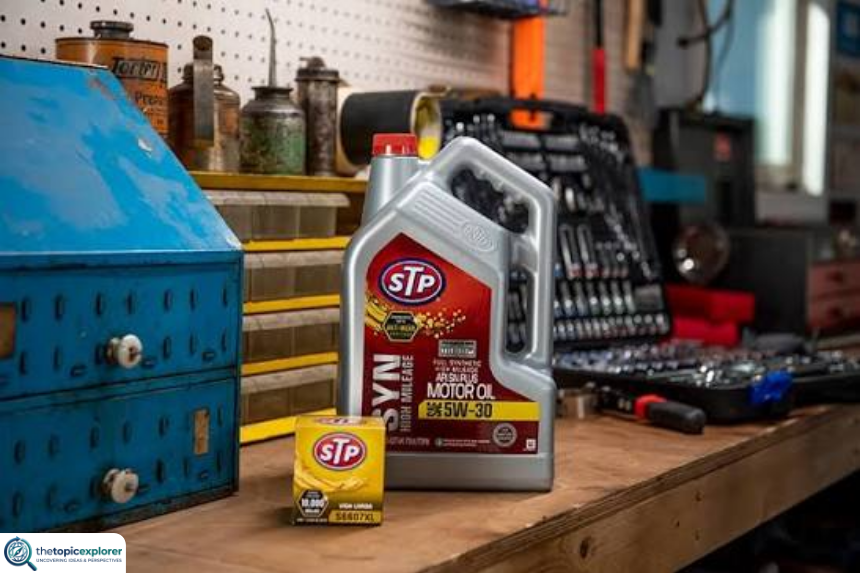

If you are wondering is high mileage oil worth it, the short answer is: sometimes, and often yes for an aging engine that can benefit from its extra additives—but it is not automatically required at a certain mileage. High-mileage formulas are designed to address issues that become more common as engines age, including minor oil leaks, oil consumption, deposits, and seal deterioration. However, the vehicle manufacturer’s required viscosity and oil specification still come first.
The commonly advertised 75,000-mile threshold is a useful starting point, not a universal mechanical rule. A carefully maintained engine with 90,000 miles may run perfectly well on the manufacturer’s regular oil, while another engine with fewer miles may benefit from a high-mileage formula because of its condition.
That distinction matters. High-mileage oil is not simply “better oil.” Instead, it is oil with a formulation aimed at the needs of older engines. The smartest choice depends on mileage, symptoms, maintenance history, the required oil specification, and the price difference.
Is High Mileage Oil Worth It for Most Older Engines?
The Short Answer
High-mileage oil can be worth the extra cost when an older engine has minor leaks, increased oil consumption, or other age-related concerns that the formulation is designed to address. It can also be a reasonable preventive choice for a well-maintained vehicle once it reaches the mileage range commonly associated with high-mileage products.
At the same time, you should not assume that a standard oil becomes unsuitable simply because the odometer passes 75,000 miles. Oil companies commonly market high-mileage products around that threshold, but the vehicle manufacturer’s specifications remain the controlling requirement.
In practical terms, the decision is easier if you ask three questions:
- Does my vehicle meet the mileage or condition range for a high-mileage formula?
- Does the high-mileage oil meet my vehicle’s required viscosity and performance specification?
- Do the added features justify the price difference for my engine?
If the answer to all three is yes, high-mileage oil is usually a sensible option.
Why 75,000 Miles Is a Guideline, Not a Rule
Many high-mileage products are marketed for vehicles with more than 75,000 miles. For example, Mobil’s high-mileage oil range and Pennzoil’s high-mileage oil are designed around this commonly used mileage range.
Still, an odometer does not measure the complete condition of an engine. Two cars with the same mileage can have very different histories. One may have received regular oil changes and mostly highway driving, while another may have spent years in short-trip city traffic with inconsistent maintenance.
Therefore, treat 75,000 miles as an inspection milestone. At that point, review the owner’s manual, check the oil level regularly, look for leaks, and consider whether a high-mileage formulation provides a useful advantage.
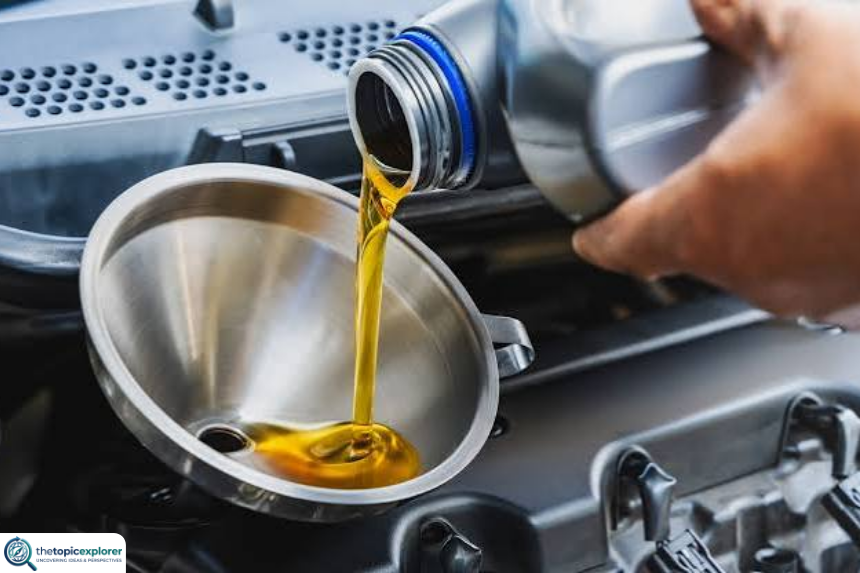
What Is High-Mileage Oil?
How the Formulation Differs
High-mileage oil is motor oil formulated with older or higher-mileage engines in mind. Depending on the brand and product, it can include seal conditioners, detergents and dispersants, anti-wear additives, and formulation choices intended to reduce oil volatility or consumption.
The goal is not to transform a worn engine into a new one. Instead, the formulation aims to support areas that can become more important with age. For example, aging seals may become less flexible, deposits can accumulate, and an engine may begin using more oil between changes.
Manufacturers describe these benefits in different ways. Mobil says its high-mileage formulas contain additives and conditioners intended to combat leaks, sludge, and wear. Pennzoil says its high-mileage formula helps reduce leaks and oil consumption and helps prevent sludge and deposits. Castrol likewise describes seal conditioners and protection against oil burn-off and deposits.
Those claims are useful for understanding the purpose of the category, but they should not be interpreted as a guarantee for every engine.
High Mileage Is Not the Same as Synthetic
This is one of the most important distinctions to understand. High-mileage describes the intended application and additive package. Synthetic, synthetic blend, and conventional describe the oil’s base-oil formulation.
That means you can have a full-synthetic high-mileage oil or a synthetic-blend high-mileage oil. Likewise, a regular full-synthetic oil can be perfectly appropriate for a high-mileage vehicle if it meets the manufacturer’s requirements.
So, do not compare “high mileage” and “synthetic” as though they are opposite categories. They answer different questions.
The first question is whether the oil has features intended for an aging engine. The second is what type of base oil and performance characteristics the product provides.
What Does High-Mileage Oil Actually Do?
Seal Conditioners and Minor Leaks
A major reason drivers consider high-mileage oil is a small oil leak. As rubber seals and gaskets age, they can harden or lose some flexibility. Some high-mileage formulations contain seal conditioners intended to help reduce leakage from aging seals.
That can be useful when the problem is minor. However, the word reduce is important. High-mileage oil is not a mechanical repair.
If a gasket has failed, a seal is badly damaged, or a component is cracked, changing the oil will not restore the damaged part. At most, a compatible high-mileage formula may help with a minor age-related sealing problem.
Therefore, if you notice oil spots under the vehicle, check the level and investigate the source. A high-mileage oil change can be part of the maintenance plan, but it should not replace diagnosis.
Detergents, Deposits, and Sludge
Older engines can accumulate deposits and sludge, particularly when maintenance has been inconsistent or operating conditions have been severe. High-mileage products often include detergent or dispersant systems designed to manage deposits.
For example, Mobil’s high-mileage oil information describes additives that help fight sludge, while Pennzoil and Castrol describe deposit and sludge-control benefits in their high-mileage products.
However, more cleaning does not mean that every neglected engine should be aggressively cleaned without thought. A heavily contaminated engine may have a different maintenance history from a well-maintained one.
The safest approach is simple: use the correct oil, follow the recommended change interval, and avoid assuming that an oil label can compensate for years of skipped maintenance.
Wear and Oil Consumption
Engine wear can increase as components age. High-mileage formulas may include additive packages designed to provide additional protection for older engines. Some products also emphasize lower volatility or other characteristics intended to reduce oil burn-off.
If you find yourself checking the dipstick more often because the oil level drops between changes, that is useful information. It may indicate normal consumption for a particular engine, a developing leak, oil burning, or another mechanical issue.
High-mileage oil may help in some cases, but it does not establish why the oil level is falling. Persistent or significant consumption deserves investigation.
Is High-Mileage Oil Worth It If Your Engine Runs Normally?
When the Upgrade Makes Sense
Suppose your car has 110,000 miles, has been maintained well, and the manufacturer permits an oil that is available in a high-mileage formulation. In that Is High Mileage Oil Worth It situation, switching can be reasonable even if the engine has no obvious problem.
The potential benefit is that you are choosing a formulation designed around the realities of an aging engine. If the price difference is small and the product fully meets the vehicle’s specifications, the convenience of using a high-mileage formula can outweigh the modest additional cost.
This is particularly straightforward if you plan to keep the car for many more years. Preventive maintenance becomes more important as a vehicle ages, and a compatible high-mileage formula can be one part of that strategy.
Still, “reasonable” does not mean “mandatory.” If your current oil meets the manufacturer’s requirements and your engine performs well, you are not necessarily doing anything wrong by continuing with it.
When Regular Oil Is Still a Good Choice
A high-mileage label does not automatically make one oil superior to every regular oil. A regular full-synthetic product that meets the exact requirements for your engine can be an excellent choice.
This matters because oil selection involves more than the words printed prominently on the front of the bottle. The back label and technical information can show the viscosity, API category, ILSAC standard, and manufacturer approvals.
If your vehicle requires a particular specification, a high-mileage product that lacks that specification is not a better choice simply because it says “high mileage.”
The practical rule is simple: the right specification beats the marketing label.
High-Mileage Oil vs. Regular Oil
Side-by-Side Comparison
| Factor | High-Mileage Oil | Regular Motor Oil |
|---|---|---|
| Main purpose | Supports older/high-mileage engines | General engine lubrication and protection |
| Common mileage label | Often 75,000+ miles | No special mileage threshold |
| Seal conditioners | Often included | May or may not be included |
| Deposit/sludge additives | Often emphasized | Depends on product |
| Viscosity choices | Many grades available | Many grades available |
| Synthetic options | Yes | Yes |
| Must match owner’s manual? | Yes | Yes |
| Can repair mechanical damage? | No | No |
| Price | Often somewhat higher, but varies | Often lower, but varies |
| Best selection method | Match condition + specifications | Match specifications + vehicle needs |
The Real Question Is Specification, Not Label
When choosing between two bottles, do not stop at the front label. First confirm the viscosity and required performance category.
The American Petroleum Institute’s Motor Oil Guide explains certification marks and service categories. These marks help drivers identify oils that meet relevant performance requirements.
The vehicle manufacturer may also specify an OEM approval or a particular performance standard. That requirement can matter more than whether the bottle says high mileage.
For example, if the owner’s manual calls for a specific viscosity and performance level, choose a high-mileage product that satisfies those requirements rather than changing to a different grade because the engine has more miles.
When Should You Switch to High-Mileage Oil?
Around 75,000 Miles
There is no universal law that says an engine must switch at 75,000 miles. Nevertheless, 75,000 miles is a common product threshold and a useful point to start evaluating whether a high-mileage formula makes sense. Mobil, Pennzoil, and Castrol all use this general mileage range in their high-mileage product guidance.
At this mileage, consider the engine’s service history. Has it received regular oil changes? Does it consume oil? Are there minor leaks? Has the vehicle spent most of its life in demanding stop-and-go traffic?
If the answer to several of those questions is yes, a compatible high-mileage product may be worthwhile.
If the engine is exceptionally clean, does not consume noticeable oil, and already uses a fully compliant standard oil, there may be less urgency.
Earlier or Later Based on Engine Condition
Mileage should not be the only factor. Valvoline’s guidance discusses high-mileage products around 75,000 miles while also noting that engines can differ based on use and condition.
A vehicle with 60,000 miles of severe service may not be in the same condition as one with 100,000 mostly highway miles and excellent maintenance. Similarly, a vehicle that has been driven gently but neglected may have different needs from a well-maintained daily driver.
That is why a condition-based approach works better than an odometer-only rule.
Signs That Deserve Attention
Watch for changes rather than waiting for a particular mileage number. Useful warning signs include:
- The oil level drops noticeably between scheduled changes.
- You see small oil spots after parking.
- The engine has developed a known minor leak.
- The vehicle has substantial mileage and you want a formulation designed for aging seals and deposits.
- Maintenance history is good, but the engine is beginning to show ordinary age-related symptoms.
These signs do not prove that high-mileage oil is Is High Mileage Oil Worth It the solution. Instead, they indicate that the engine deserves closer attention.
Is High-Mileage Oil Worth It for an Engine That Leaks?
What It May Help
If the leak is minor and appears related to aging seals, a compatible high-mileage formula may reduce the rate of leakage. Seal conditioners are one of the defining features of many high-mileage products.
That can make the oil worth considering when the alternative is simply watching a small leak get gradually worse. However, monitor the engine rather than assuming the oil has solved the problem.
After a switch, check the oil level at appropriate intervals and look for changes in leakage. If the leak continues or grows, identify the source.
What It Cannot Repair
A high-mileage oil cannot replace a damaged gasket, broken seal, cracked housing, failed oil pan, or other mechanical component. It also cannot restore worn engine parts to factory condition.
If oil is leaking heavily, the oil level falls quickly, or you notice other warning signs, the correct response is diagnosis and repair.
This distinction prevents one of the biggest misunderstandings about high-mileage oil: it is a maintenance product, not a stop-leak repair kit.
Does High-Mileage Oil Reduce Oil Consumption?
Why Older Engines Can Use More Oil
Oil consumption can increase for several reasons. Aging seals, deposits, worn components, operating conditions, and leaks can all affect how much oil an engine uses.
High-mileage formulas are designed with some of these age-related issues in mind. Product manufacturers commonly mention seal conditioning and reduced oil consumption as potential benefits. Pennzoil, for example, specifically describes its high-mileage oil as helping reduce leaks and oil consumption.
However, the amount of oil an engine should use varies by vehicle and manufacturer. Therefore, do not rely on a generic internet number to decide whether your car’s consumption is acceptable.
Instead, check the owner’s manual and monitor the dipstick consistently. Recording how much oil you add and how far you drive can provide a much clearer picture.
When Consumption Needs Diagnosis
If oil consumption suddenly increases, do not simply change oil brands and ignore it. A sudden change can indicate a leak or mechanical problem that needs attention.
Likewise, visible smoke, repeated low-oil warnings, or a rapidly falling oil level deserves more than an oil change.
A high-mileage product may be a sensible part of maintenance, but it should not delay a proper inspection when symptoms are significant.
Choosing the Right High-Mileage Oil
Start With the Owner’s Manual
Before buying any high-mileage oil, find the vehicle manufacturer’s requirements. The manual may specify viscosity, API or ILSAC performance, and additional manufacturer approvals.
API’s Motor Oil Guide provides consumer information about API engine-oil quality marks and service categories.
Mobil’s current high-mileage product information also advises drivers to check the owner’s manual for the recommended oil viscosity, API service classification, and manufacturer approval.
This step is more important than the mileage number.
Check Viscosity
Viscosity is the oil’s resistance to flow at different temperatures. Grades such as 0W-20, 5W-30, and 10W-40 describe how the oil behaves under specified conditions.
Do not assume that an older engine automatically needs thicker oil. Some modern high-mileage products are available in low-viscosity grades because the vehicle was designed for them.
If your manual calls for 0W-20, do not switch to 10W-40 simply because the car has 150,000 miles unless the manufacturer specifically allows that grade for your application.
Check API/ILSAC and Manufacturer Approvals
After confirming viscosity, check the required performance standards. The API Motor Oil Guide explains the certification marks used to identify oil performance categories.
Manufacturer approvals can also matter. A Is High Mileage Oil Worth It product may be excellent in general but still not be the right product for a particular engine if it lacks a required specification.
When in doubt, compare the oil bottle’s technical information with the owner’s manual rather than relying on the front-label phrase “high mileage.”
Choose Conventional, Blend, or Full Synthetic
High-mileage oil comes in different base-oil types. A synthetic blend can offer a balance between cost and performance, while a full synthetic can provide advantages in temperature stability, volatility, and overall performance depending on the product.
The best option depends on the vehicle and budget. If your manual allows several types and the price difference is manageable, full synthetic high-mileage oil may be an attractive choice for an older vehicle you intend to keep.
However, there is no universal rule that says every high-mileage engine needs full synthetic oil. Meeting the required specifications remains the priority.
High-Mileage Oil Disadvantages
Extra Cost
The most obvious downside is price. High-mileage oil can cost more than a comparable standard product, although the difference varies by brand, viscosity, formulation, retailer, and promotions.
The important question is whether the premium buys something useful for your particular engine.
If the difference is small and the formulation addresses a concern you actually have, the upgrade may make sense. If the premium is substantial and your engine is healthy with no relevant symptoms, a compliant standard oil may offer better value.
It Is Not a Repair
Another disadvantage is the potential for false confidence. A driver might see “high mileage” on the bottle and assume the engine no longer needs attention.
That is not how the product works. It can support an aging engine, but it cannot repair major mechanical problems.
In other words, high-mileage oil should be treated as one part of preventive maintenance, not as a substitute for inspection.
The Wrong Viscosity Is Still the Wrong Viscosity
This point deserves repetition because it can Is High Mileage Oil Worth It prevent expensive mistakes. High-mileage status does not override the engine’s viscosity requirement.
If a particular vehicle needs 5W-30, choosing a 10W-40 high-mileage oil without confirming that the grade is approved can create an unnecessary problem.
Always check the manual first.
How Much Extra Does High-Mileage Oil Cost?
Compare the Whole Oil Change
Do not judge the value by the price of one quart alone. Compare the total cost of the oil change, including the amount of oil your engine takes and the filter.
For example, if a high-mileage oil adds only a small amount to the total service cost, the premium may be easy to justify for an older engine. On the other hand, if a premium formulation costs substantially more and your engine shows no symptoms, you Is High Mileage Oil Worth It may decide that the standard oil already provides enough value.
Retail prices change frequently, so a fixed dollar figure would quickly become outdated. Instead, compare the current price of two oils that both meet your vehicle’s requirements.
Evaluate the Benefit, Not the Marketing
The best value is not necessarily the cheapest bottle. It is the product that provides the required protection and useful features at a reasonable total cost.
If high-mileage additives can help address minor seal-related leakage or oil consumption, the premium may be worthwhile. If your engine has none of those concerns, the benefit may be more preventive and therefore harder to measure.
That does not make the product useless. It simply means the value depends on the vehicle.
A Simple Decision Checklist
Choose High-Mileage Oil When
A high-mileage formula is worth considering when most of these statements are true:
- Your vehicle is in the commonly marketed high-mileage range.
- The product meets the exact viscosity and performance requirements in the owner’s manual.
- The engine has minor oil consumption or age-related sealing concerns.
- You plan to keep the vehicle for several more years.
- The price premium is reasonable.
- You understand that the oil supports maintenance rather than repairing damaged parts.
This is a strong use case because Is High Mileage Oil Worth It the product’s intended features match the engine’s situation.
Stay With Standard Oil When
Continuing with regular oil can be perfectly reasonable when:
- The engine is well maintained and has no age-related symptoms.
- The current oil meets all manufacturer requirements.
- The high-mileage version costs substantially more without offering a meaningful benefit.
- Your vehicle manufacturer specifically directs you toward another formulation.
- You are considering a viscosity change solely because of mileage.
In these situations, there is no need to switch simply for the sake of the label.
See a Technician When
Do not treat an oil change as the answer to serious symptoms. Seek appropriate diagnosis if you have:
- a large or rapidly worsening oil leak;
- repeated low-oil warnings;
- unusually high oil consumption;
- persistent smoke;
- abnormal engine noises;
- warning lights related to oil pressure or engine operation;
- signs of major mechanical damage.
A high-mileage oil can support an aging engine, but it cannot replace mechanical repair.
Does Switching to High-Mileage Oil Cause Problems?
Understanding Seal-Conditioner Concerns
One concern you may encounter is that seal conditioners can soften or swell seals and somehow create problems in an engine that did not need them. It is important not to turn that concern into a universal rule.
High-mileage products are specifically Is High Mileage Oil Worth It formulated for aging engines, and manufacturers intentionally include conditioning additives in many products. At the same time, product formulations differ, and a vehicle manufacturer may have specific requirements that should take priority.
The practical lesson is not “never use high-mileage oil.” Instead, choose a product that meets the vehicle’s requirements and use the high-mileage feature because it fits the engine’s age or condition.
If your engine is newer, healthy, and still covered by a warranty, following the manufacturer’s recommended oil is especially important.
Avoiding Myths and Overclaims
You may also see claims that high-mileage oil automatically fixes leaks, makes an engine quieter, increases horsepower, or guarantees a longer engine life. Treat such statements cautiously.
A properly formulated oil can provide lubrication and may help address specific age-related issues. However, it cannot reverse physical wear or guarantee a particular outcome.
Likewise, an online claim from one driver does not establish how the oil will perform in every engine. Vehicle design, maintenance history, climate, driving style, and existing mechanical condition all matter.
How Often Should You Change High-Mileage Oil?
Follow the Owner’s Manual
A high-mileage label does not automatically create a new oil-change interval. Follow the vehicle manufacturer’s schedule unless a qualified service professional has identified a specific reason to adjust it.
Some oil manufacturers advertise long protection periods for particular products. Those claims apply under stated conditions and do not automatically replace the vehicle manufacturer’s requirements, especially when a vehicle is under warranty.
Also remember that the correct interval depends on the vehicle and its operating conditions. Severe service, short trips, extreme temperatures, towing, and frequent stop-and-go driving can change maintenance needs.
Check the Oil Level Between Changes
Even with the right oil, checking the level matters more as an engine ages. If the engine consumes oil, you need to know before the level becomes dangerously low.
Make oil-level checks part of normal maintenance. Follow the vehicle manufacturer’s procedure for checking the dipstick or electronic oil-level system.
If the level repeatedly falls, record how much you add and when. That information can help distinguish a small, stable consumption pattern from a developing problem.
Is Synthetic High-Mileage Oil Worth It?
When Full Synthetic Makes Sense
Full synthetic high-mileage oil can be attractive when you want the characteristics of a synthetic formulation plus features aimed at older engines.
This can be particularly appealing for a high-mileage vehicle that still has many years of service ahead. Full synthetic products can offer strong temperature performance and volatility characteristics, while the high-mileage package can target seals, deposits, and oil consumption.
Still, the product must match the engine’s required specification.
When a Synthetic Blend May Be Enough
A synthetic blend high-mileage oil can be a sensible middle ground when the vehicle allows it and the driver wants high-mileage features without paying for a premium full-synthetic product.
The important point is not that one base-oil type always wins. Is High Mileage Oil Worth It Instead, compare the product specifications, intended application, price, and your vehicle’s needs.
If two oils both meet the required specification, the decision can reasonably come down to budget and the features you value.

High-Mileage Oil Buying Mistakes to Avoid
Buying by Mileage Alone
The biggest mistake is treating the odometer as the only deciding factor. Mileage provides useful context, but condition and maintenance history matter too.
A 100,000-mile engine that has received careful maintenance may be healthier than a 60,000-mile engine that has been neglected.
Changing Viscosity Without Approval
Do not assume a high-mileage engine needs thicker oil. The viscosity grade should come from the owner’s manual or approved manufacturer guidance.
High-mileage products exist in multiple grades precisely because different engines have different requirements.
Expecting Oil to Fix a Leak
If you see oil on the ground, identify the source. A high-mileage formulation may help with a minor seal-related leak, but a failed gasket or damaged component still needs repair.
Waiting too long can allow a small problem to become a larger one.
Extending Intervals Because the Bottle Promises Protection
Some premium oils advertise extended protection under specified conditions. That does not mean you should ignore the vehicle manufacturer’s maintenance schedule.
Oil quality matters, but maintenance timing matters too.
10 FAQs
1. Is High Mileage Oil Worth It?
Yes, it can be worth it for an older engine when its formulation matches the vehicle’s requirements and provides useful features such as seal conditioning, deposit control, or support for minor oil-consumption concerns. However, it is not mandatory solely because a car reaches 75,000 miles.
2. Is High Mileage Oil Better Than Regular Oil?
Neither is automatically better for every engine. High-mileage oil has features aimed at older engines, while regular oil may be completely suitable when it meets the manufacturer’s requirements. The best choice depends on the engine’s condition and specifications.
3. Should I Switch to High Mileage Oil at 75,000 Miles?
You can consider switching around 75,000 miles because that is a common high-mileage product threshold. However, it is a guideline rather than a universal rule. Check the owner’s manual, maintenance history, oil consumption, and leaks before deciding.
4. Can High Mileage Oil Stop a Small Leak?
It may help reduce a minor leak associated with aging seals because many high-mileage formulas contain seal conditioners. However, it cannot repair a failed gasket, damaged seal, cracked component, or major mechanical problem.
5. Does High Mileage Oil Reduce Oil Consumption?
It may reduce some oil consumption in aging engines, particularly when worn or aging seals contribute to the problem. However, increased consumption can have several causes, so a significant change should be investigated rather than treated only with a different oil.
6. Can I Use High Mileage Oil in a Low-Mileage Car?
Some high-mileage products can be used in vehicles below the advertised mileage threshold if they meet the vehicle’s requirements, but there is usually no need to choose the high-mileage formulation without a reason. Follow the owner’s manual and consider the specific product’s approvals.
7. Is High Mileage Oil Thicker Than Regular Oil?
Not necessarily. High-mileage oils are available in many viscosity grades. “High mileage” describes the formulation’s intended application, not a specific thickness. Always choose the viscosity specified or approved for your engine.
8. Is Synthetic High Mileage Oil Worth the Extra Cost?
It can be, especially if you want full-synthetic performance characteristics in an older engine and the product meets the required specifications. Whether it is worth the premium depends on the vehicle, driving conditions, maintenance plan, and price difference.
9. Can High Mileage Oil Damage an Engine?
A properly selected oil that meets the vehicle’s required specifications is intended to protect the engine. The greater risk comes from choosing the wrong viscosity or specification, ignoring manufacturer guidance, or expecting high-mileage oil to solve a mechanical fault.
10. What Is the Best High Mileage Oil for My Car?
There is no single best high-mileage oil for every car. Start with the owner’s manual and identify the required viscosity, API/ILSAC category, and any manufacturer approval. Then compare compatible high-mileage products based on formulation, price, and availability.
Conclusion
High-mileage oil can be a sensible choice for an older vehicle because many products include seal conditioners and other additives designed for issues that can become more common with accumulated mileage. Manufacturers commonly position these products around the 75,000-mile mark.
Still, 75,000 miles is not a magic number. A healthy, well-maintained engine can continue using regular oil if that oil meets the manufacturer’s requirements. Likewise, a high-mileage oil that does not match your vehicle’s required viscosity or performance specification is not the right choice.
The safest approach is to start with the owner’s manual, then consider mileage, oil consumption, leaks, maintenance history, and cost. If the high-mileage formulation fits the vehicle and provides features that are useful for your engine, the extra cost can be worthwhile.
Most importantly, remember that high-mileage oil is maintenance support, not a mechanical repair. It may help with minor age-related concerns, but serious leaks, rapidly increasing oil consumption, low oil pressure, or other engine problems need proper diagnosis.
