

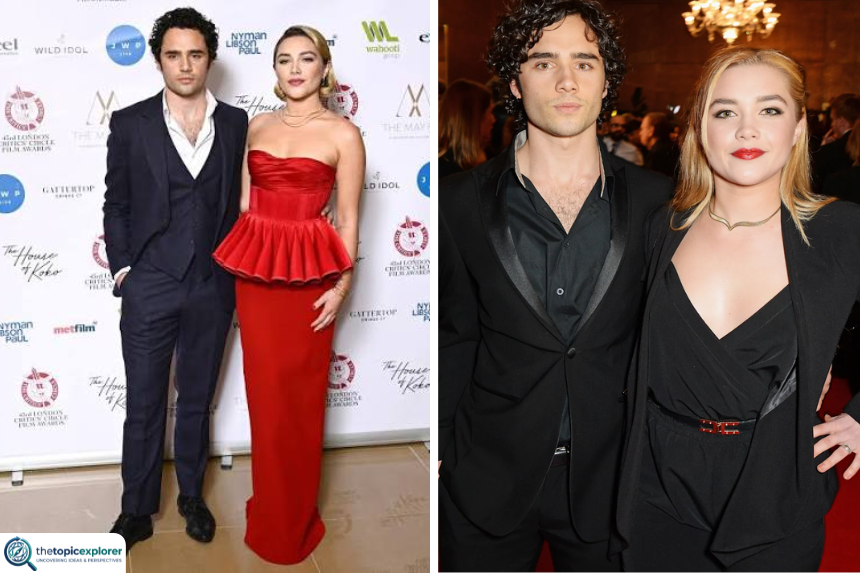

Arabella Gibbins is a British voice coach, performer, actor, voice-over artist, singer, writer and educator whose work centers on communication and performance. She is also the older sister of actress Florence Pugh and actor-musician Toby Sebastian, but her career stands well beyond that family connection. However, current professional sources identify her as a Teaching Fellow at the Liverpool Institute for Performing Arts and a Senior Coach working with speakers, actors and business professionals.
Her training combines English literature, professional acting and postgraduate Voice Studies. She has taught singing, coached public speakers, worked in voice-over, acted and written for screen, developed live performance, and trained performers at major British institutions.
That range makes Arabella an unusual biography subject. Search results often introduce her as “Florence Pugh’s sister,” yet her own professional record tells a much fuller story.
This profile looks at that record first.
Who Is Arabella Gibbins?
Arabella Gibbins is a voice and communication professional with a background in acting, singing and performance education.
The Liverpool Institute for Performing Arts staff page currently lists her as a Teaching Fellow and describes her as an actor, voice-over artist and voice coach. The same biography also identifies her as a singer-songwriter and musical comedienne.
That description captures the central point of her career: Arabella does not work in only one part of the performing arts.
In addition, she teaches performers how to use their voices, works with public speakers, performs herself, and brings acting experience into the training room. Her background allows her to move between technique and performance rather than treating voice as an isolated skill.
For readers who know her only through Florence Pugh, that independent career is the most important correction to make at the beginning.
A Career Built Around Voice and Communication
Arabella’s public work increasingly centers on helping people communicate with greater clarity, confidence and presence.
Her professional profiles describe clients ranging from actors and recording artists to executives, presenters, entrepreneurs and first-time public speakers. Meanwhile, that diversity reflects a basic idea in her coaching: voice is not only about volume or pronunciation.
Instead, effective communication involves breath, confidence, physical freedom, intention, listening and a sense of connection with an audience.
The London Speech Workshop profile lists Arabella as a Senior Coach and emphasizes authenticity, clarity and presence as core parts of her work.
That is a broader role than a traditional singing teacher. She may help one client prepare a keynote, another improve presentation confidence, and another work through performance or vocal tension.
Therefore, the most accurate description of her current career is not simply “actress.” Voice and communication coaching now form a major part of her professional identity.
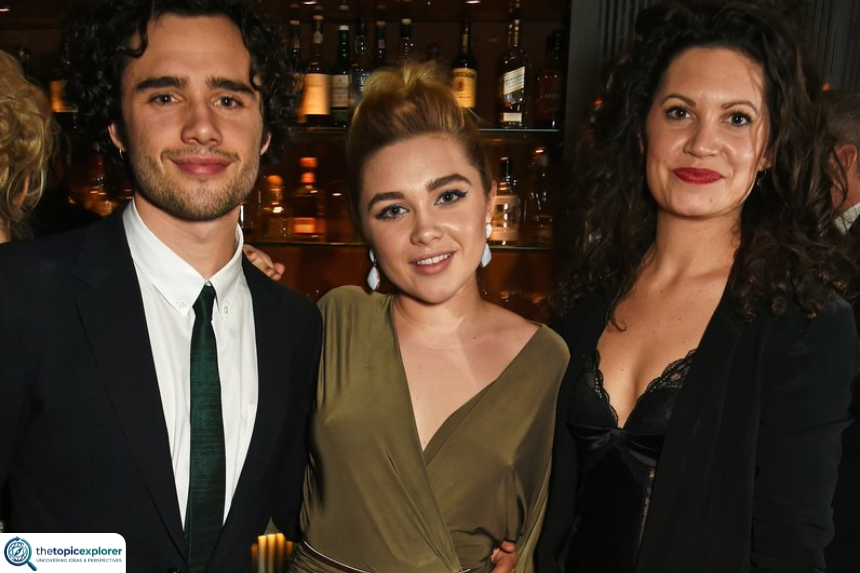
Arabella Gibbins Education and Training
Arabella’s education helps explain why her career moves comfortably between language, acting and voice.
Her professional biographies and CV describe three major academic stages: English literature, acting, and postgraduate Voice Studies.
That sequence is unusually coherent. Literature develops sensitivity to language and text, acting training develops performance technique, and Voice Studies adds specialist understanding of speech, sound, pedagogy and vocal function.
English literature at Bristol
At the same time, Arabella studied English Literature at the University of Bristol.
Her professional CV lists the degree in 2007. This stage came before her formal actor training.
Studying literature does not automatically lead to a performance career, but it fits the later direction of her work. Voice coaches and actors often work closely with text, rhythm, meaning, rhetoric and interpretation.
Likewise, in Arabella’s case, language remained central as she moved toward performance.
Her later coaching work with speakers also benefits from that foundation because communication is not only about producing sound. It is also about understanding what a speaker wants to say and how language lands with listeners.
Acting training at Oxford School of Drama
After university, Arabella trained as an actor at the Oxford School of Drama.
The Both Feet faculty biography confirms that training and describes her as a singing teacher, performer and voice coach.
However, her CV identifies the qualification as professional acting training completed in 2013.
Actor training gave her practical experience with rehearsal rooms, performance pressure, character work and the physical demands of using the voice professionally.
That matters in her later teaching. A coach who has performed understands that technically correct advice must still work under lights, in rehearsal, during auditions and in front of audiences.
Therefore, her acting background is not separate from her coaching career. It informs it.
MFA Voice Studies at Royal Central
Arabella later completed an MFA in Voice Studies at the Royal Central School of Speech and Drama.
In a 2023 first-person interview, she explained that this period helped her recognize how strongly she wanted to help people explore the range and power of their voices.
Her CV lists the MFA as completed in 2019 with Distinction.
Readers unfamiliar with the field can think of Voice Studies as specialist work connecting performance, speech, vocal technique, teaching and communication. In addition, the Royal Central School of Speech and Drama Wikipedia page provides general context on the institution.
For Arabella, the postgraduate degree gave a formal academic framework to interests she had already developed through acting and singing.
Teaching and Coaching at LIPA
Arabella’s current work at the Liverpool Institute for Performing Arts is one of the clearest indicators of her professional standing.
LIPA lists her as a Teaching Fellow across its performance staff. The institute’s biography emphasizes that she brings real acting, stage and voice-over experience into training environments.
That combination matters in performing-arts education. Students need technical instruction, but they also benefit from teachers who understand what happens when technique meets professional pressure.
Arabella’s work spans voice, performance and communication rather than one narrowly defined classroom subject.
Her institutional role has also received recognition. LIPA’s Teaching Excellence and Employee Recognition Awards named Arabella for the Excellence Award in the School of Performance.
For that reason, that recognition supports a point that celebrity-family coverage often misses: Arabella has built credibility as an educator in her own field.
Her Work as a Senior Communication Coach
Alongside higher-education teaching, Arabella works as a Senior Coach at London Speech Workshop.
The role broadens her client base beyond actors.
Her profile says she has coached CEOs, entrepreneurs, keynote speakers, senior leaders, graduates, best men and other clients who need to communicate clearly under pressure.
That work draws on many of the same principles used in actor training. At the same time, breath, presence, intention, connection and vocal flexibility matter whether someone is performing Shakespeare or delivering a boardroom presentation.
However, the goal changes. An actor may need to inhabit a character, while a business client usually needs to sound more fully like themselves.
Arabella’s communication work appears to favor authenticity over a rigid “correct” speaking style. That approach fits her broader teaching philosophy, which treats the coach as someone who helps clients make discoveries rather than imposing one fixed voice.
What Arabella Teaches About Voice
Likewise, Arabella has spoken directly about the philosophy behind her teaching.
She describes learning as something that happens inside the student rather than something a teacher does to them. In practice, that means guiding people toward their own discoveries instead of forcing a predetermined result.
This idea helps explain the language used throughout her professional profiles: connection, confidence, clarity, freedom and authenticity.
Voice coaching can easily become mechanical if it focuses only on exercises. However, arabella’s approach places the exercises inside a larger purpose.
A speaker does not breathe well simply to demonstrate breathing technique. Better breathing may help them stay grounded, communicate a difficult point, or remain present in front of an audience.
Likewise, an actor does not explore resonance only to make a louder sound. The aim is a freer, more responsive instrument.
Therefore, that distinction makes her work relevant well beyond drama schools.
Singing Tuition and Vocal Development
Arabella’s background in singing predates some of her formal voice-coaching work.
Her professional materials say she had already taught singing for years before beginning postgraduate Voice Studies.
Her teaching covers beginners as well as advanced performers and professional recording artists. The emphasis includes healthy vocal development, range, pitch, control, expression and confidence.
In addition, singing also adds another layer to her understanding of voice. Spoken communication and sung voice share physical systems, yet each creates different technical and expressive demands.
A coach with experience in both can move between speech and singing without treating them as unrelated disciplines.
That flexibility likely helps explain why Arabella appears across acting, musical-theatre and performance-training contexts.
Her work therefore sits at the intersection of voice science, performance craft and practical teaching.
Work Behind the Microphone
Meanwhile, Arabella also works as a professional voice-over artist.
Her professional website lists commercial and educational clients in sectors ranging from consumer brands to publishing. Current institutional biographies continue to describe her as a voice-over artist.
Voice-over requires a different kind of precision from stage work.
The performer may need to create character, clarity and emotional tone without relying on facial expression or physical gesture visible to an audience. For that reason, microphone technique also changes how small vocal choices register.
For a voice coach, that experience is useful because it creates direct familiarity with studio demands.
Arabella’s career therefore includes both teaching other people how to use their voices and using her own voice professionally.
That dual perspective strengthens the link between her coaching and performance work.
Acting, Writing and Producing Swim to Land
Arabella’s screen work includes the short film Swim to Land.
At the same time, the IMDb full credits list her as Sasha in the cast. They also credit her as a co-writer and producer.
Her brother Toby Sebastian plays Dylan and shares writing credits on the project.
That combination is important because it shows Arabella contributing creatively behind the camera as well as performing in front of it.
A short-film credit does not make acting the center of her current career, but it demonstrates that “performer” is not simply a teaching label.
Likewise, she has participated in the process of building a screen project, shaping the writing, producing it, and performing a role.
For readers searching “Arabella Gibbins actress,” Swim to Land is one of the clearest documented answers.
The One-Woman Show Big Bad
Arabella’s live-performance work also includes the one-woman show Big Bad.
LIPA’s current biography says the show won an Origins Award for Outstanding New Work.
That detail is valuable because it reflects creative authorship and solo performance rather than only institutional teaching.
One-person shows demand unusual control. The performer carries the audience’s attention without the constant support of a larger cast and often shifts rapidly between narrative, character, comedy and direct address.
For a voice specialist, such work also creates a practical testing ground for the skills she teaches.
The award adds current professional evidence that Arabella continues to develop her own performance work while teaching others.
It also makes the label “voice coach” incomplete if used alone.
Music, Comedy and Backing Vocals
Therefore, lIPA’s staff biography describes Arabella as a singer-songwriter and musical comedienne.
It also includes a striking credit: backing vocals for Robbie Williams.
This part of her career shows the breadth of her performing identity. Singing tuition, songwriting, comedy and professional backing vocals all require different ways of using voice and timing.
They also help explain why she can teach across acting and musical-theatre environments.
In addition, her 2023 interview offers another memorable example of that versatility. She named performing “Seven Nation Army” for David Beckham while dressed as a bearded lady as one of her career highlights.
The point is not the celebrity name alone. It is the range of settings in which she has performed.
Arabella’s professional path moves between serious pedagogy and playful performance, which appears to be part of what keeps her work adaptable.
Arabella Gibbins and Florence Pugh
Meanwhile, Arabella is one of Florence Pugh’s older siblings.
Reliable family profiles identify Florence, Arabella, Toby Sebastian and Raffie Pugh as siblings from the same creative family.
The relationship naturally drives search interest because Florence has become an internationally recognized film actor through projects such as Little Women, Midsommar, Oppenheimer, Dune: Part Two and the Marvel Cinematic Universe.
However, using Florence as the main explanation for Arabella’s identity creates a distorted biography.
Arabella’s training, teaching, coaching and performance work developed through her own institutions and professional roles.
In fact, Arabella’s website includes a testimonial from Florence about her coaching, which adds an interesting reversal: in that context, Florence appears not as the famous sibling who validates Arabella’s existence, but as someone commenting on Arabella’s professional skill.
That is a better way to understand the relationship in a career-focused profile.
The Wider Pugh Creative Family
The Pugh siblings have taken different routes through the arts.
Toby Sebastian works as an actor and musician. Florence built an international film career. Arabella works across voice, education and performance. Younger sister Raffie has also shown creative interests.
Their parents also had artistic and entrepreneurial backgrounds. Family profiles describe Deborah Mackin as a dancer and Clinton Pugh as a restaurateur.
That environment helps explain why several siblings found careers involving performance, creativity and communication.
Still, family background should not be used as a substitute for individual achievement.
Arabella’s professional record includes specific training, institutional teaching, coaching work, stage projects and screen credits.
Those details matter more than simply saying she comes from a talented family.
Growing Up Between Oxford and Spain
Arabella’s London Speech Workshop biography provides useful context about her childhood and early interest in language.
It says she grew up in Oxford and moved to Spain with her family at age 13. However, she attended an international school and later a school in Gibraltar.
Arabella connects that period with her fascination for language and accent.
That connection is especially relevant to her later career. Living among different accents, speech patterns and linguistic environments can make people more conscious of how identity and voice interact.
However, the article should avoid overclaiming cause and effect.
Therefore, moving to Spain did not automatically make her a voice coach. It became one part of a longer path that also included literature, actor training, singing teaching and postgraduate study.
Together, those experiences created the professional framework she uses today.
What Her Career Says About the “Celebrity Sibling” Label
Search engines often reduce relatives of famous actors to a simple relationship label.
That may help a reader recognize a name, but it can flatten a substantial independent career.
Arabella Gibbins offers a clear example.
Calling her “Florence Pugh’s sister” is factually correct, yet it tells readers almost nothing about what Arabella actually does. It leaves out her education, voice pedagogy, LIPA work, communication coaching, voice-over work, acting, singing and creative performance.
A stronger biography reverses the order.
Arabella is first a voice professional and performer. Meanwhile, she is also part of a well-known creative family.
That framing respects both facts without allowing one to erase the other.
Is Arabella Gibbins Age Publicly Verified?
IMDb lists Arabella Gibbins as born on November 20, 1985, in Oxford, England.
That would make her 40 in August 2026.
However, her official professional website, current LIPA biography, Both Feet profile and London Speech Workshop biography do not prominently publish an exact date of birth.
For that reason, the date should be described as IMDb-reported rather than treated as independently confirmed across primary professional sources.
This distinction may seem minor, but biography sites often convert one database entry into dozens of pages that all appear to corroborate one another.
The strongest parts of Arabella’s biography do not depend on an exact age anyway.
Her training, current work and creative credits are much better documented.
Does Arabella Gibbins Have a Verified Net Worth?
No reliable public financial disclosure supports a specific Arabella Gibbins net-worth figure.
At the same time, her career includes teaching, private coaching, voice-over work, performance and institutional employment. However, none of those roles provides enough information to calculate personal wealth.
A professional fee is not the same thing as annual income, and annual income is not the same thing as net worth.
A defensible calculation would require assets, savings, debts, investments, property interests, taxes and other financial information that public sources do not provide.
Her connection to Florence Pugh also offers no basis for assigning family wealth to her.
Therefore, any precise number published by a biography or celebrity-finance page should be treated as speculative unless it shows reliable financial evidence.
The accurate answer is that Arabella’s net worth is not publicly verified.
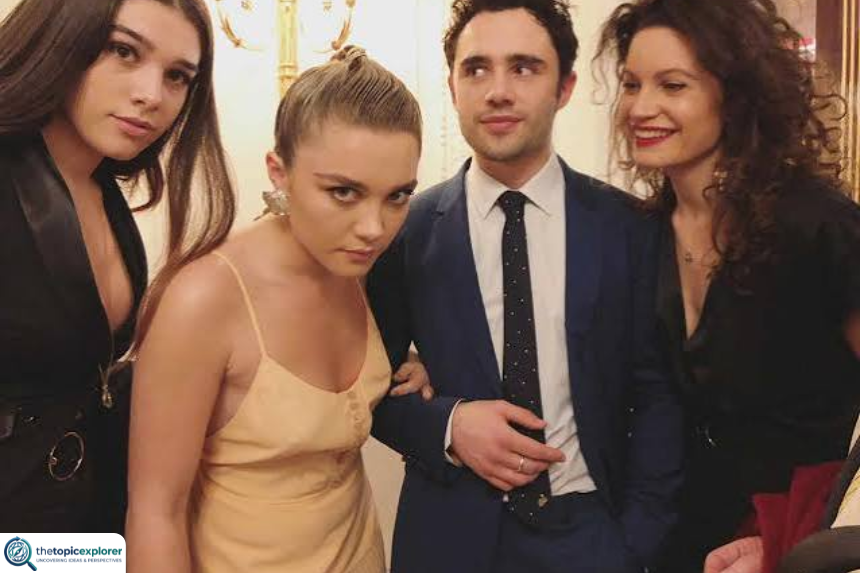
Current Career Snapshot
As of 2026, Arabella’s professional profile is active and varied.
LIPA lists her as a Teaching Fellow. London Speech Workshop lists her as a Senior Coach. However, her professional work continues to cover voice, public speaking, communication, performance and teaching.
Her current LIPA biography also highlights Big Bad, singer-songwriter work, musical comedy and voice-over performance.
That is a stronger picture than older profiles that freeze her career around one acting credit or one family connection.
It also shows how professional identities evolve.
Arabella trained as an actor, but she did not have to choose between acting and teaching. Instead, she developed a career in which performance experience feeds coaching, and coaching deepens her understanding of performance.
That combination is now the clearest way to describe her work.
It also explains why her current résumé does not fit neatly into a single entertainment label. In one setting she may be teaching emerging actors; in another she may coach a senior executive; elsewhere she may perform, record voice-over, or develop a live piece. The common thread is not a particular venue or industry title. In addition, it is the practical use of voice, language, presence and performance.
Frequently Asked Questions
1. Who is Arabella Gibbins?
Arabella Gibbins is a British voice coach, performer, actor, singer, voice-over artist and educator.
She currently works as a Teaching Fellow at the Liverpool Institute for Performing Arts and as a Senior Coach at London Speech Workshop. She is also the older sister of actress Florence Pugh and actor-musician Toby Sebastian.
2. Is Arabella Gibbins Florence Pugh’s sister?
Yes. Arabella and Florence Pugh are sisters.
Their siblings also include actor-musician Toby Sebastian and Raffie Pugh. Although the family connection brings search interest, Arabella has an independently documented career in voice coaching, acting, performance and education.
3. What does Arabella Gibbins do?
Arabella works across voice coaching, communication coaching, public speaking, singing tuition, voice-over, acting and performing-arts education.
Current sources list her as a LIPA Teaching Fellow and a Senior Coach at London Speech Workshop.
4. Where did Arabella Gibbins train?
For that reason, her professional biographies say she studied English Literature at the University of Bristol, trained as an actor at the Oxford School of Drama, and later completed an MFA in Voice Studies at the Royal Central School of Speech and Drama.
Her CV lists the MFA with Distinction.
5. Does Arabella Gibbins work at LIPA?
Yes. The Liverpool Institute for Performing Arts currently lists Arabella as a Teaching Fellow.
LIPA’s staff biography describes her as an actor, voice-over artist, voice coach, singer-songwriter and musical comedienne.
6. Is Arabella Gibbins an actress?
Yes. Arabella trained professionally as an actor and has screen and stage experience.
IMDb credits her as Sasha in the short film Swim to Land, where she also worked as a co-writer and producer. Her current professional identity, however, extends well beyond acting.
7. What is Swim to Land?
Swim to Land is a short drama featuring Arabella Gibbins and her brother Toby Sebastian.
Likewise, iMDb lists Arabella as a performer, co-writer and producer on the project, while Toby also acted and contributed to the writing.
8. What is Arabella Gibbins age?
IMDb lists November 20, 1985 as Arabella’s date of birth, which would make her 40 in August 2026.
Because her current primary professional biographies do not prominently verify that exact date, it is safer to describe it as an IMDb-reported birth date rather than an independently confirmed fact.
9. What is Arabella Gibbins net worth?
Arabella does not have a verified public net-worth figure.
Her work includes teaching, coaching, performance and voice-over, but those professional roles do not reveal personal assets, debts, investments or total wealth.
10. Is Arabella Gibbins married?
However, reliable professional sources used for this article do not make her current marital status central to her public biography.
Rather than relying on people-search pages or celebrity-family speculation, the article leaves private relationship information out unless Arabella herself makes it publicly relevant.
Conclusion: Arabella Gibbins Has a Career of Her Own
Arabella Gibbins may first appear in search results because she is Florence Pugh’s sister, but that is only one part of her story.
Her professional record shows a trained actor who expanded into Voice Studies, singing, voice-over, communication coaching and higher-education teaching. She now works with performers and speakers while continuing her own creative practice.
Therefore, her LIPA role, Senior Coach position, Swim to Land credit, award-winning Big Bad work and broader performance experience all point in the same direction: Arabella has built a career around helping people use their voices while continuing to use her own.
That is the most useful way to understand Arabella Gibbins. The family connection explains why many readers search her name, but her work explains why the biography deserves to stand on its own.
